
A hotel booking service autoscales, and each new instance receives a new address. The traffic baseline is a frozen list of last month's addresses, so every scale-out looks like an unknown host. What should that baseline follow?
Select an answer to reveal the explanation.
Short Explanation
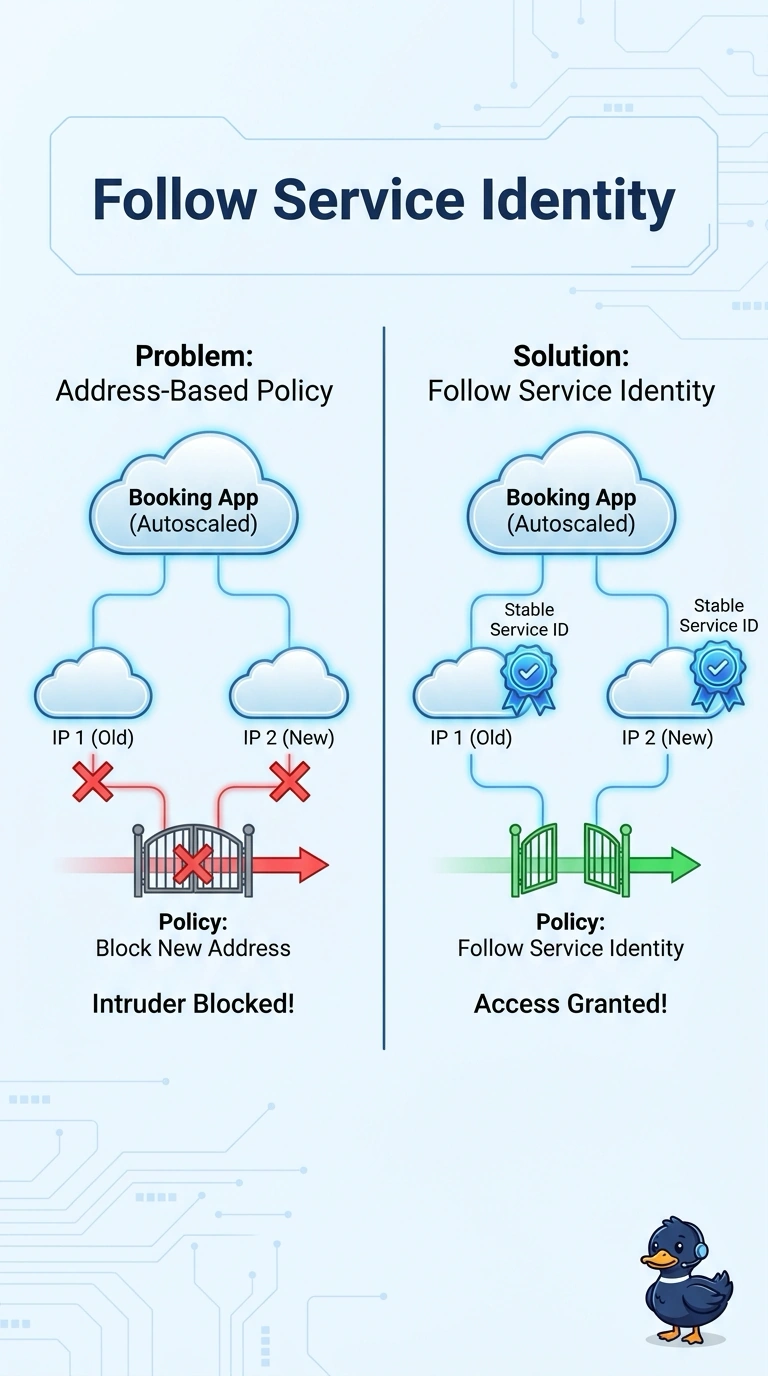
New name tags for the same front desk are not a crowd of strangers. You follow the booking service identity so a new autoscaled address stays with that service. The trap is a frozen address list that treats every scale-out as an intruder.
Full Explanation
Autoscale gives a known service a new address without making it a new actor. A baseline that follows the stable service identity of the booking application keeps that labeled service together, so a fresh address is not treated as an intruder. A frozen address list does the opposite: every scale-out fails the list until someone types the address in by hand, which manufactures alerts from normal growth. A CPU threshold on the hypervisor measures processor load. Load does not explain who the new address belongs to, and a busy host is not the same signal as an identity change. Packet-loss counters on the hotel firewall describe path quality. An autoscaled address is not a path-quality event, and packet loss does not decide whether the instance is the booking service. Exam caveat: compare a new address to the service identity before you call it unknown, and do not mix that comparison with loss or processor graphs. Operational check: scale the booking service once in a maintenance window and confirm the new address inherits the service label instead of opening an unknown-host alert.