
At an electric utility, denied flows spike in the minute after a policy push, and the denies match the rule that was just added. What does comparing those denies to the baseline indicate?
Select an answer to reveal the explanation.
Short Explanation
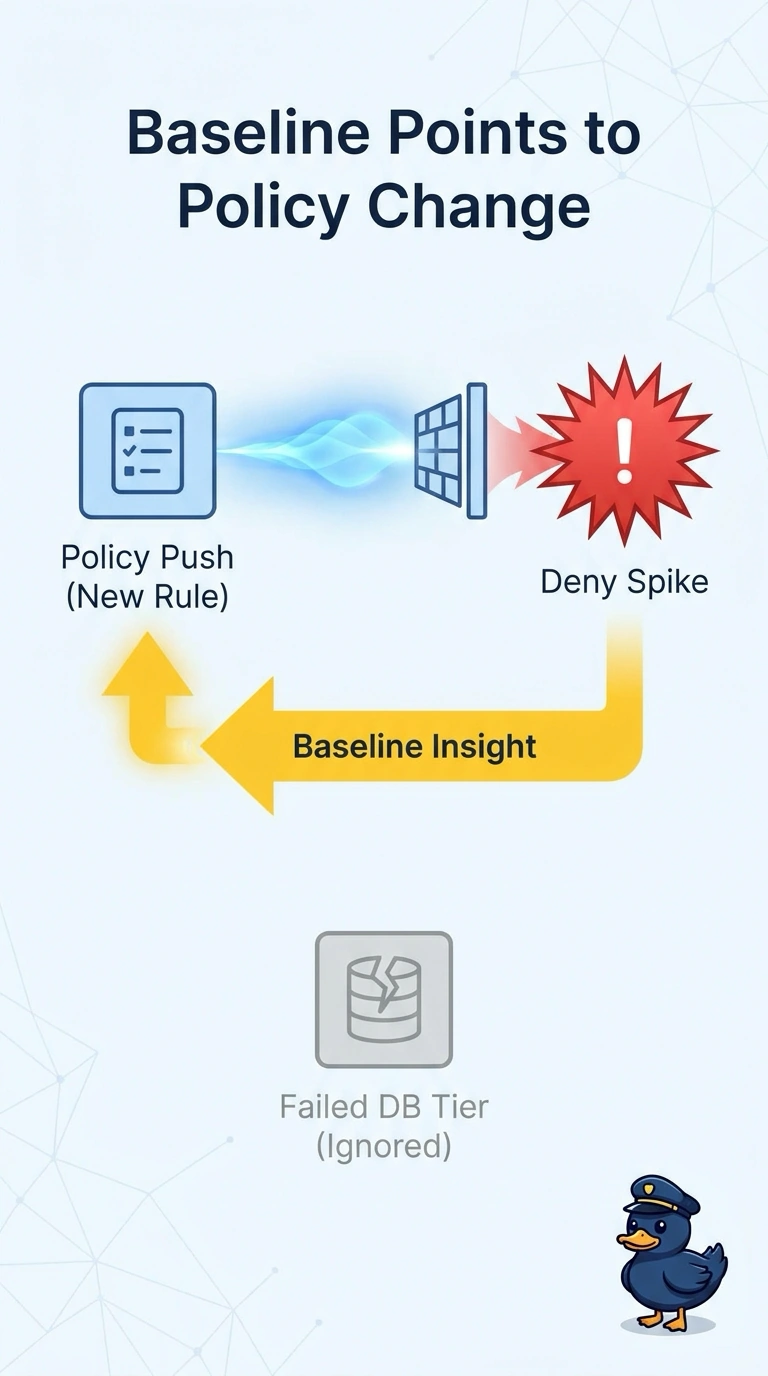
If the alarm sounds the moment you test a new pull station, you inspect that pull station before you declare the server room on fire. You tie the deny spike to the policy push because the denies match the new rule. The trap is reading that spike as proof the database tier is down.
Full Explanation
Baseline comparison is how a new deny pattern is separated from an outage. The spike begins in the minute after the policy push and the denies match the new rule, so the comparison points at that policy change rather than a failed database tier. Calling the database tier down treats a policy deny and packet loss as the same signal, which they are not. Raising the threshold so the new deny pattern disappears hides the effect of the rule instead of explaining it. A new autoscaled address with a stable identity is a case where a new address should not be treated as an intruder, and it does not account for denies that match a rule just pushed. Exam caveat: a deny spike that does not match any recent rule, or that lines up with path loss rather than a policy push, deserves a different investigation. Operational check: open the deny records, confirm the rule identifier equals the rule in the push, and confirm the database tier's own health signals stayed steady through the same minute. Note the policy revision beside the deny reason so the next baseline review can tell this push apart from a later outage on the same tier.