
An airline identity provider is unreachable, and the crew scheduling application has no local break-glass administrator. Single sign-on has stopped for every user. What restores sign-in?
Select an answer to reveal the explanation.
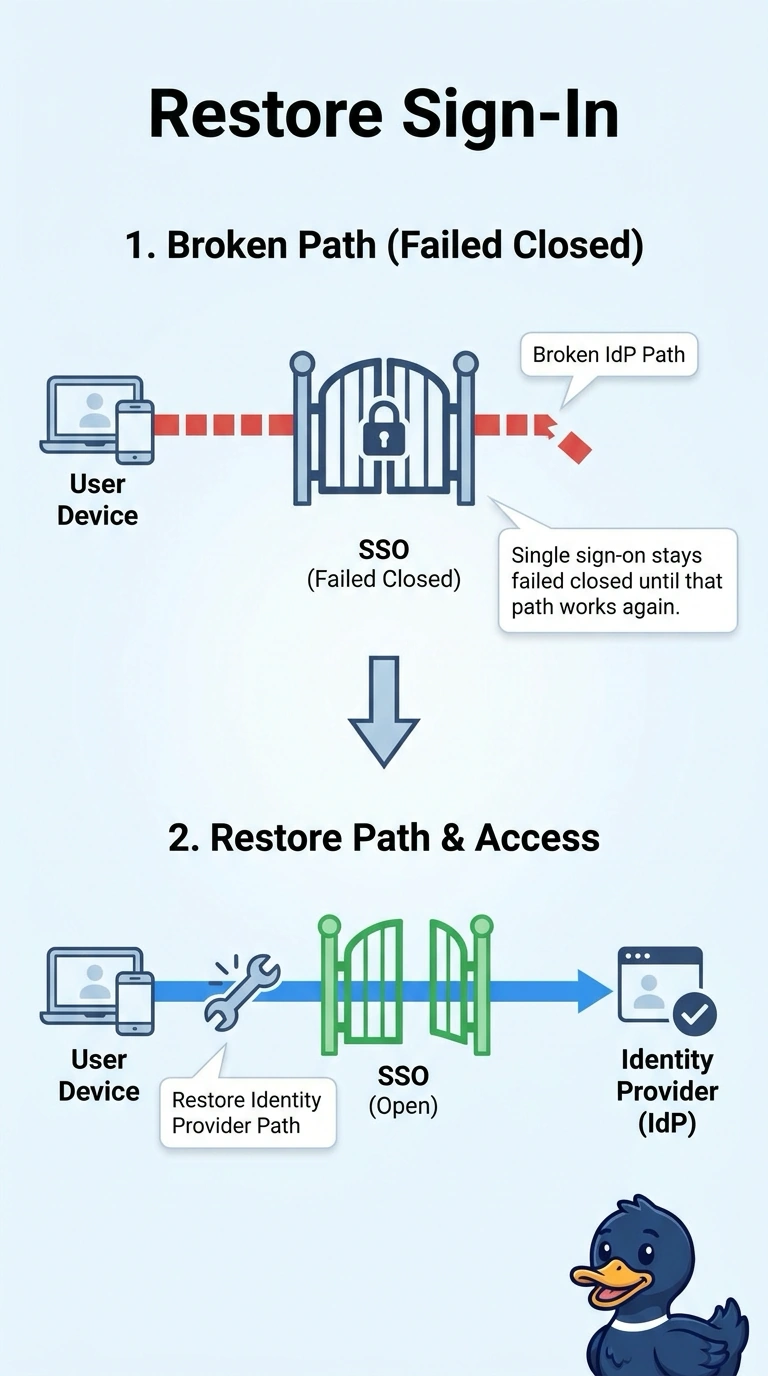
Short Explanation
If the front desk is closed, changing the ink in the badge printer does not open the desk. You restore the identity provider path, because sign-in fails closed and there is no local administrator to fall back on. The trap is rotating a provisioning token and expecting the directory to reappear.
Full Explanation
The application is a service provider that trusts assertions from the identity provider. With that provider unreachable and no local administrator, single sign-on stays failed closed until the identity provider path works again, so restoring that path is what brings sign-in back. Resetting the SCIM bearer token rotates a provisioning credential. It does not bring the unreachable identity provider back into service, and provisioning is not the login. Changing the service provider's request-signing certificate does not restore reachability to the identity provider or enable it to issue assertions. Just-in-time creation runs when a successful login presents an assertion. It cannot finish a login when no identity provider is available to authenticate the user. Exam caveat: a leaked SCIM token is rotated on its own, and that rotation is unrelated to restoring a down identity provider. Operational check: restore reachability to the identity provider, then complete a test login and confirm the application accepts a fresh signed assertion.