
A hotel group renamed a front-desk manager in the directory, and the reservation application created a second account instead of updating the original. What should provisioning change so the existing account is updated?
Select an answer to reveal the explanation.
Short Explanation
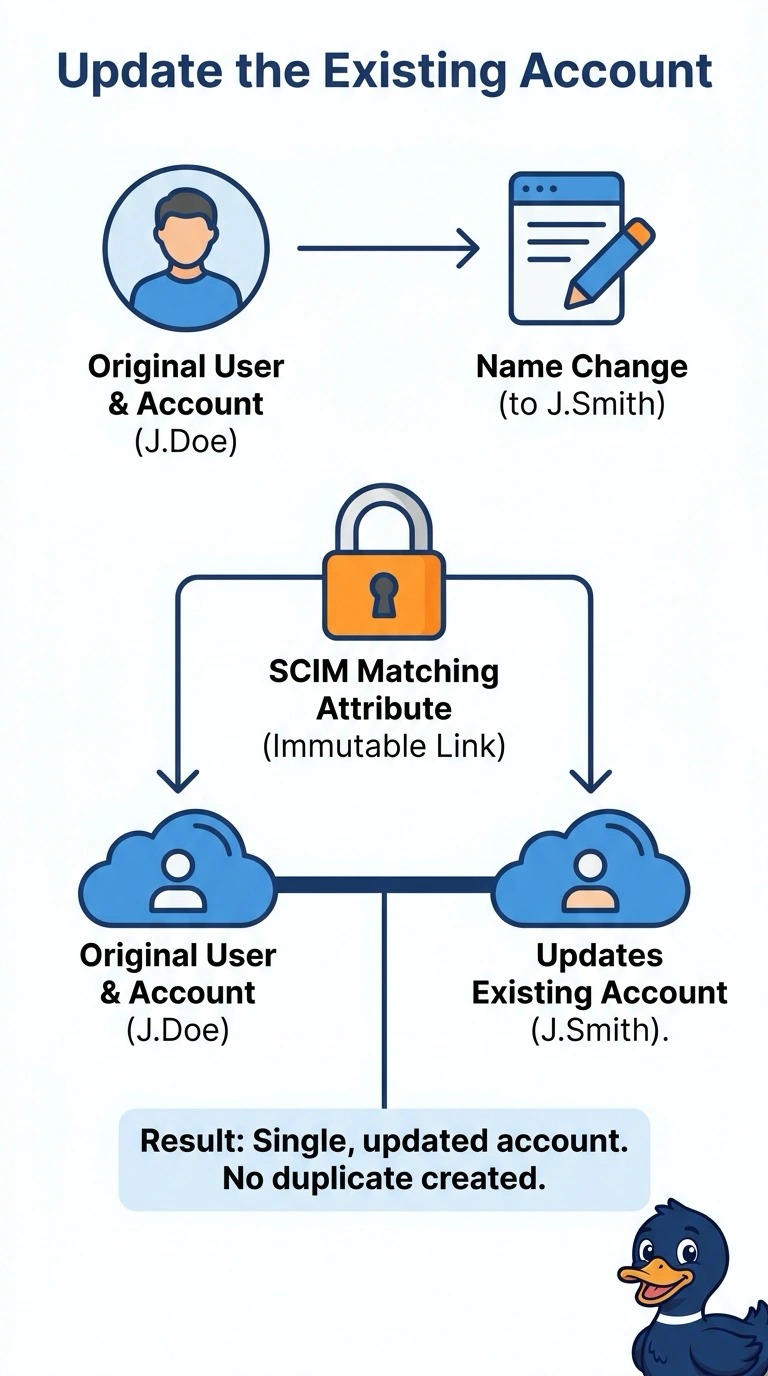
Changing the name on a mailbox should not make the post office open a second box. The reservation account split because the match key did not follow the rename, so you fix the SCIM matching attribute and update the existing account. A new signing certificate does not tell the application these two rows are one employee.
Full Explanation
Provisioning has to recognize the renamed manager as the same person, or the reservation application will keep creating a second account. The SCIM matching attribute is what ties the directory object to the existing account, so correcting that match lets the rename update the original row. Replacing the SAML signing certificate changes the key that signs login assertions. The next assertion does not merge two accounts, and it does not tell the application that the new name is the old employee. Just-in-time creation builds an account at first login when one is missing. It does not delete the original account during a rename, and it is not the control that keeps a single row. The local password form is an application sign-in path. A password reset there does not reconcile two provisioned accounts into the renamed user. Exam caveat: a successful sign-in under the new name can hide a leftover account that still holds reservations. Operational check: rename a test user, run provisioning, and confirm the original reservation account changes in place instead of a second account appearing beside it.