
A regional bank pasted a SCIM bearer token into a help-desk ticket while repairing account sync to its payroll application. Security now treats that token as exposed. Which action retires the leaked credential?
Select an answer to reveal the explanation.
Short Explanation
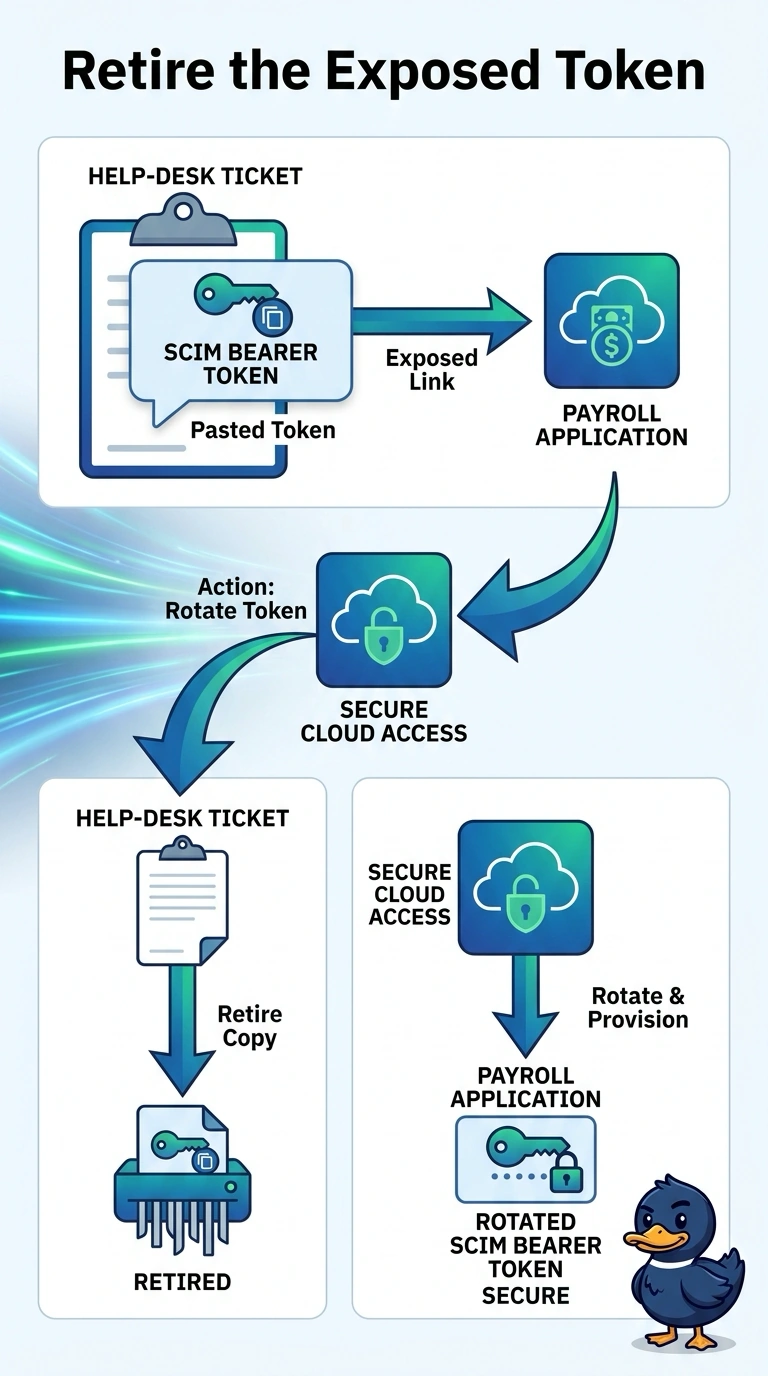
A copied house key still opens the door after you change the lock on a different gate. The SCIM bearer token is its own credential, so you retire it by rotating that token. Replacing the SAML signing certificate leaves the pasted provisioning token able to keep changing accounts.
Full Explanation
SCIM is the provisioning channel that creates, updates, and removes accounts in the payroll application, and it authenticates with its own bearer token. That token was copied into a ticket, so anyone with the ticket can change payroll accounts until the bank rotates the SCIM bearer token and stops accepting the exposed copy. The sign-in trust is a different secret. Replacing the SAML signing certificate rotates the key that signs login assertions for users. It does not invalidate the SCIM bearer token, so the pasted credential keeps working against the provisioning API. Turning off just-in-time account creation changes only whether a brand-new user is built at first login. An already issued provisioning token is unaffected and can still create or edit accounts. Shortening the SAML assertion lifetime reduces how long a browser sign-in statement is honored. The leaked provisioning credential is not an assertion, so it does not age out on that timer. Exam caveat: a user who can still sign in with single sign-on has not proved that the provisioning secret was retired. Operational check: replay a provisioning call with the token from the ticket and confirm the payroll application rejects it, then rename a test user in the directory and confirm the new token updates the same account.