
A warehouse requires every new hire to have an account in the scheduling application before that person signs in for the first time. The identity team is choosing how the account gets created. Which path creates the account ahead of the first login?
Select an answer to reveal the explanation.
Short Explanation
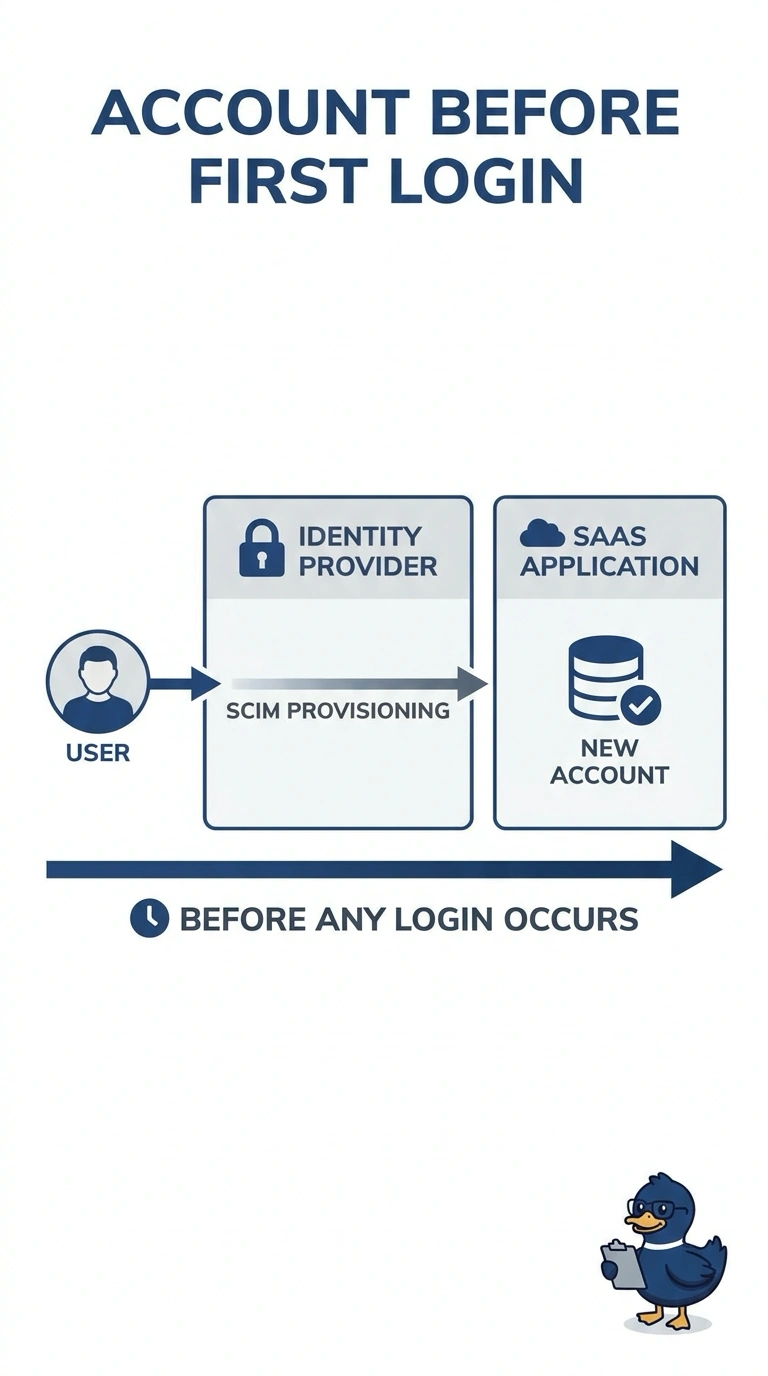
You cannot use a desk that only appears after someone sits down when the rule is that the desk exists first. SCIM can create the SaaS account before the first login, and just-in-time creation waits for that login. The trap is calling a first-login create an advance provision.
Full Explanation
SCIM provisioning from the identity provider pushes the account into the application on the provisioning cycle, so the scheduling account exists before any login occurs. That matches a rule that the person must already be present on day one. Just-in-time SAML creation builds the account only when the new hire completes the first successful login. Until that login, the application has no account, which misses the warehouse requirement even though the same person could get in later. A local password reset email sent by the application itself assumes a local account and a local password form. It is not a feed from the identity provider, and it does not create the account ahead of login through single sign-on. Replacement of the SAML signing certificate rotates the key the application uses to trust assertions. A new certificate does not push new accounts into the application overnight. Exam caveat: SAML authenticates, and SCIM is what creates the account before the user arrives. Operational check: create a test hire in the in-scope group, wait for the provisioning cycle, and confirm the application shows the account before anyone attempts a login.