
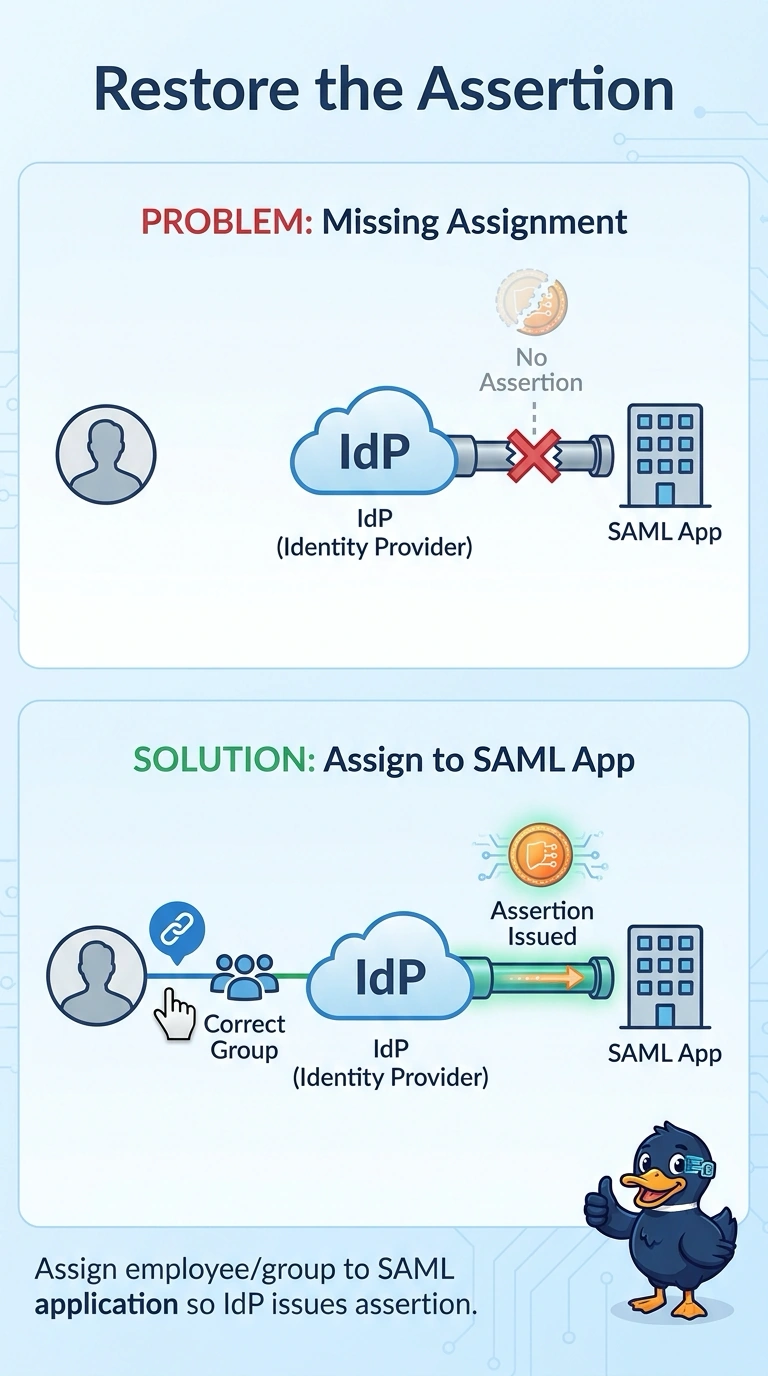
A valid hotel employee reaches the identity provider but gets no assertion for the housekeeping application because that person is not assigned to the SAML application. What fixes the missing assertion?
Select an answer to reveal the explanation.
Short Explanation
A new stamp on the door does not put your name on the guest list. You assign the employee or the right group to the SAML application so an assertion is actually issued. Replacing the signing certificate leaves that missing assignment exactly where it was.
Full Explanation
The identity provider in this scenario requires application assignment before it issues a SAML assertion. This employee is valid and can reach the identity provider, but no assertion is issued because the assignment is missing. Assigning the employee or the correct group to the SAML application is what causes an assertion to be issued. Installing a new signing certificate and leaving the housekeeping application assignment unchanged rotates a trust key and does not put the employee in scope for the application. Turning off signature requirements would weaken validation and still would not create an assignment the identity provider uses when deciding whether to issue an assertion. Pointing the assertion at a different consumer URL changes where a post would be delivered. That URL does not grant the application assignment, and there is no assertion to redirect until the user is assigned. Exam caveat: the people in scope have to be the right group, or a broad assignment gives contractors the same access as employees. Assignment fixes the missing assertion only when the group itself is correct. Operational check: confirm the employee or the housekeeping group is assigned to the SAML application, then sign in and confirm an assertion is issued for that application.