
A university disables a departing researcher in the identity provider, but the grants application still shows an active account weeks later. That person has not signed in since the account was disabled. Which change removes or disables the leftover application account?
Select an answer to reveal the explanation.
Short Explanation
Disabling a badge at the front desk does not empty a locker the person never opens again. You remove the leftover SaaS account with deprovisioning, not by waiting for a login that will not happen. The trap is hoping the next sign-in cleans up an account that stays idle.
Full Explanation
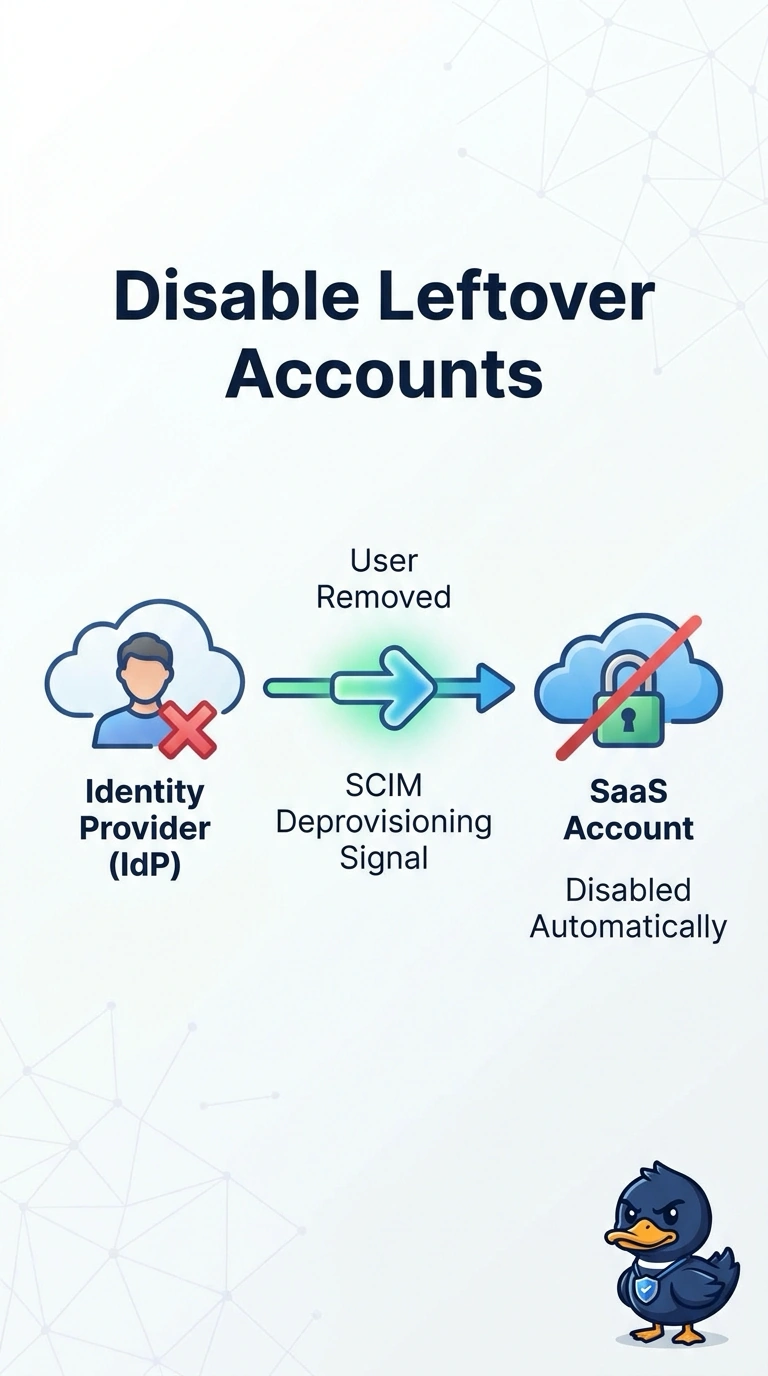
Enable SCIM deprovisioning so the SaaS account is disabled when the person is removed from the identity provider, even if that person never signs in again. SCIM creates, updates, and deprovisions accounts, which is what clears the leftover grants account. Just-in-time creation notices a user only during a login, and it builds an account on first success. It does not delete a SaaS account during a login that never occurs, and a disabled identity that nobody uses will not trigger that path. Replacing the SAML signing certificate changes which assertions the application will trust. It does not remove the leftover account, and the account can remain listed after the certificate change. Clearing the browser cookies on an old laptop ends a local session in that browser. Cookies are not the directory object, so the application account stays in place after the cookies are gone. Exam caveat: SAML signs a user in, and it does not by itself remove the account when the person leaves. Operational check: disable a test user in the identity provider, confirm no login occurs, and verify the application account is disabled by the SCIM feed rather than left active.