
Researchers at a materials lab authenticate at the identity provider, but the assertion is posted to the wrong consumer URL and the lab portal never completes the login. Which trust setting should be corrected?
Select an answer to reveal the explanation.
Short Explanation
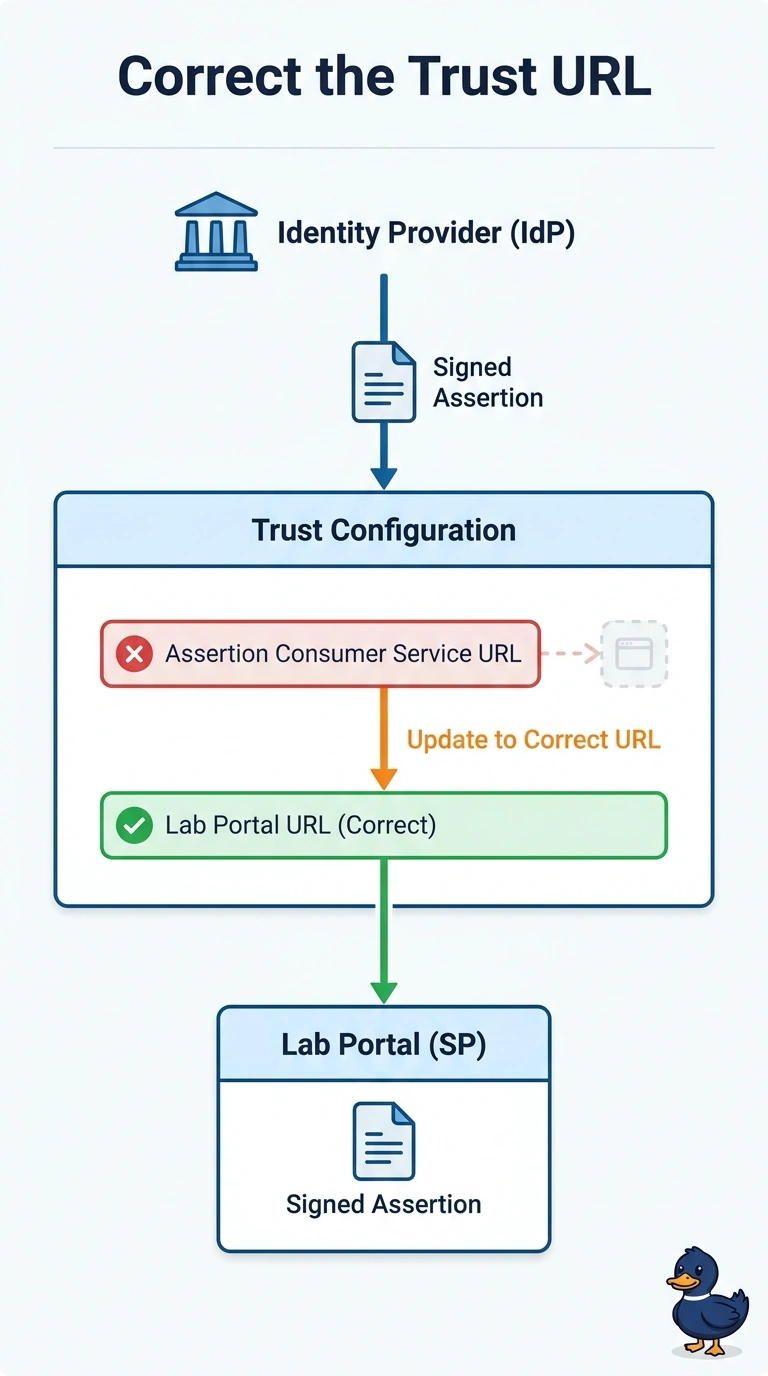
Mail that arrives at the wrong apartment number does not reach the person who lives there, even when the letter is genuine. You correct the assertion consumer service URL so the signed assertion is posted to the lab portal. A new certificate does not change the address where that post is delivered.
Full Explanation
The identity provider authenticates the researcher and posts a signed assertion to the assertion consumer service URL configured in the trust. When that URL is wrong, the lab portal never receives the assertion and the login cannot finish, even though authentication at the identity provider succeeded. Correcting the assertion consumer service URL sends the signed assertion to the lab portal. Issuing a new user certificate does not replace that URL. A user certificate answers a different trust question and is not how this SAML post finds the portal. Replacing the identity provider signing certificate, while leaving the consumer URL unchanged, rotates a key the portal may then reject, and a certificate does not redirect the post to a new address. Disabling signature validation would accept an assertion that might have been altered or forged, and it still would not deliver the post to the URL the portal is listening on. Exam caveat: the audience and the clock have to agree with the signing certificate as well, so fixing the consumer URL can still leave a login failing if one of those other values is wrong. Operational check: compare the consumer URL in the identity provider trust with the URL the portal actually serves, then complete one researcher login and confirm the assertion arrives there.