
A clinic web application rejects a signed SAML assertion because the audience does not match the identifier the application expects. What should be corrected?
Select an answer to reveal the explanation.
Short Explanation
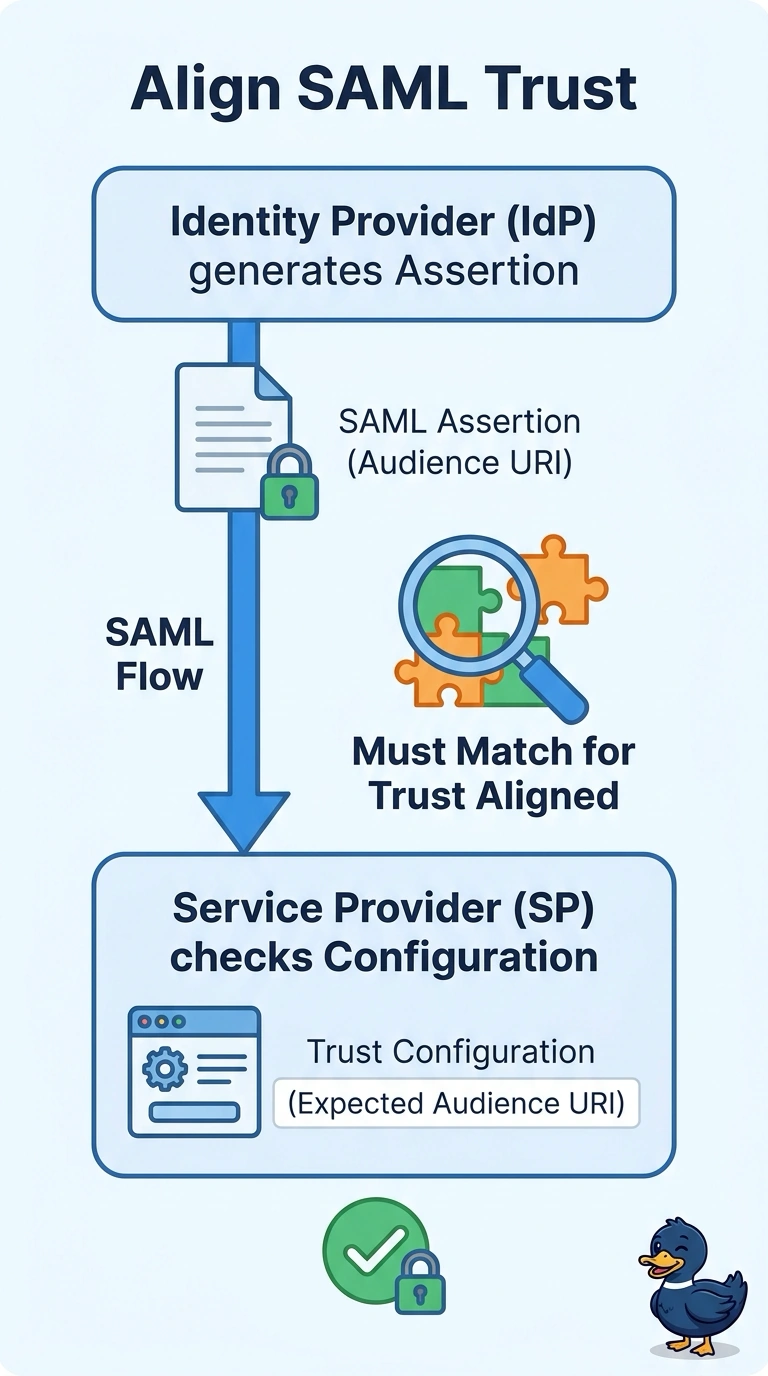
You can picture a genuine badge being turned away because it names the wrong building. Correct the SAML trust identifiers so the audience matches what the application expects; resetting the directory password does not rewrite the audience in the assertion.
Full Explanation
The identity provider has already issued a signed assertion, but the clinic application rejects it because its audience does not match the identifier it expects. Correct the SAML trust identifiers, including the audience the identity provider places on the assertion, so they agree with the application’s expected identifier. Resetting the user’s directory password changes a credential, not the audience value carried in the assertion, so it cannot fix this mismatch. The device posture profile measures the endpoint, but this audience check does not evaluate device posture while validating the assertion; SAML sign-in does not measure the device. SCIM deprovisioning removes the clinic account, rather than repairing the audience mismatch or aligning the trust identifiers. Exam caveat: an audience mismatch is a trust-identifier problem on an otherwise signed assertion, so do not reset a password for a field it does not control. Practical check: compare the audience in a rejected assertion with the identifier configured on the application, then align those values.