
A hospital identity team rotates the signing certificate on the identity provider, and every clinical web application then rejects user assertions even though the passwords still work. Which change restores trust for those applications?
Select an answer to reveal the explanation.
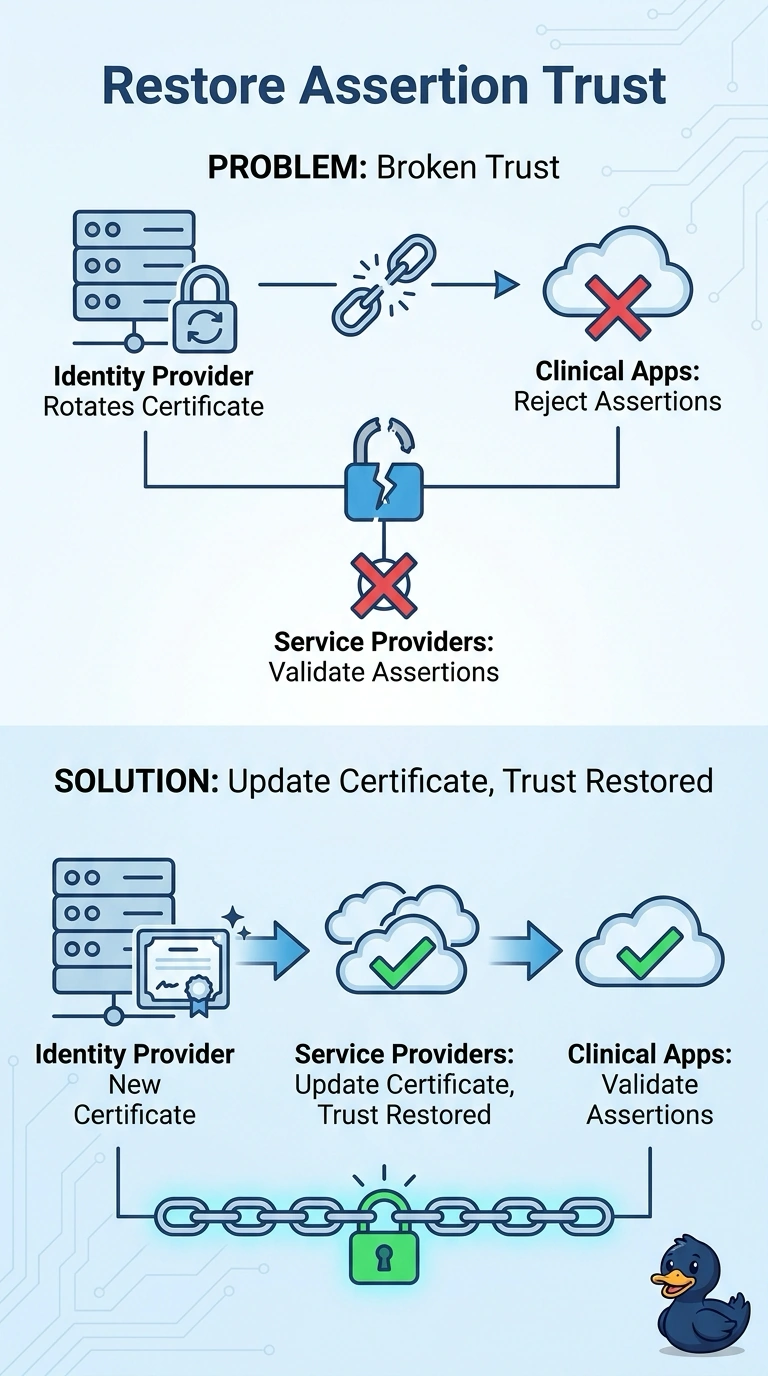
Short Explanation
A new wax seal does nothing for you if every clerk is still checking for the old one. You update the signing certificate on each service provider so the clinical applications trust the assertions again. Resetting passwords or turning signature checks off leaves the real mismatch untouched.
Full Explanation
After an identity provider rotates its signing certificate, each service provider still checks the assertion signature against the certificate it was configured to trust. Until that certificate is updated, every clinical application rejects the new assertions even though the password is correct. Updating the signing certificate that each service provider uses restores validation of those assertions. Resetting every clinician password and publishing fresh metadata while leaving the previous signing certificate on the applications changes a credential the applications were already accepting and never teaches them the new certificate. Disabling signature checks would let an unsigned or substituted assertion through, which removes the proof that the trusted identity provider issued the login. Replacing the audience restriction with the identity provider entity identifier changes who the assertion claims to be for, and the audience is not what failed when the signature stopped matching. Exam caveat: the audience, the assertion consumer URL, the signing certificate, and the clock all have to agree, so a certificate update can still fail if one of the other three is wrong. Operational check: complete one clinical sign-in after the update and confirm the assertion is accepted, then confirm an assertion signed by the retired certificate is rejected.