
A hotel must confirm full-disk encryption before a front-desk laptop can open the reservation system. Which check can actually see that encryption state?
Select an answer to reveal the explanation.
Short Explanation
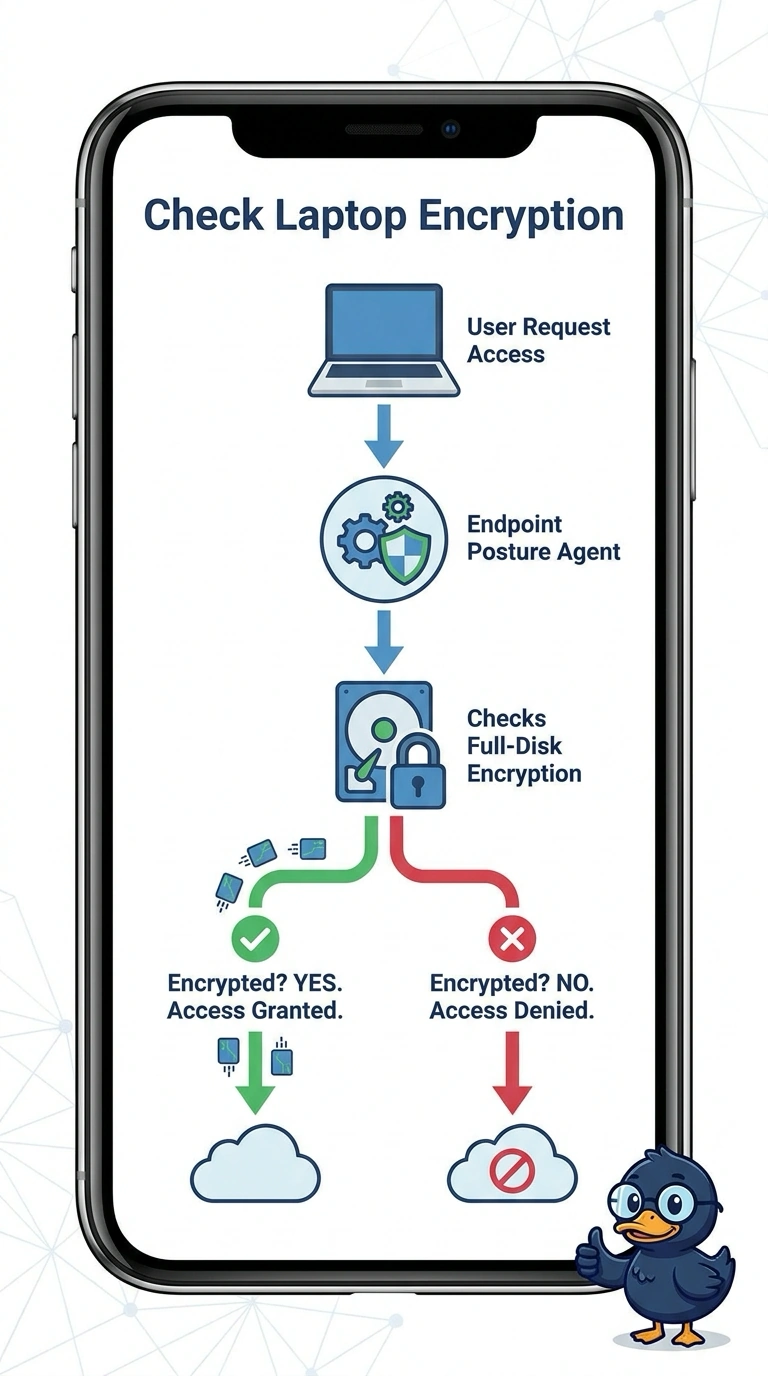
You cannot tell whether a safe is locked by reading the envelope a guest hands you. You use an endpoint posture agent, because full-disk encryption is visible to that agent and not to a browser header. The trap is trusting a header, a sign-in assertion, or a pass from last quarter.
Full Explanation
Full-disk encryption is an endpoint health fact, and an endpoint posture agent on the laptop is what can check it at the time access is requested. A browser header sent with the reservation request is a weak signal and does not report whether the laptop disk is actually encrypted. A SAML assertion from the identity provider authenticates the user and does not measure disk encryption or deprovision staff when they leave. Last quarter's stored posture pass is stale, so it is not valid proof of encryption until the laptop is replaced or on any later day. Exam caveat: a posture pass does not identify the person, and a successful sign-in does not prove the disk is encrypted. Encryption state lives on the endpoint, so the agent has to be present and reporting at access time before the hotel trusts the laptop. A header, an assertion, or a stored pass cannot see the volume. Operational check: disable encryption on a test laptop and confirm the posture result fails closed against the reservation system until encryption is turned back on.