
A laboratory analyst tries to open the finance application from a personal phone, and the ownership check fails. What satisfies that ownership rule?
Select an answer to reveal the explanation.
Short Explanation
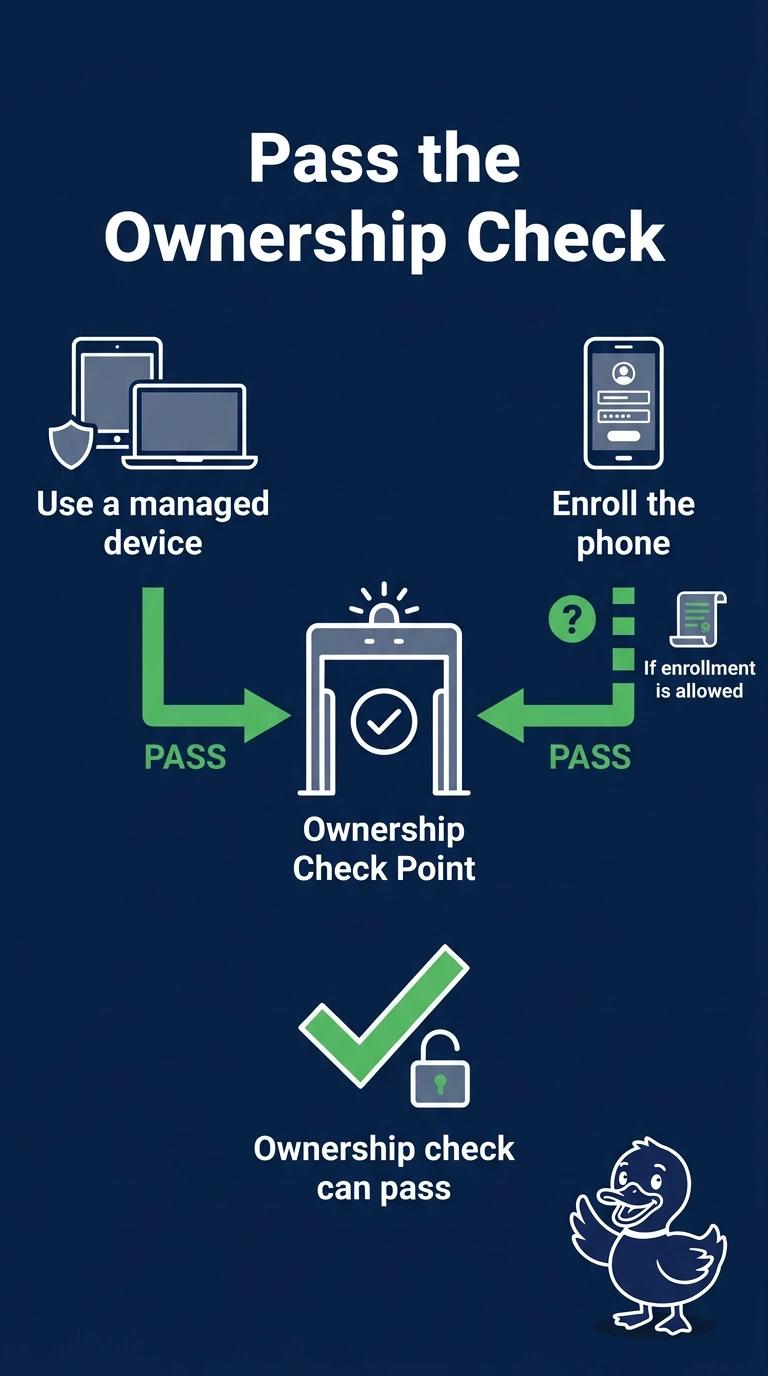
A visitor badge that fails the employee turnstile is not fixed by remembering the door code. You use a managed device, or you enroll the phone when policy allows, so the ownership check can pass. The trap is ignoring ownership, swapping in a user certificate, or treating a VPN connection as ownership.
Full Explanation
Endpoint posture includes whether the device is managed or personal. The finance application failed the analyst's personal phone on ownership, so the rule is doing what it was written to do. The way through is to use a managed device, or enroll the phone if policy allows enrollment, so the ownership check can pass. Ignoring the ownership failure because the analyst knows the finance password substitutes a shared secret for device ownership. The password never answered the check that failed. Issuing a user certificate proves the phone holds a key a relying party trusts. A certificate is not an ownership enrollment, and accepting it in place of the ownership check rewrites the rule without admitting the device. Connecting the personal phone to the lab VPN places the phone on a network path. Network attachment does not make the phone a managed asset, and the finance rule is not satisfied by a tunnel. Exam caveat: if policy forbids personal-device enrollment, the managed device is the only path, and a local exception that ignores ownership fails the rule on purpose. Operational check: attempt the finance application from the personal phone and confirm denial, then repeat from a managed or newly enrolled device and confirm the ownership check passes.