
A hospital imaging workstation passed its endpoint posture check last quarter and is still treated as compliant, although nobody has evaluated it since. Which change makes the next access decision use a current health result?
Select an answer to reveal the explanation.
Short Explanation
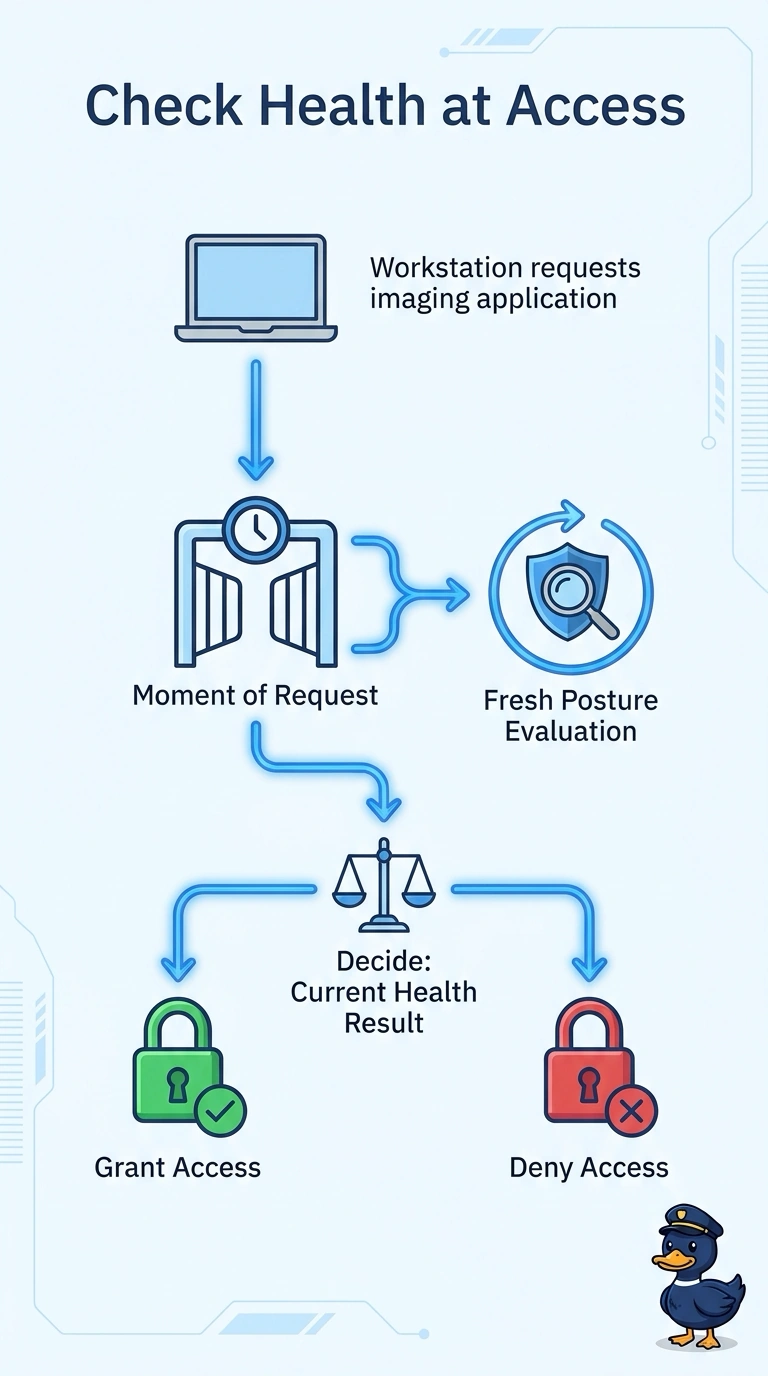
A visitor sticker from last season does not open the imaging suite today. You need a fresh posture evaluation when the workstation actually asks for the application, because device health drifts after a quiet quarter. The trap is keeping an old pass on file just because nobody has reimaged the machine.
Full Explanation
Posture is the health of the endpoint at the moment access is requested, so a result stored from an earlier quarter cannot decide today's imaging session. The workstation may have lost a patch, dropped encryption, or had a control turned off since that pass, and the decision has to see the machine as it is now. Requiring a fresh posture evaluation at the moment the workstation requests the application binds the grant to this attempt. Keeping last quarter's pass on file and skipping a new check because the workstation has not been reimaged since assumes nothing changed, which is the stale result this control exists to retire. Replacing the user directory after a quiet application log confuses an identity store with device health, and that quiet log does not prove the endpoint meets the posture rule. Accepting the server certificate on the imaging host shows only that the server presented a key the client may trust, not that the workstation itself is healthy. Exam caveat: a current posture result still has to feed the authorization policy, because a failure that is only recorded does not deny the application. Operational check: open the imaging application from that workstation and confirm the access record carries a posture result from this attempt rather than the stored pass from last quarter.