
A hospital records application let a laptop in because the user certificate is valid, even though the laptop disk is not encrypted. What should the access decision do?
Select an answer to reveal the explanation.
Short Explanation
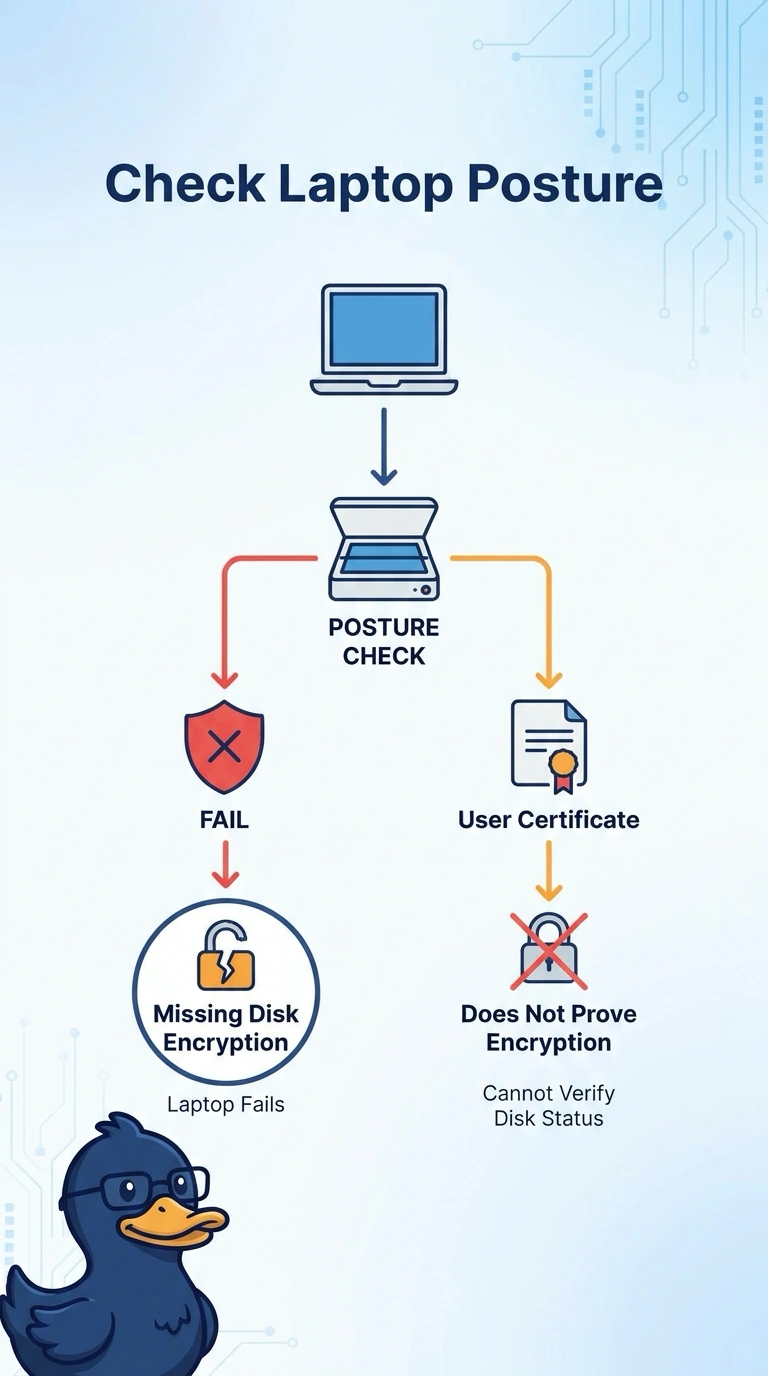
A valid driver's license does not prove the car has airbags. You fail that laptop on an endpoint posture check for missing disk encryption, because a user certificate only proves a key. The trap is accepting the certificate, opening another firewall port, or stretching the certificate lifetime.
Full Explanation
Endpoint posture is the health and ownership of the device at access time, and disk encryption is one of those health checks. A full disk-encryption result comes from an endpoint agent, not from the certificate the user presented. The records policy should fail the laptop on an endpoint posture check for missing disk encryption, which a user certificate does not prove. Accepting the session because the certificate is valid answers the identity question and skips the device question the scenario already failed. Opening an additional firewall port makes the application easier to reach. Reachability is not encryption, and a port change does not satisfy a posture rule. Reissuing the user certificate with a longer lifetime refreshes a credential. Treating that certificate as disk encryption still skips the device check and leaves the unencrypted laptop authorized. Exam caveat: a browser header is a weaker device signal than an endpoint agent when the rule is full disk encryption. Operational check: from the same laptop, confirm the posture report shows encryption absent and that the records application denies the session until the agent reports the disk as encrypted.