
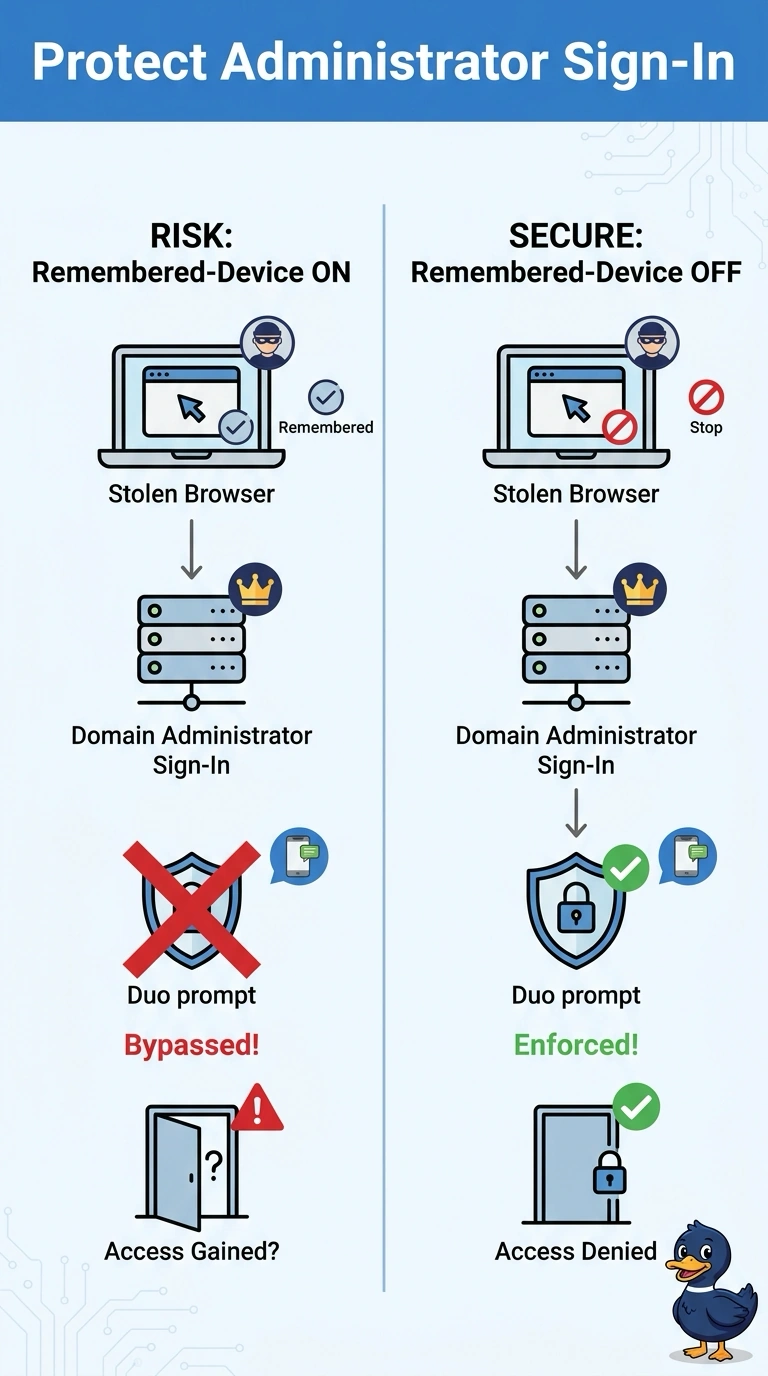
A hotel allows remembered-device sign-in for domain administrators. A laptop is stolen, and its remembered browser now skips the Duo prompt. What should the policy do for that administrator tier?
Select an answer to reveal the explanation.
Short Explanation
A coat-check stub that lets you skip the door is a gift to whoever steals the coat. You stop remembered devices for domain administrators so a stolen browser cannot skip the prompt. The trap is keeping that convenience on the administrator tier.
Full Explanation
Remembered-device sign-in lets a browser that was already trusted skip the Duo prompt. On a stolen laptop, that skip is the failure, and domain administrators should not keep it. The policy should stop remembered-device sign-in for that tier so the stolen browser has to face a real prompt again. Replacing remembered browsers with SMS brings a prompt back, but SMS is not phishing-resistant, so it does not meet that requirement for administrators. One shared bypass code drops the prompt for the whole tier and is a standing bypass, which is not how you retire a stolen browser. Keeping remembered devices because the browser is still a phishing-resistant factor misstates what remembering does: it skips the factor rather than providing a phishing-resistant one. Exam caveat: convenience that skips a prompt is the wrong trade for a domain-administrator tier. Operational check: after the policy change, open the stolen-laptop browser profile in a test and confirm the Duo prompt is required again.