
A new airline dispatcher reaches the Duo prompt on the first shift and cannot continue because no authenticator is enrolled on the account. What should the identity team do?
Select an answer to reveal the explanation.
Short Explanation
A turnstile will not open for a badge that was never printed. You enroll an authenticator so the new hire can finish the Duo prompt. The trap is turning the multifactor policy off so an empty enrollment looks like success.
Full Explanation
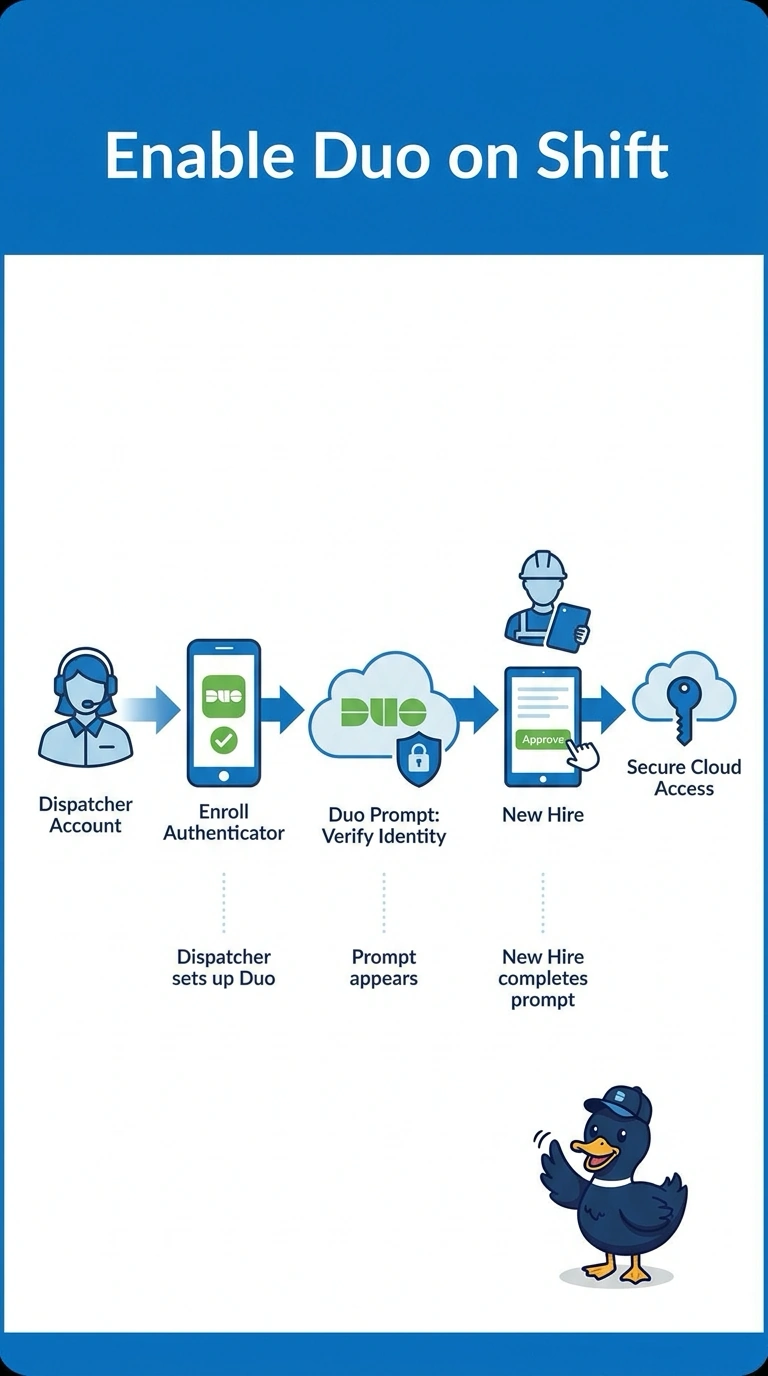
The Duo prompt is waiting for a method that does not exist yet. The fix is to enroll an authenticator on the dispatcher account so there is a factor the new hire can complete. Until that enrollment exists, the sign-in cannot move forward, and that is the policy working. Disabling the multifactor policy on the dispatch application would let the first sign-in succeed with no authenticator enrolled, which removes the control instead of completing it. Issuing a bypass code so the first shift skips the prompt still leaves no authenticator enrolled on the account. A Duo bypass code still requires a valid authentication device enrolled on the account, so it cannot resolve this empty enrollment. Replacing the SAML signing certificate rotates the key that signs assertions for the application. It does not create an authenticator record the dispatcher can satisfy. Exam caveat: a user stuck at an empty Duo enrollment needs an enrolled method, and weakening the policy is not that method. Operational check: after enrollment, have the dispatcher complete a fresh prompt and confirm the account shows an authenticator before any bypass is considered.