
During an outage at a pharmaceutical lab, an administrator created a reusable Duo bypass code for one administrator account, and weeks later it still authenticates that account. What should happen to the bypass?
Select an answer to reveal the explanation.
Short Explanation
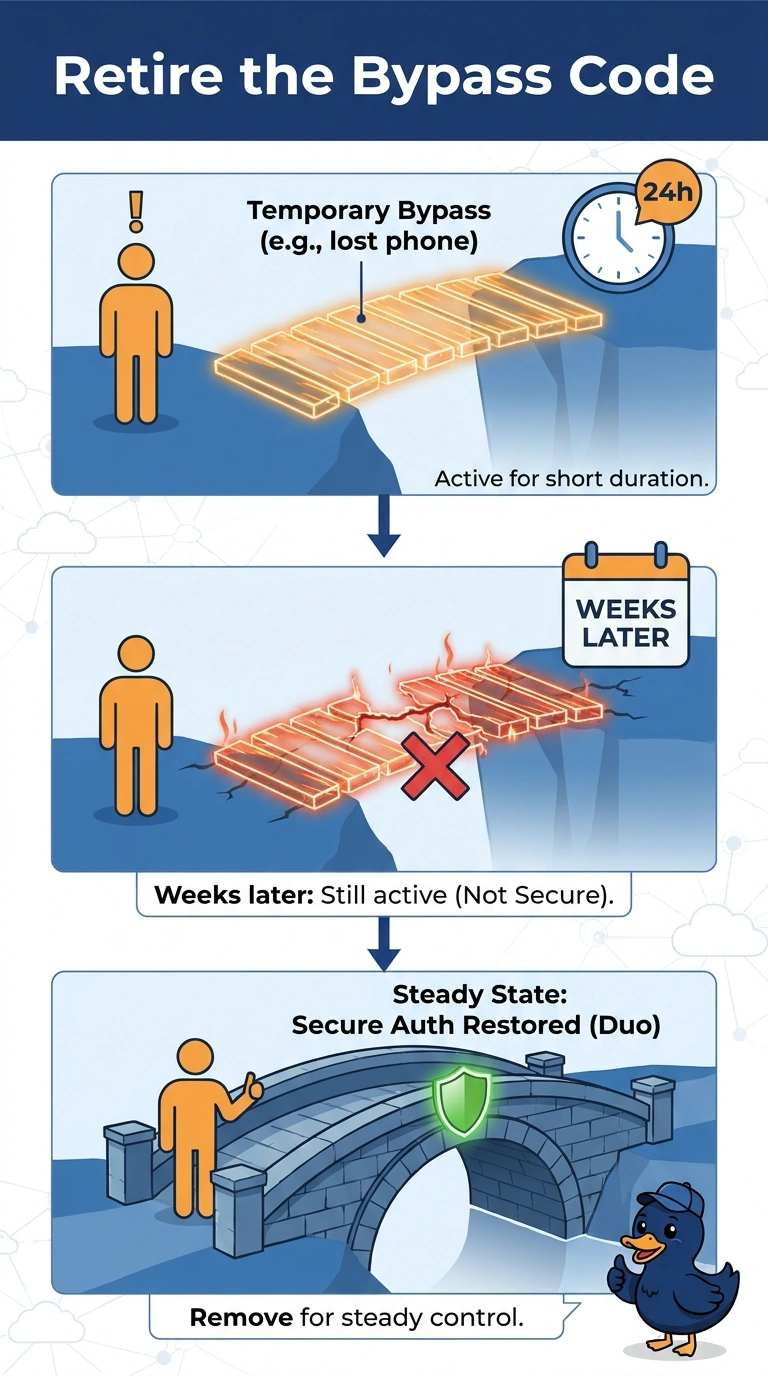
A door wedge left in place after a fire drill becomes the way someone skips the lock. You retire the bypass code once the outage is over. The trap is keeping a standing bypass as the normal control for that account.
Full Explanation
A bypass code created for one outage is an exception with an end. Weeks later it still authenticates that administrator account, so it has become a standing bypass, and a standing bypass is not the steady authentication control. The code should be retired so that account returns to its enrolled methods. Leaving the bypass code in place as the normal sign-in path keeps the exception as policy for that account. Replacing the SAML signing certificate rotates assertion signing for applications and does not automatically expire Duo bypass codes. Enrolling SMS does not retire the bypass by itself, and SMS is not a phishing-resistant method, so it cannot be treated as meeting that bar. Leaving the code active also trains that administrator to skip the enrolled method the lab meant to require after the outage. Exam caveat: an emergency bypass is temporary. If it still works after the incident, it is the hole, not the control. Operational check: confirm the bypass code is revoked, then sign in as that administrator and verify the prompt requires an enrolled method rather than the old code.