
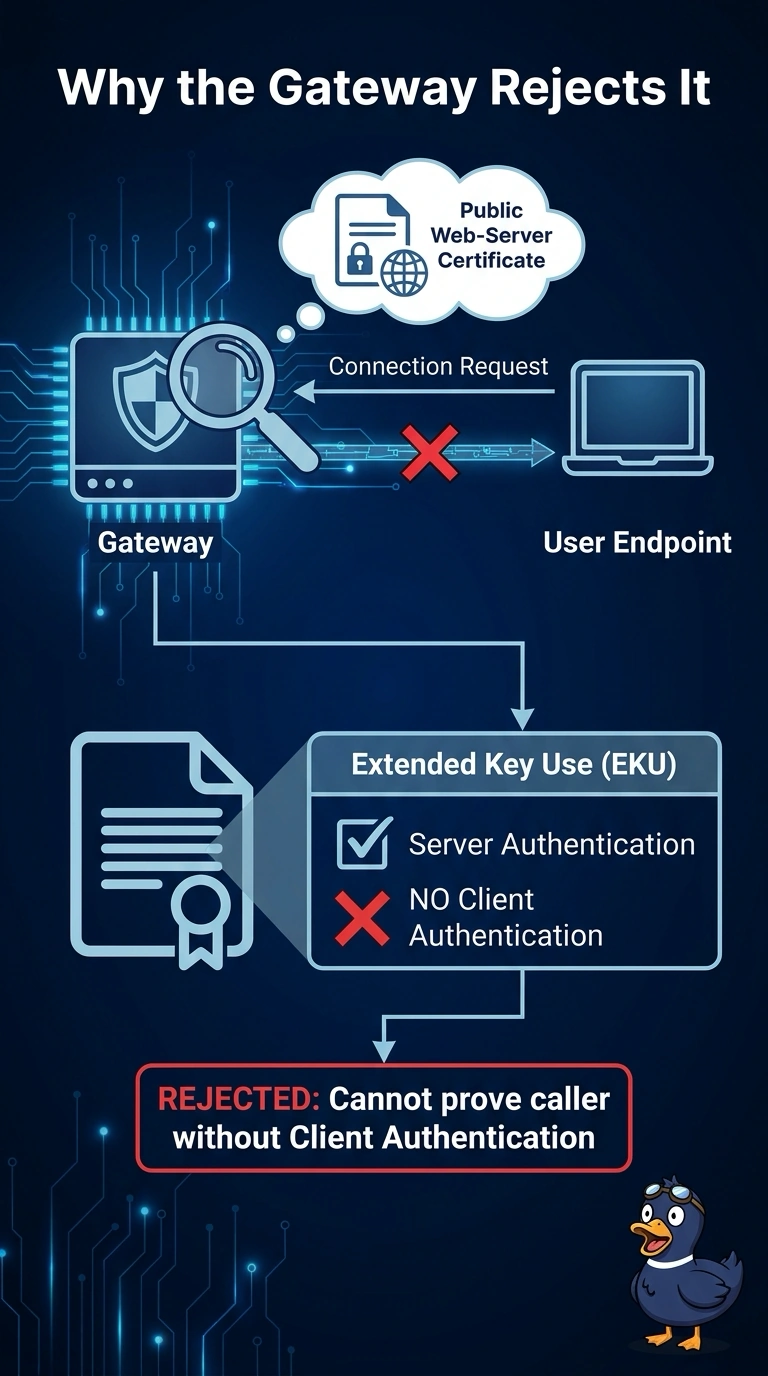
A factory gateway rejects a certificate offered for client authentication. The certificate is inside its validity window, is not revoked, chains to an authority the gateway trusts, and is the plant's public web-server certificate. The certificate has an Extended Key Usage extension that permits server authentication only. Why is it rejected?
Select an answer to reveal the explanation.
Short Explanation
A driver's license is the wrong document when the gate asked for a visitor pass. You reject the web-server certificate because its extended key use does not allow client authentication. The trap is blaming the date or the issuer after you already know both of those are fine.
Full Explanation
A relying party accepts a client certificate only when the extended key use allows client authentication, the issuer is trusted, the certificate is inside its validity window, and the certificate is not revoked. This web-server certificate fails because its extended key use does not allow client authentication, so it cannot prove the caller even though every other check would pass. A laptop clock that is hours behind would skew the validity window, but the scenario already places the certificate inside that window and the failure is specific to a server certificate used as a client. An untrusted issuing authority would also cause rejection, yet the gateway already trusts this chain. Revocation would fail a different check, and this certificate is not revoked. Exam caveat: the wrong extended-key-use template is rejected even when the same authority issues both server and client certificates. Operational check: read the extended key use on the presented certificate, confirm server authentication is present and client authentication is absent, and retest with a client-authentication certificate from the same authority.