
A water utility accepts a device certificate as the only factor for remote access, and the private key has no user-presence check. Leaders want proof a person is there, not only that the key is present. What should be added?
Select an answer to reveal the explanation.
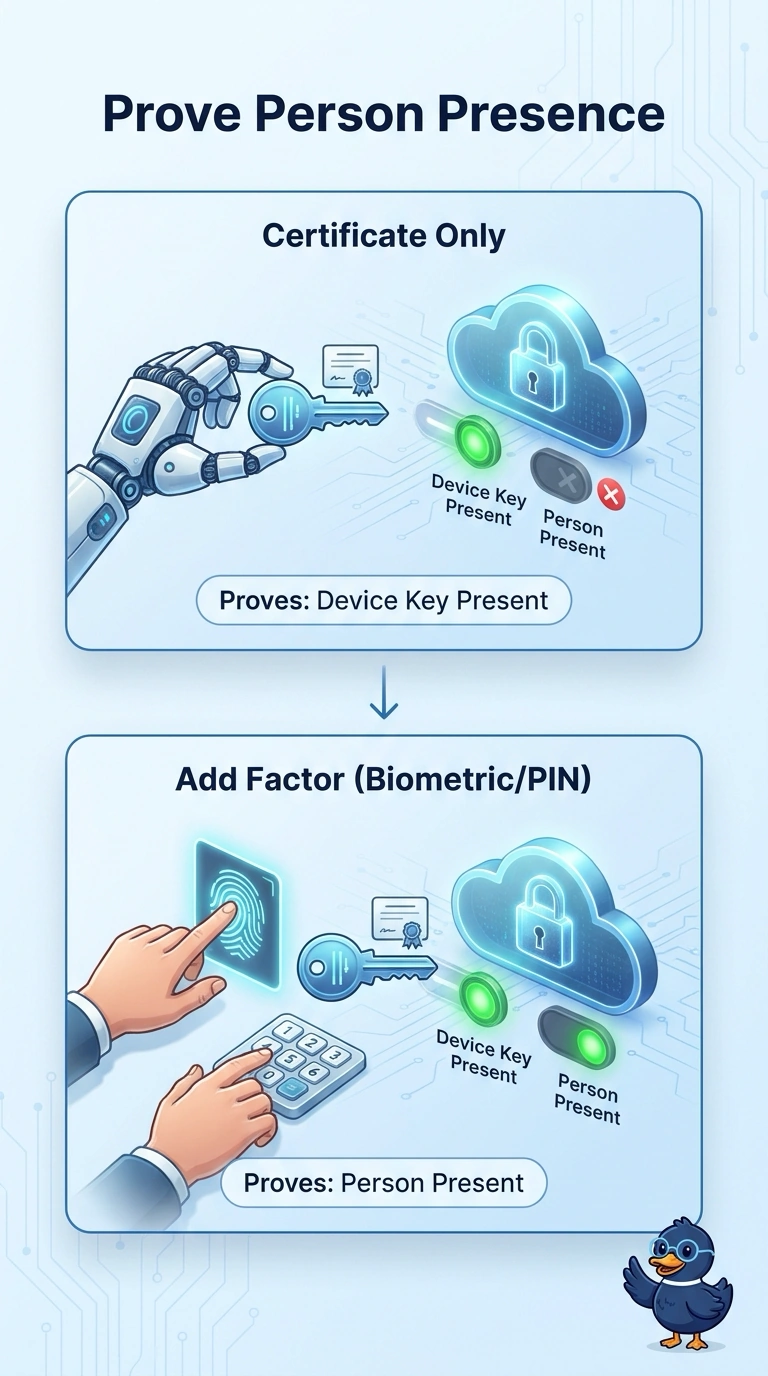
Short Explanation
A badge propped in the door proves the badge is here, not that the owner walked through. You add a factor that requires the person, because this certificate only proves the key is present. The trap is issuing another certificate that still has no user-presence check.
Full Explanation
A certificate proves possession of a key the relying party trusts. With no user-presence check, that proof stops at the device key and does not establish that a person is at the keyboard. Adding a factor that requires the person supplies the missing check when the policy demands a human, not only a machine. Another device certificate that uses the same exportable key and still includes no person check repeats the same gap. The utility web-server certificate identifies the website, and a trusted chain on that server certificate does not authenticate the remote user. Shortening the validity window changes when the certificate expires and still evaluates only the key, not whether a person is present. Exam caveat: user certificates and device certificates answer different questions, and stacking a second device certificate does not convert either one into user presence. Operational check: attempt a remote sign-in with the device certificate alone and confirm the session now stops until the additional person factor succeeds.