
A university keeps each lab computer's device identity as an exportable certificate file on a shared drive that many technicians can open. What is the better place to hold that device credential?
Select an answer to reveal the explanation.
Short Explanation
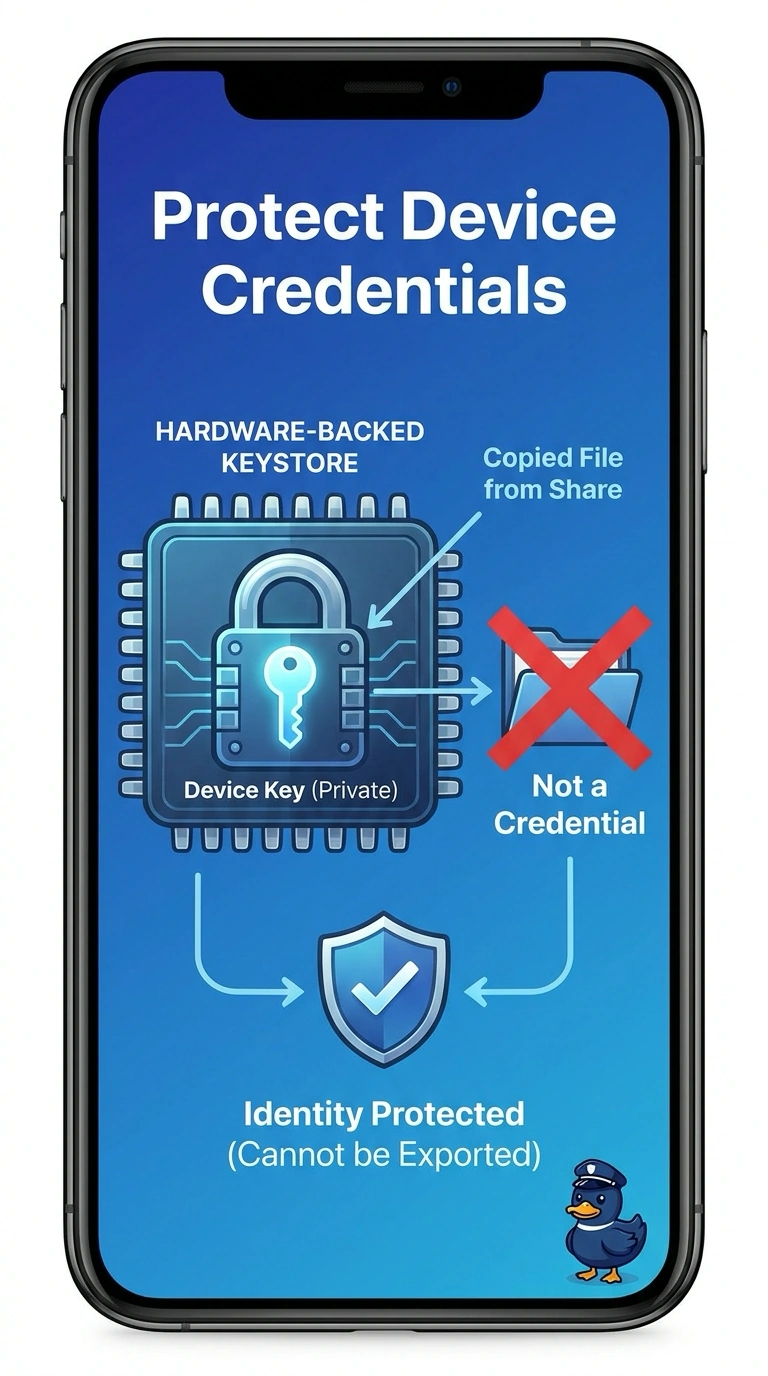
A key bolted inside the lock cannot be photocopied the way a key left on the counter can. You keep the device key in hardware that will not export it, so a file on the share is not the credential. The trap is tighter folder permissions on the same exportable file, which still leave a copyable secret.
Full Explanation
A device certificate is only as private as the key behind it. Holding the device key in hardware that cannot export it means a copied file is not the credential, because the private key cannot leave the machine as a file. Leaving the exportable certificate file on the share, even with tighter folder permissions, still stores a copyable secret that any technician who can read the folder can take. A certificate for the portal identifies the portal. Each computer needs a credential issued for its own identity and suitable for client authentication. Shortening the certificate lifetime only reduces how long the exportable file remains valid, and until that date the file on the share is still the credential. Exam caveat: if a key has already been exported, moving future certificates into hardware does not retire the copy that already left, so that serial still needs revocation. Operational check: confirm the lab computers enroll a hardware-backed key, attempt to export the private key, and confirm the export is refused.