
A clinic nurse exists in the human-resources identity provider and in a local application directory, and the two stores show different risk. Both stores are configured sources for the identity intelligence system, and both records have been linked to the same nurse. Which signal should drive the access decision?
Select an answer to reveal the explanation.
Short Explanation
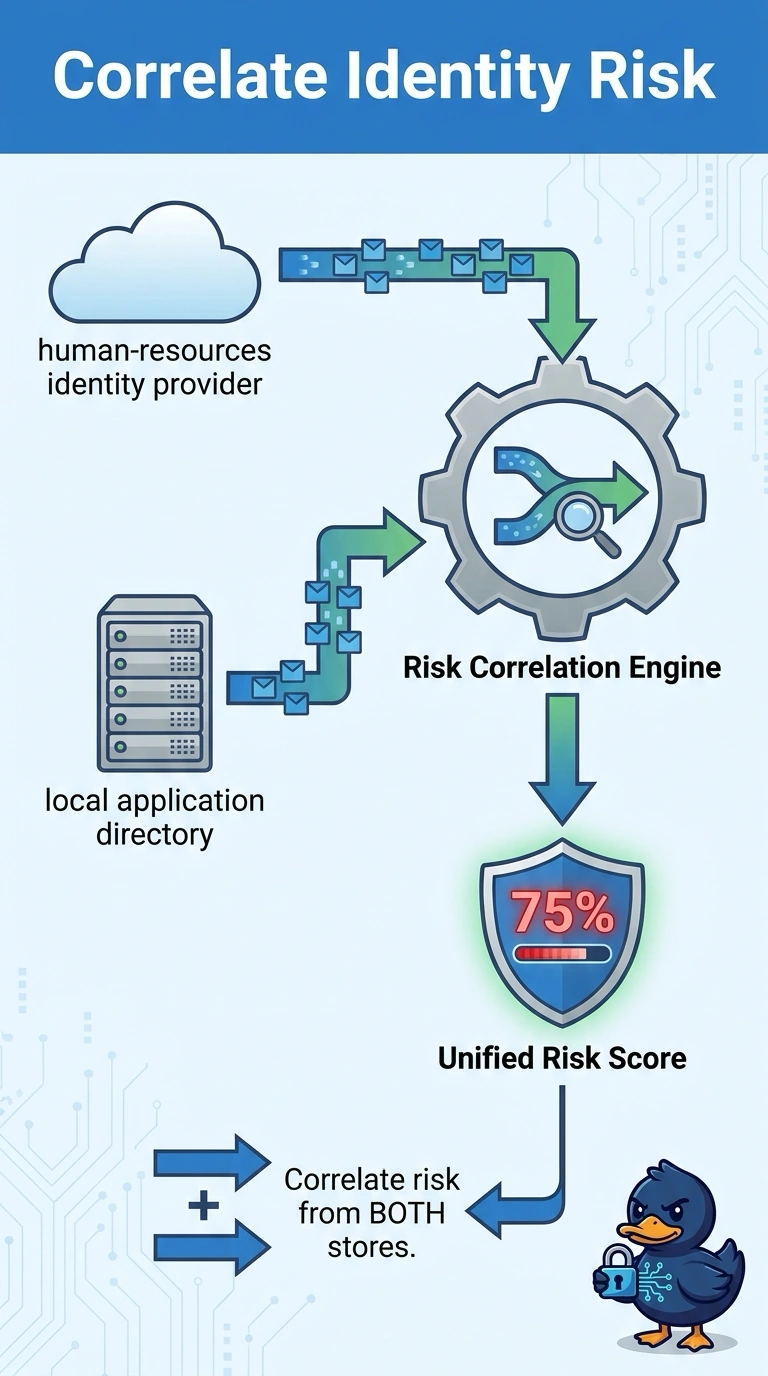
Think of two charts on the same patient, where the quiet chart does not erase the alarming one. You drive the decision from the correlated risk across both identity stores, not from whichever log looks calmer. The trap is letting a quiet application record cancel the identity-provider signal, or treating last quarter as current.
Full Explanation
Identity intelligence correlates signals from more than one identity provider, and a quiet application log does not cancel a bad identity-provider signal. The access decision should use the correlated risk from both identity stores, rather than whichever of the two logs looks quieter. Using only the local application log, on the theory that a quiet application record cancels a bad identity-provider signal, throws away the worse of the two findings. Building a second user directory from the risk feed, so passwords can be reset inside that feed, confuses a signal with a directory. The feed informs policy, and it is not where you manage the account. Last quarter's successful sign-in does not clear the newer risk flag coming from the identity provider, because an older success is stale next to a current signal. Exam caveat: when two stores disagree, do not shop for the quieter log. Operational check: compare the nurse's risk in both stores at decision time and confirm the policy consumes the correlated result, not a single quiet application event.