
A university guest account was invited for a one-week research project and is still signing in months later. Which identity-intelligence signal does that pattern represent?
Select an answer to reveal the explanation.
Short Explanation
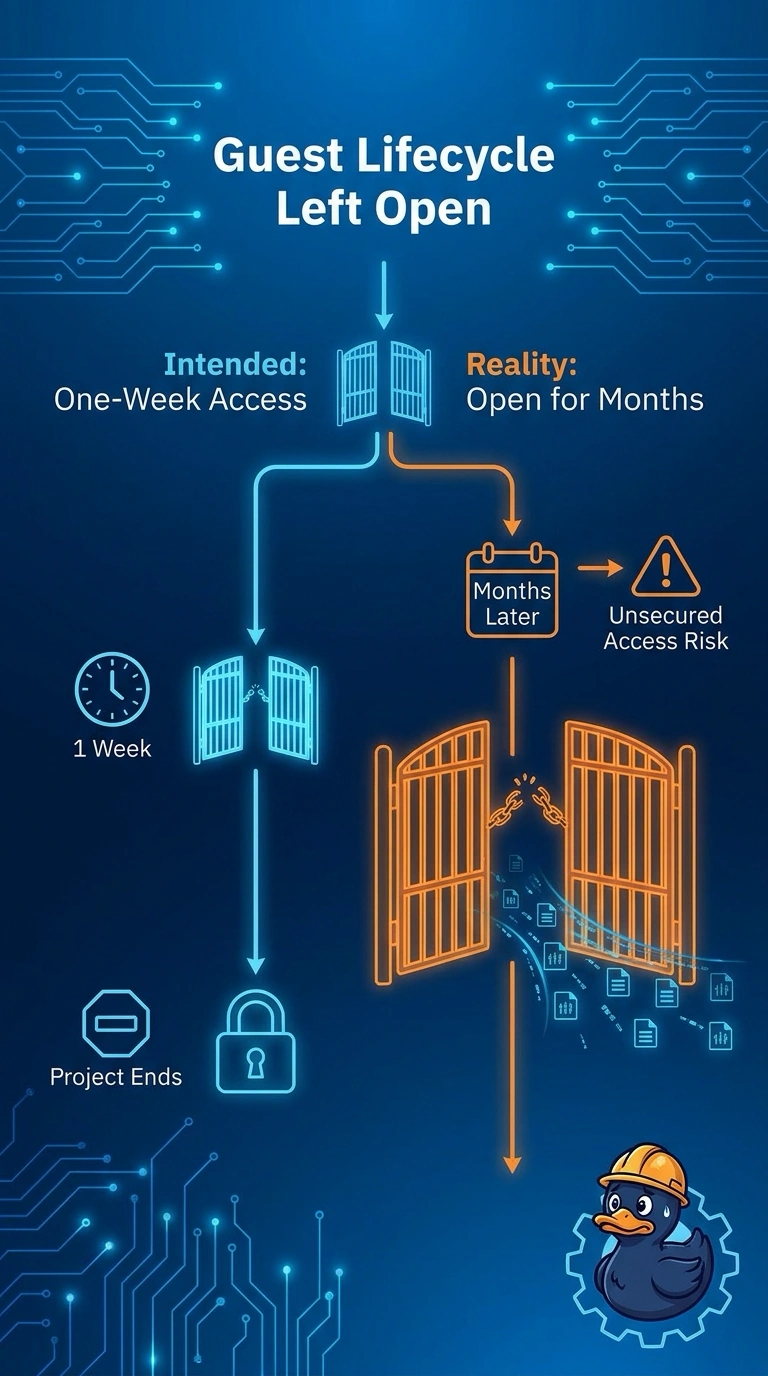
Think of a visitor badge that was printed for a short conference and is still opening doors months later. You treat this as a guest lifecycle that was left open after the project ended. The trap is calling it impossible travel, a leaked password, or a service account in a browser, when the story is a guest who was never removed.
Full Explanation
Identity intelligence includes a guest that was never removed as a signal for the access decision. A university guest invited for one week and still signing in months later is a guest lifecycle opened for one week and left open long after that project ended. Impossible travel across two identity providers in the same hour is a different signal, and this guest pattern does not match it. A leaked-password hit that should be ignored because the guest passed multifactor authentication last month both names the wrong signal and misuses an old prompt. Last month's success does not clear a current problem, and this problem is the open lifecycle. An interactive browser sign-in on a non-human service account that was never meant to use a browser describes a service identity, not a human guest who overstayed a project. Exam caveat: close the guest when the invitation ends, because sign-in success does not retire a lifecycle that was left open. Operational check: compare the invitation end with the latest sign-in, and disable the guest account if the project is over.