
A research lab user completes multifactor authentication in the morning, and later the same session token is replayed from a new network. What should identity evaluation do with that replay?
Select an answer to reveal the explanation.
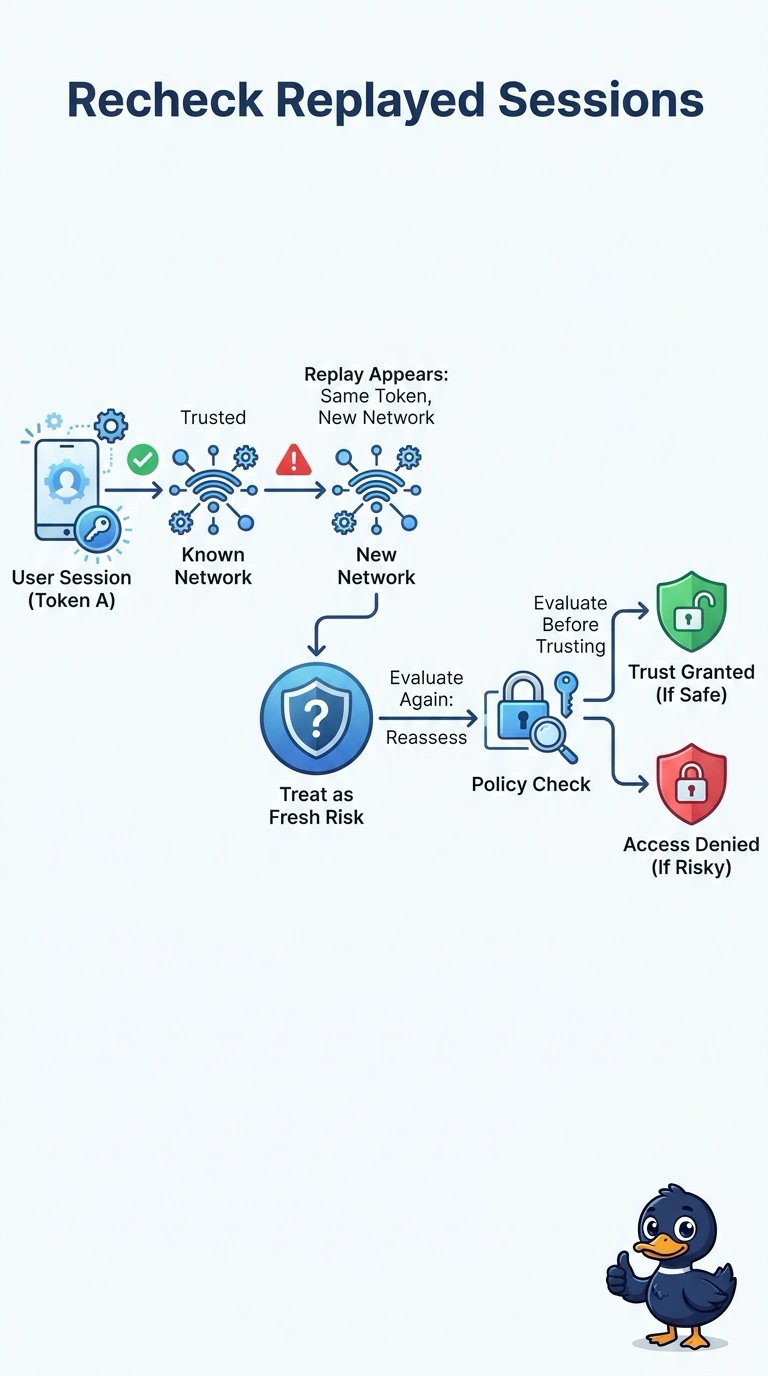
Short Explanation
Think of a day pass that someone photocopies and uses at a second gate. You treat the replay from the new network as fresh risk and evaluate that session again, because the morning success does not bless the rest of the day. The trap is letting one clean prompt, or a quiet application log, cancel the reuse.
Full Explanation
Continuous identity evaluation looks at the session as conditions change. A token replayed from a new network after a clean morning prompt is a new signal, and multifactor authentication once does not bless the rest of the day. You treat the replay from the new network as fresh risk and evaluate that session again before trusting it. Accepting the replay because the morning multifactor success blesses the session for the rest of the day freezes the decision at the first prompt. Ignoring the new network because a quiet application log cancels the identity signal about token reuse repeats a common mistake: a quiet application log does not cancel a bad identity signal. Replacing the directory with the risk feed and resetting the lab user's password inside that feed treats the feed as a directory. The feed informs the decision, and the directory remains the place the account lives. Exam caveat: a clean prompt is a point in time, not a pass for every later reuse of that session. Operational check: find the two uses of the token, compare the networks, and confirm policy stepped up or ended the replayed session.