
A hotel cloud posture report passed yesterday, and this morning a management port on a cloud virtual machine is exposed to the internet. Which approach detects that new exposure?
Select an answer to reveal the explanation.
Short Explanation
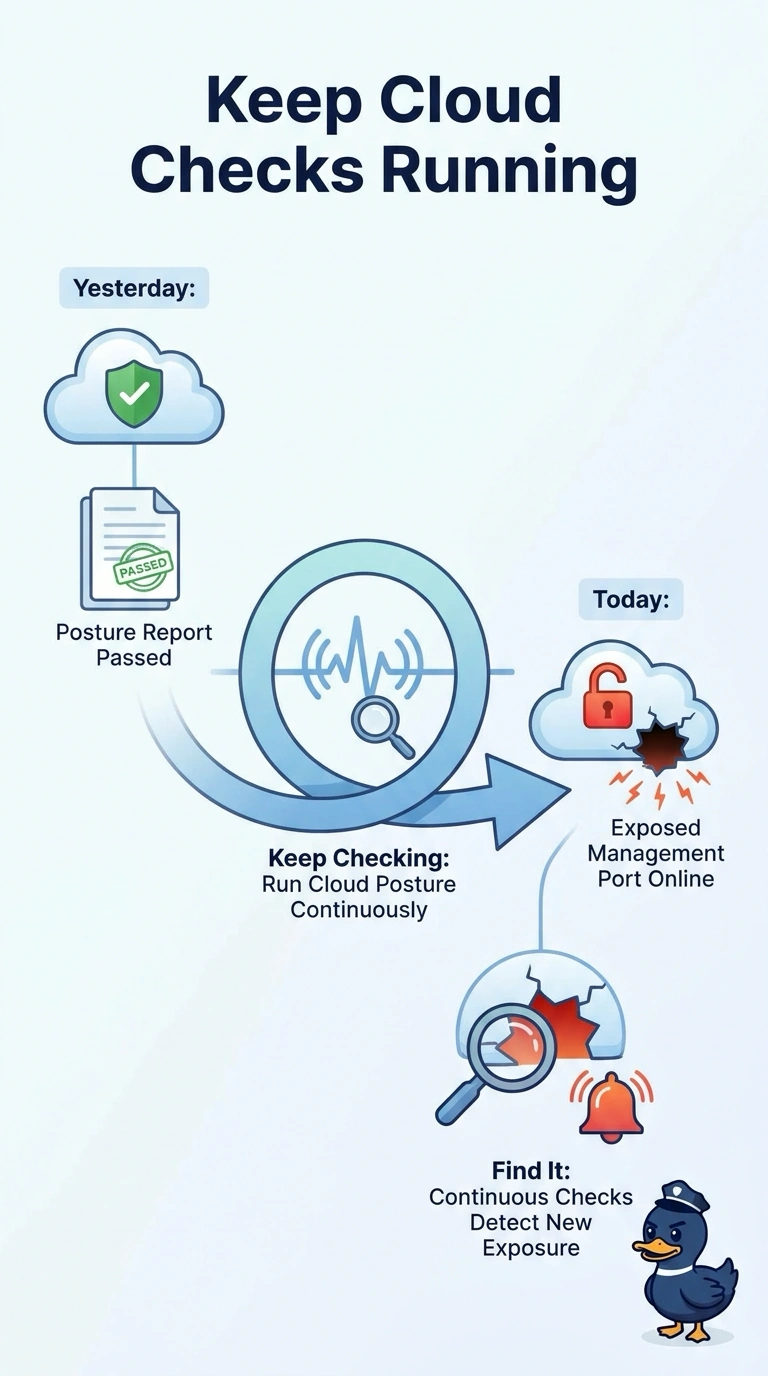
Yesterday's clean sticker on the door does not walk the floor for you this morning. You run cloud posture continuously so a management port exposed today is still found. The trap is archiving the old report, scanning for a malware hash, or watching a CPU graph.
Full Explanation
Posture is a current configuration finding. A report that passed yesterday describes yesterday's rules, not a management port that was opened after that report was saved. Continuous cloud posture rechecks the environment so today's exposed management port is found after yesterday's report already passed. Archiving yesterday's passing posture PDF freezes a point in time and treats that document as ongoing proof. A PDF does not see a change made the next morning. Scanning the hotel file share for a malware hash looks for a known bad file. An exposed management port is a configuration finding, not a malware verdict, and a hash scan will not notice the port. Watching the guest-network CPU graph tracks utilization. A busy processor is not the same signal as a management listener open to the internet, and a quiet CPU graph would hide the exposure rather than reveal it. Exam caveat: shared responsibility still leaves the customer owning the network rules they configure on infrastructure they run, even when yesterday's report looked clean. Operational check: compare this morning's posture findings with yesterday's PDF and confirm the new finding names the virtual machine and the exposed management port.