
A hospital imaging cluster is compromised, and the attacker queries the cloud metadata service from that workload to steal the role attached to the instance. Which mitigation matches this technique?
Select an answer to reveal the explanation.
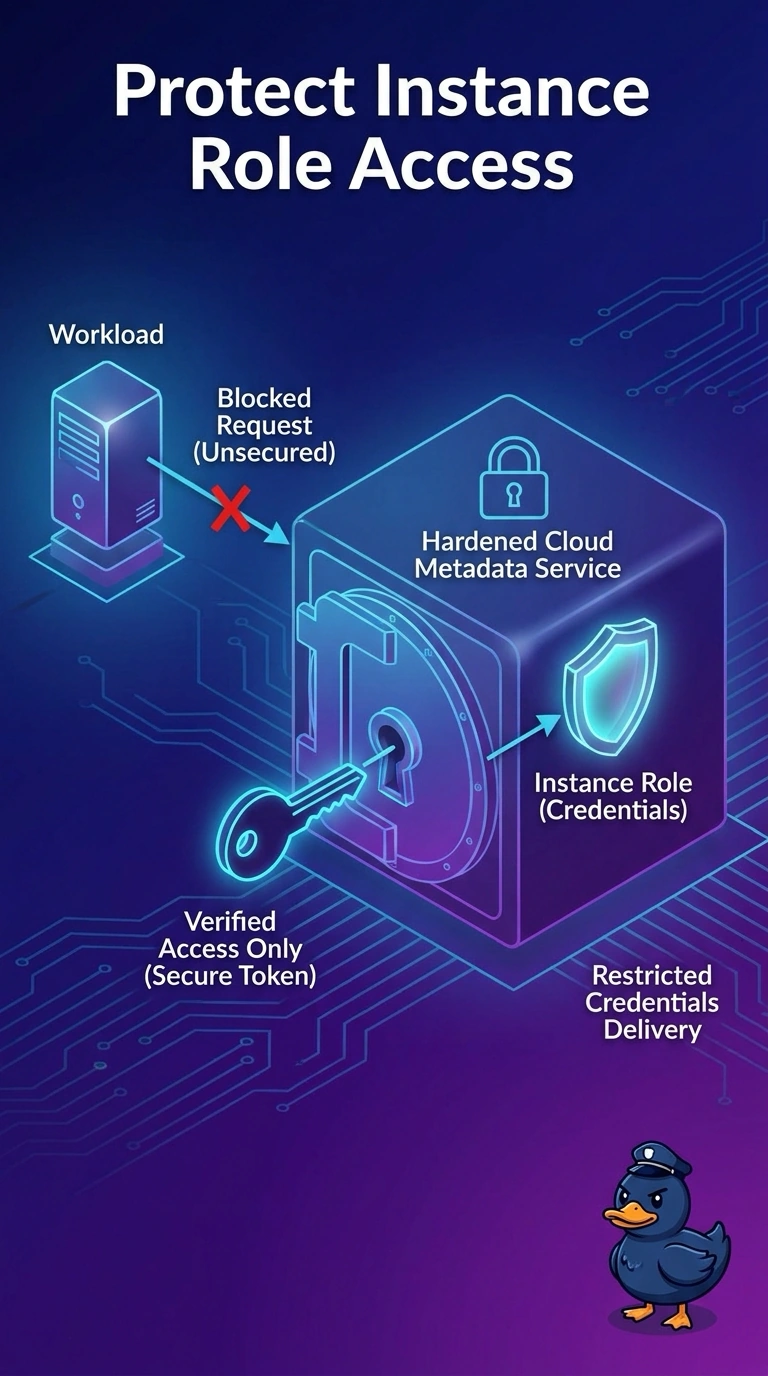
Short Explanation
Think of the metadata service as a coat-check window that hands a workload its own keys just for asking. You harden that window, because the attacker is already on the imaging host and is cashing in the attached role. The trap is an outbound mail scan that never watches a request staying on the machine.
Full Explanation
The imaging host is already compromised, and the call that matters is the one that host makes to the cloud metadata service to read the role attached to the instance. That is infrastructure abuse of instance roles and the metadata service, so the matching mitigation is hardened access to the cloud metadata service so this workload cannot freely read its attached instance role. An email data-loss rule that scans outbound hospital messages for imaging attachments and patient identifiers only sees mail that leaves the organization, and this theft never becomes a message. A web-category block that stops clinicians from opening public file-sharing sites constrains a browser destination on the proxy, not a metadata request from a compromised instance. A guest wireless policy that keeps visitor phones off the imaging subnet separates visitors from clinical systems and does not remove a role the workload can already request. Exam caveat: choose the mitigation that matches the cloud surface in the scenario, because a control built for mail, the web, or guests does not answer metadata role theft. Operational check: from a test instance in the imaging cluster, confirm a routine metadata query no longer returns usable credentials for the attached role, and review cloud audit events for unexpected use of that role.