
A materials lab sees storage-bucket access lists changed by sessions the identity provider still accepts as valid accounts. The sign-in investigation confirms those sessions used stolen credentials and an abused IdP consent grant. Which mitigation matches this abuse?
Select an answer to reveal the explanation.
Short Explanation
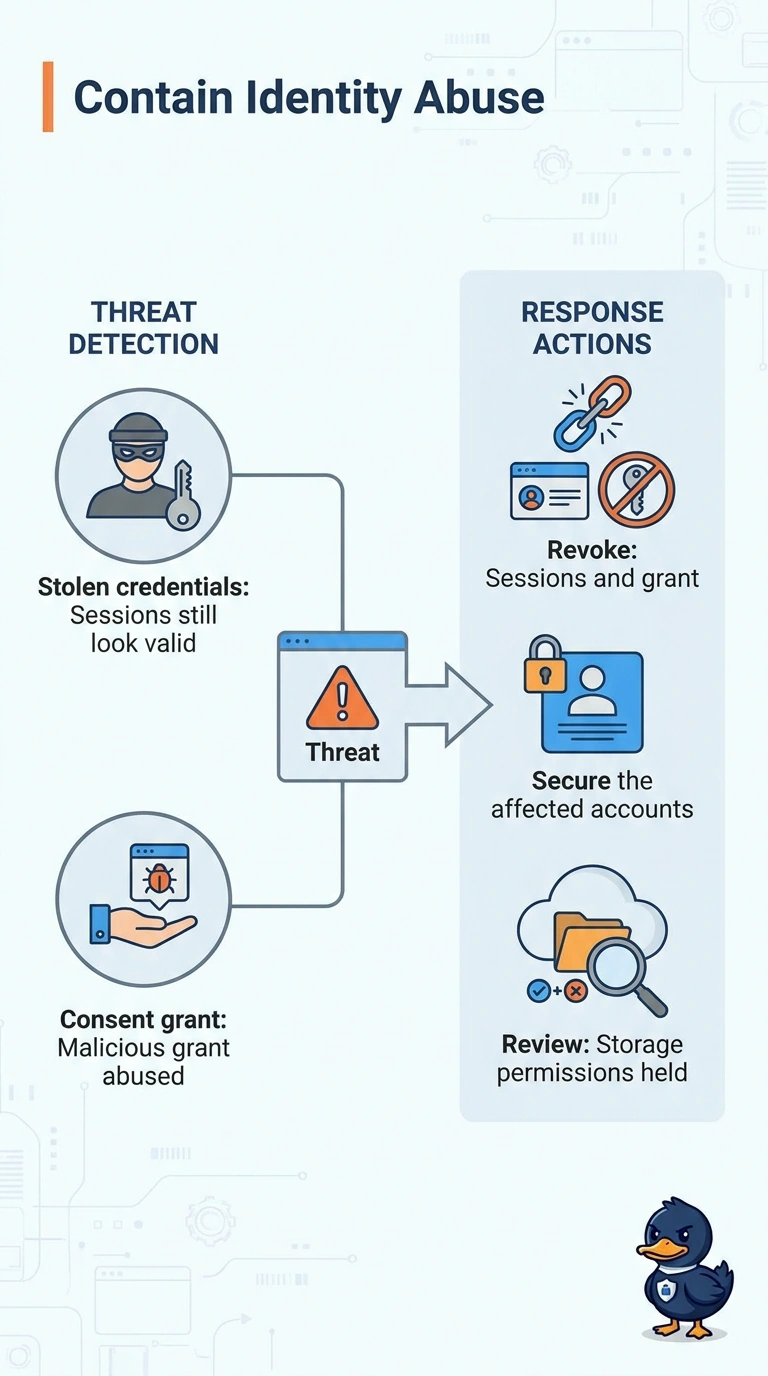
A stolen employee badge can rewrite who is allowed in while the door alarm stays quiet. You revoke the compromised sessions and the malicious grant, secure the affected accounts, and review what storage permissions those identities held. A subnet access list does not retire those sessions.
Full Explanation
The visible effect is a storage-bucket access-list change, but the sessions doing it are accounts the identity provider still accepts. The sign-in investigation confirms stolen credentials and an abused consent grant. The matching mitigation is to revoke the compromised sessions and the malicious grant, secure the affected accounts, and review which storage permissions those identities held. Moving the bucket into a private-cloud namespace fails because a namespace is not a security boundary until policy enforces it, and it does not fix the provider that is still issuing the sessions. Adding an email data-loss rule watches mail, not the sign-in that changed the bucket. Tightening only an infrastructure network access list on the storage subnet leaves the abused accounts able to act wherever that path is still allowed. Exam caveat: a control aimed at a different cloud surface does not answer the technique in front of you, and a network list alone does not retire a valid session. Operational check: line up identity-provider sign-in logs with the bucket changes, confirm the sessions and consent grant are revoked, and verify the accounts' storage permissions.