
Attackers stole the token-signing key from a warehouse company's identity provider and are forging session tokens for cloud applications. Which mitigation matches that identity-provider abuse?
Select an answer to reveal the explanation.
Short Explanation
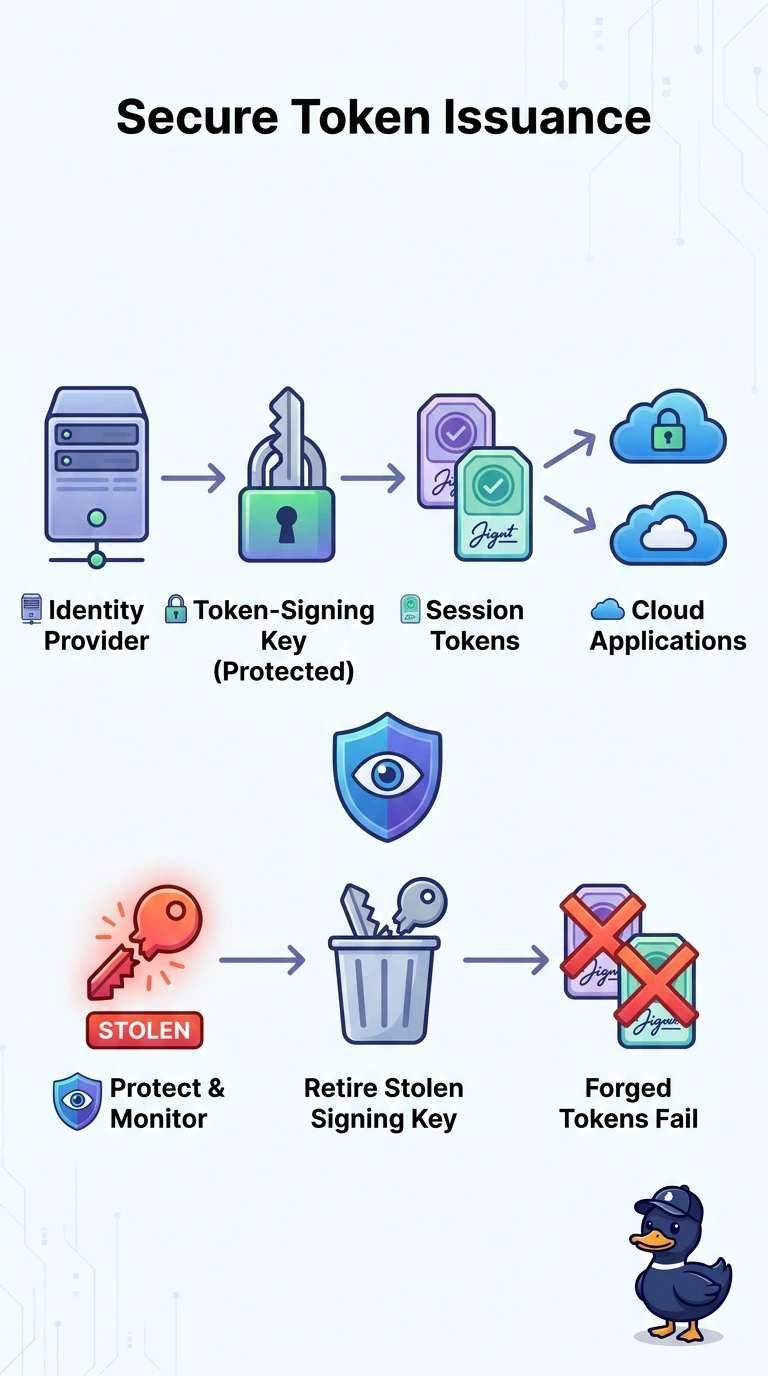
When a signing key is stolen, you need to protect and monitor the signing process, then retire that key so forged tokens stop working. Token signing is the issue here—not the client’s network traffic or account provisioning. You can verify the fix by confirming applications reject tokens signed with the retired key.
Full Explanation
Identity-provider abuse of this kind concerns token signing and session issuance. Protecting and monitoring that signing path, then retiring the stolen signing key, makes forged tokens fail validation because they no longer match a trusted key. Installing a host firewall on each cloud-application client filters traffic at the workstation but leaves the stolen key active, so a forgery signed with it may still be accepted. Blocking the legitimate cloud vendor domain in DNS makes the real application unreachable; it does not distinguish a forged token from a genuine session or revoke the key. Rotating the account-provisioning token changes the secret used to create users, but leaves token signing and session issuance on the compromised key. Exam caveat: these controls address different parts of identity management; rotating a provisioning token does not substitute for retiring a stolen signing key. Practical check: confirm the old signing key is removed from the issuer metadata trusted by the applications, then verify that a token signed with the retired key is rejected while a token signed with the replacement key still works.