
After a valid sign-in to a utility cloud mail service, an attacker adds a mailbox rule that hides security messages from the mailbox owner. Which mitigation matches that abuse?
Select an answer to reveal the explanation.
Short Explanation
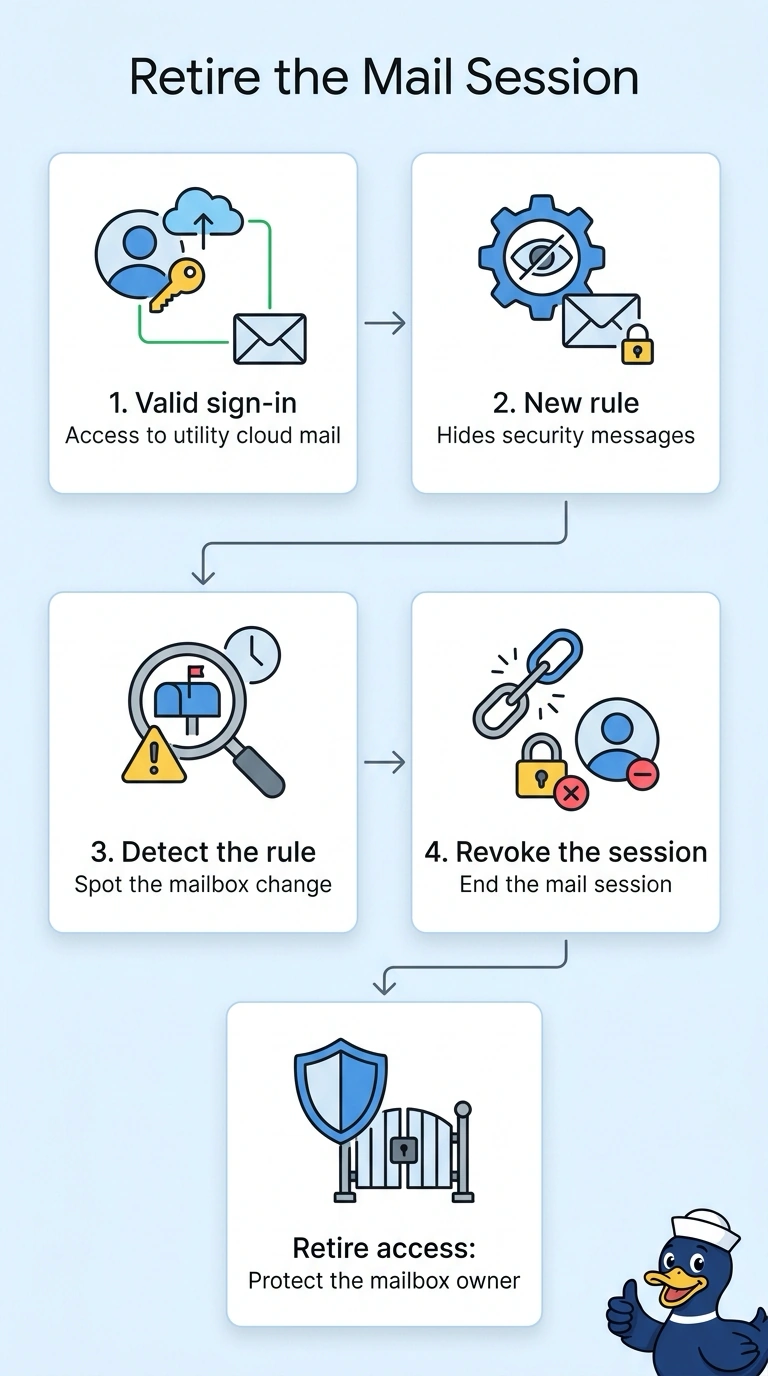
Someone with a valid mailbox can still file your alerts under junk. After a real login, the attacker hid security mail with a mailbox rule, so you detect that rule and revoke the session. Encrypting the laptop disk does not see a rule that lives in the mail service.
Full Explanation
SaaS abuse of this kind is a mailbox rule created after a valid sign-in. Detect the new mailbox rule and revoke the mail session, which matches SaaS mailbox-rule abuse after a valid sign-in and retires that session. Full-disk encryption on the employee laptop protects stored bytes and does not remove a mailbox rule in the mail service. The rule is not on the disk. Least privilege on a cloud instance role limits snapshot export and does not govern mailbox rules in the mail service. That control matches infrastructure snapshot abuse, not mail. A security group between cloud subnets limits tiers inside one cloud and does not inspect mailbox rules. A network rule inside one cloud does not see a mail-rule change. Exam caveat: a valid login is not proof that later mailbox changes are benign. Identity-provider abuse, SaaS mail abuse, and infrastructure abuse are different surfaces. Operational check: alert on mailbox-rule creation in the utility mail tenant and confirm the response revokes the session that created the hiding rule.