
A university research laptop uses client-based zero-trust access, and the campus firewall blocks outbound 443 traffic to the documented Secure Access zero trust endpoints, so the client cannot connect. What should the network team change?
Select an answer to reveal the explanation.
Short Explanation
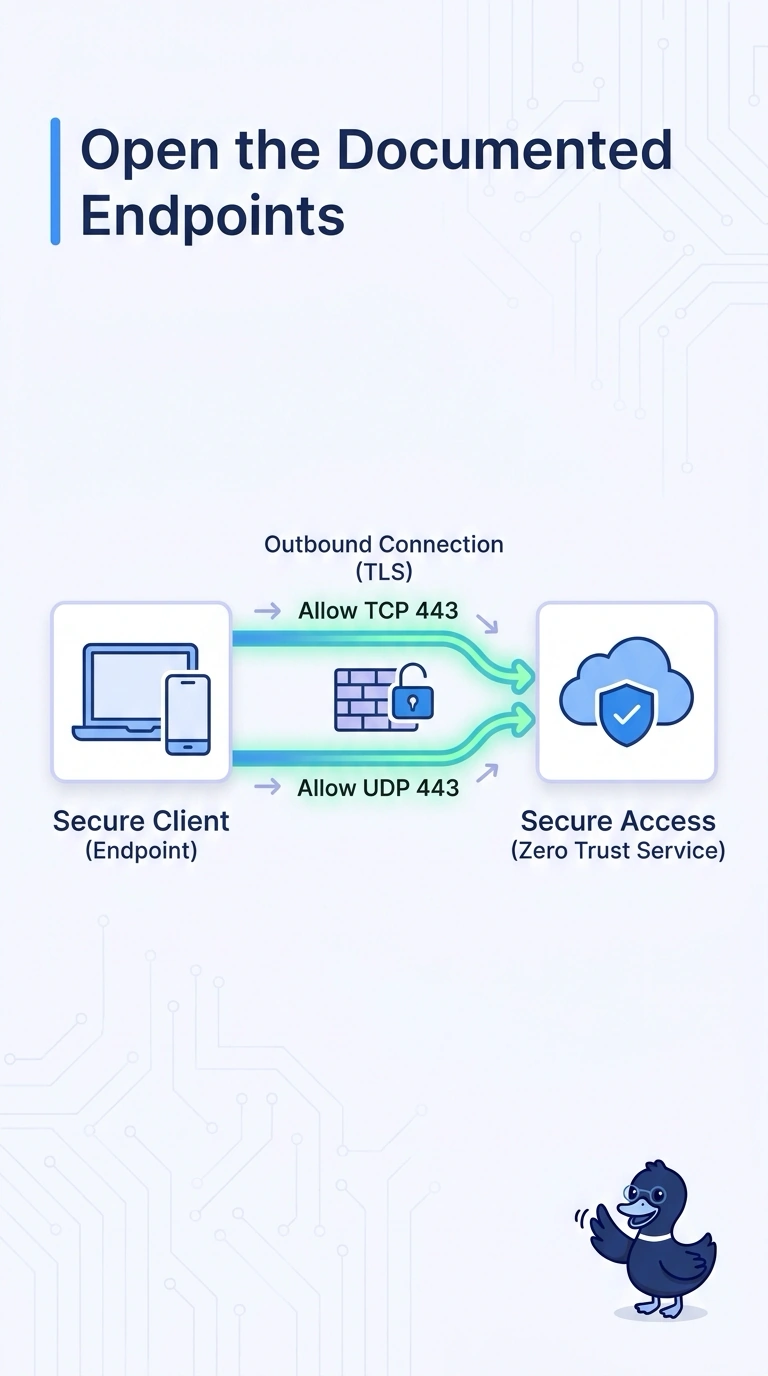
When the main gate is locked, you ask security to open it, not borrow a stranger's car. The documented requirements list the TCP 443 and UDP 443 destinations the client needs, so you allow those. An unmanaged public proxy is not private access.
Full Explanation
Client-based zero-trust access depends on outbound connectivity from Secure Client to the Secure Access zero trust endpoints, and the network requirements document lists TCP 443 and UDP 443 destinations. When a campus firewall blocks that traffic, the fix is to allow the documented outbound TCP 443 and UDP 443 destinations. An unmanaged public proxy chosen by the user leaves the security service edge, and any proxy the user picks is not private access. A clientless browser bookmark is a web path for HTTP and HTTPS. It does not replace the client connection for every TCP and UDP application the laptop uses. A hosts-file override for the private application name changes local name resolution. A local name entry does not open a blocked network path to the service edge. Exam caveat: allowing the documented endpoints restores client-based access through Secure Client; it is not a reason to treat browser-only users who have no client as covered. Operational check: after the firewall change, confirm the laptop connects and opens the same private application it reached before the block, and review the firewall log for permitted traffic to the documented destinations.