
A university library wants off-campus staff to reach a private catalog service that speaks only a non-web TCP protocol. Secure Client is not installed, and clientless access was proposed. What should the library do instead?
Select an answer to reveal the explanation.
Short Explanation
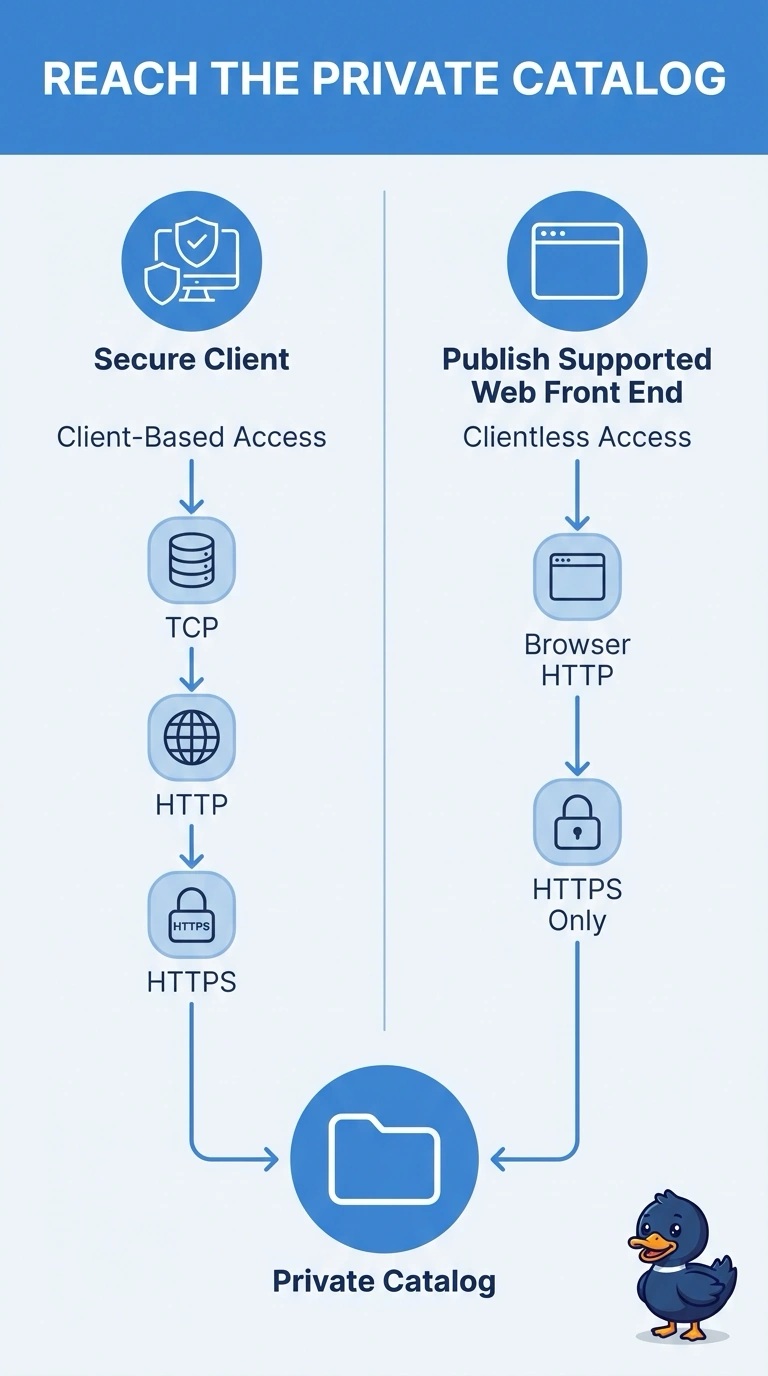
A walk-up window serves coffee, not freight. Clientless access is a browser path for ordinary web traffic, and this catalog service is a non-web TCP protocol with no Secure Client installed, so you install the client or put a supported web front end in front of it. The trap is expecting the browser session to grow a custom protocol.
Full Explanation
Clientless zero-trust access is a browser path for HTTP and HTTPS. It does not place the user on the network, and it does not carry an arbitrary TCP protocol. The library should install Secure Client for client-based access, or publish a supported web front end, because clientless access carries only browser HTTP and HTTPS. Adding the catalog name to the protected resolver can make a DNS lookup succeed for clients that use that resolver. A successful name answer does not teach the browser path how to speak the catalog protocol. Keeping clientless access and only changing the VPN authorization assumes the browser path already carries every TCP and UDP application. It does not. VPN authorization changes a different access method and does not widen the clientless web path. Assigning the staff a full-tunnel pool address inside the browser session describes a network attachment the clientless page does not provide. That address would not make the page carry the catalog protocol. Exam caveat: a later supported web front end can be reached without Secure Client, while the non-web catalog service itself stays off the browser path. Operational check: from a PC without Secure Client, confirm the catalog port does not open through the browser, then confirm it opens after the client is installed or through the supported web front end.