
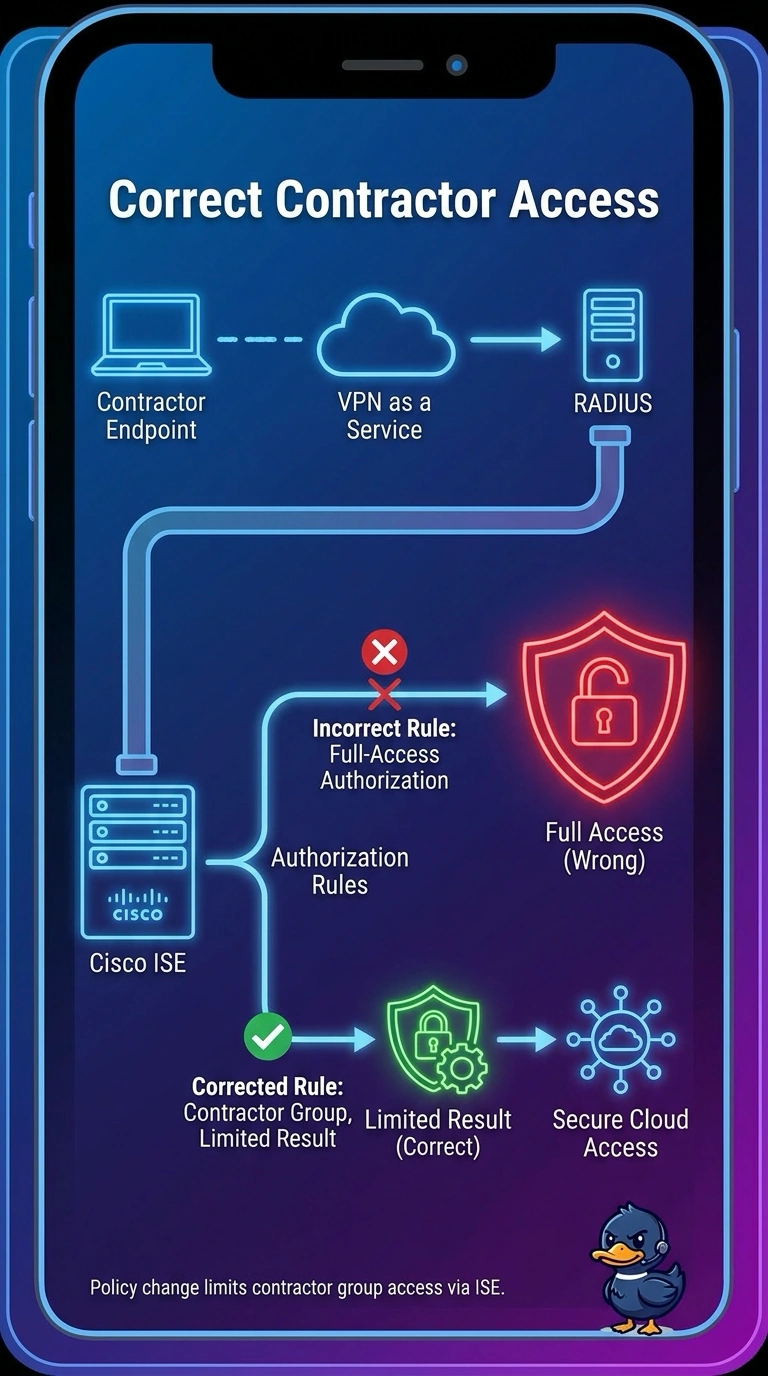
Contractors at a school district complete VPN as a service sign-in and receive a full-access authorization. Cisco ISE is the RADIUS server that returns that result. Which change corrects what the contractors receive?
Select an answer to reveal the explanation.
Short Explanation
The badge printer is stamping contractor badges with the staff logo. ISE is returning a full-access VPN authorization, so you correct the authorization rule that produces that result. A new name blocklist does not change what the RADIUS server hands back.
Full Explanation
ISE is the RADIUS server for this VPN as a service, so the full-access result contractors receive is the authorization rule ISE is returning. Correct the ISE authorization rule that returns full access so the contractor group receives the limited result instead. Adding a DNS blocklist for contractor domains changes name resolution for clients that use the school resolver. The resolver result is not what ISE returns as the VPN authorization. Replacing the SAML signing certificate rotates the key that signs the login assertion. A new signing key does not force ISE to return a limited authorization. The authorization rule still says full access. Running a ThousandEyes path test from a contractor laptop measures the path. A degraded path does not change the authorization result ISE returns, and path evidence does not grant or deny the VPN session. Exam caveat: correcting the rule for the contractor group should leave the staff result intact when those identities are separated. Operational check: authenticate a test contractor and a test staff account and confirm ISE returns the limited result only for the contractor.