
A school library sends its private catalog application out the internet breakout instead of toward the resource connector or the network tunnel, so students never reach the catalog. What should be changed?
Select an answer to reveal the explanation.
Short Explanation
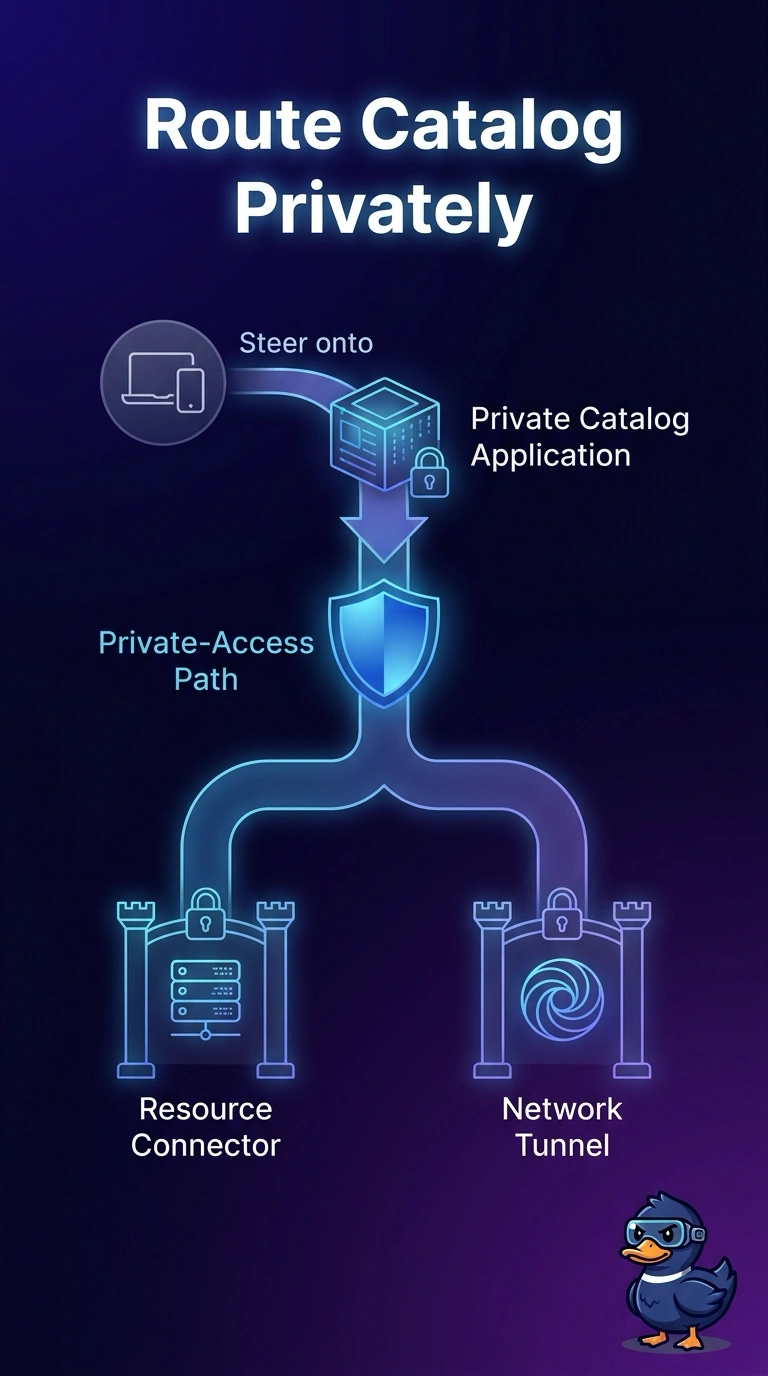
A private package tossed onto the public highway does not arrive at the loading dock out back. You steer the catalog destination onto the private-access path toward the connector or the tunnel. Publishing a public address keeps the traffic on the breakout you already have.
Full Explanation
Private application traffic has to be steered toward the resource connector or the network tunnel. Sending the catalog out the internet breakout never presents it to that private-access path, so students cannot reach an application that is not on the public internet. Steering that private catalog destination onto the private-access path is the change that puts the flow toward the connector or the network tunnel. Keeping the internet breakout and publishing a public address makes the catalog a public service, which abandons the private design instead of steering it. Adding the carrier-grade range 100.64.0.0/10 on the library network copies an IPsec static-routing checklist item into a breakout path. That range is not what pulls a private destination off an internet breakout, and a connector design does not need it inside the customer network. A hosts-file override that sends the catalog name to a public resolver only changes name lookup. It does not steer the destination into private access, and a hosts-file override is outside the protected resolution path. Exam caveat: if a connector group for this application is reachable and the request still fails, traffic does not fall back to a tunnel on its own. The steering decision still has to point at the right private path. Operational check: from a library workstation, open the catalog and confirm the flow is headed to the connector or the tunnel, not out the internet breakout.