
A factory reaches a private maintenance application through one resource-connector virtual machine, and an outage of that virtual machine takes the application offline for every user. Which change removes that single point of failure?
Select an answer to reveal the explanation.
Short Explanation
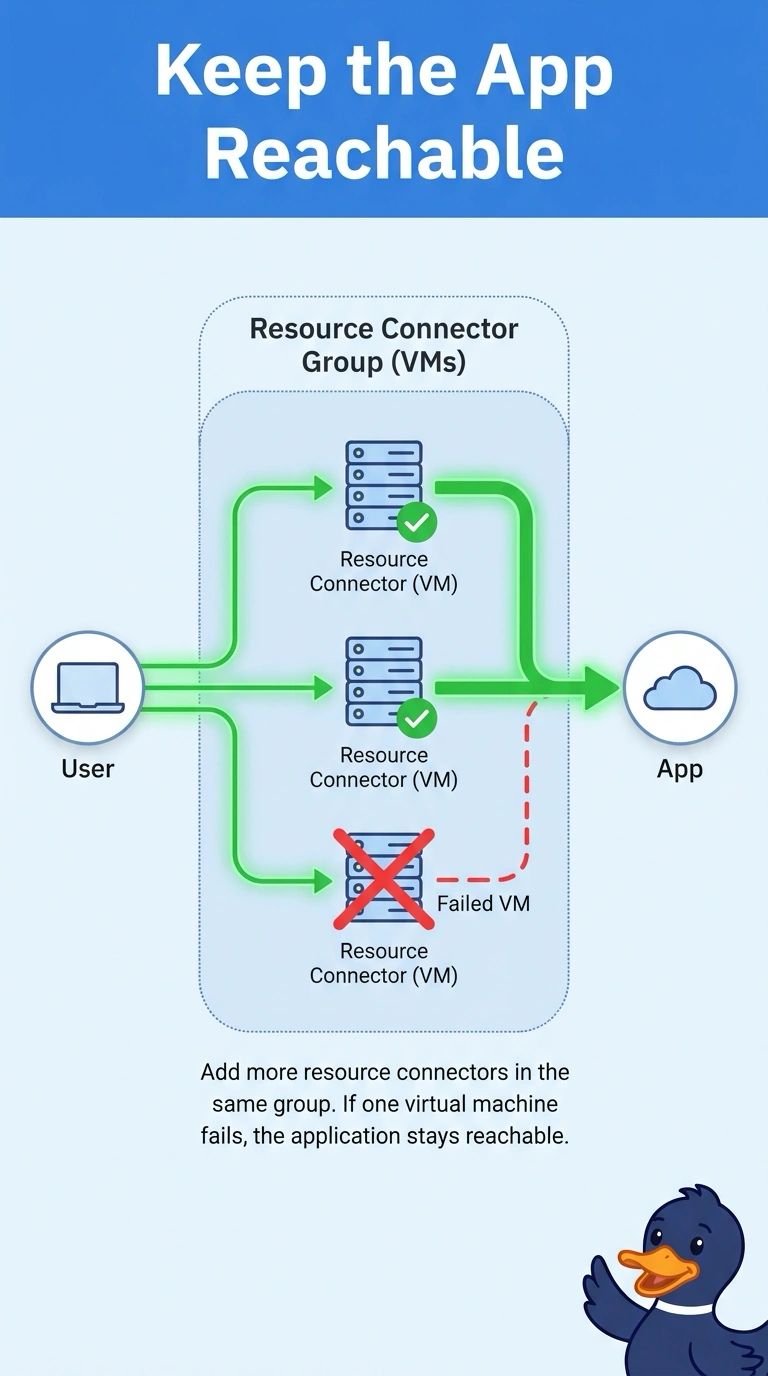
You can think of the connector as a generator with no spare: if it stops, the plant goes dark. Add more resource connectors in the same group so the maintenance application stays reachable if one virtual machine fails. A public port forward would replace private access with an exposed application.
Full Explanation
A resource connector is a virtual machine inside your network that makes outbound connections and exposes the private resources you specify. With only one connector, its failure makes the maintenance application unavailable to every user. Adding more resource connectors in the same group removes that single point of failure: if one virtual machine fails, another connector can keep the application reachable without changing the private-access design. Replacing the connector group with a public port forward would expose the application to the internet rather than keep it private behind the connector. Publishing the application on a public address for users to reach when the virtual machine is down creates the same exposure as a fallback and encourages users to bypass private access. Opening UDP 500 and 4500 on the application server misunderstands their role: those ports are the optional allowance for the IPsec tunnel path, which resource connectors do not use. Exam caveat: if every connector in the group is unreachable, a network tunnel that also serves the resource can carry the traffic; that fallback is not a reason to remove the group or expose the application publicly. Practical check: stop one connector virtual machine and confirm that users can still reach the maintenance application through another connector in the same group.