
A school engineer proposes putting a public address on a private grading application so remote staff can find it. How should that application be published for private access?
Select an answer to reveal the explanation.
Short Explanation
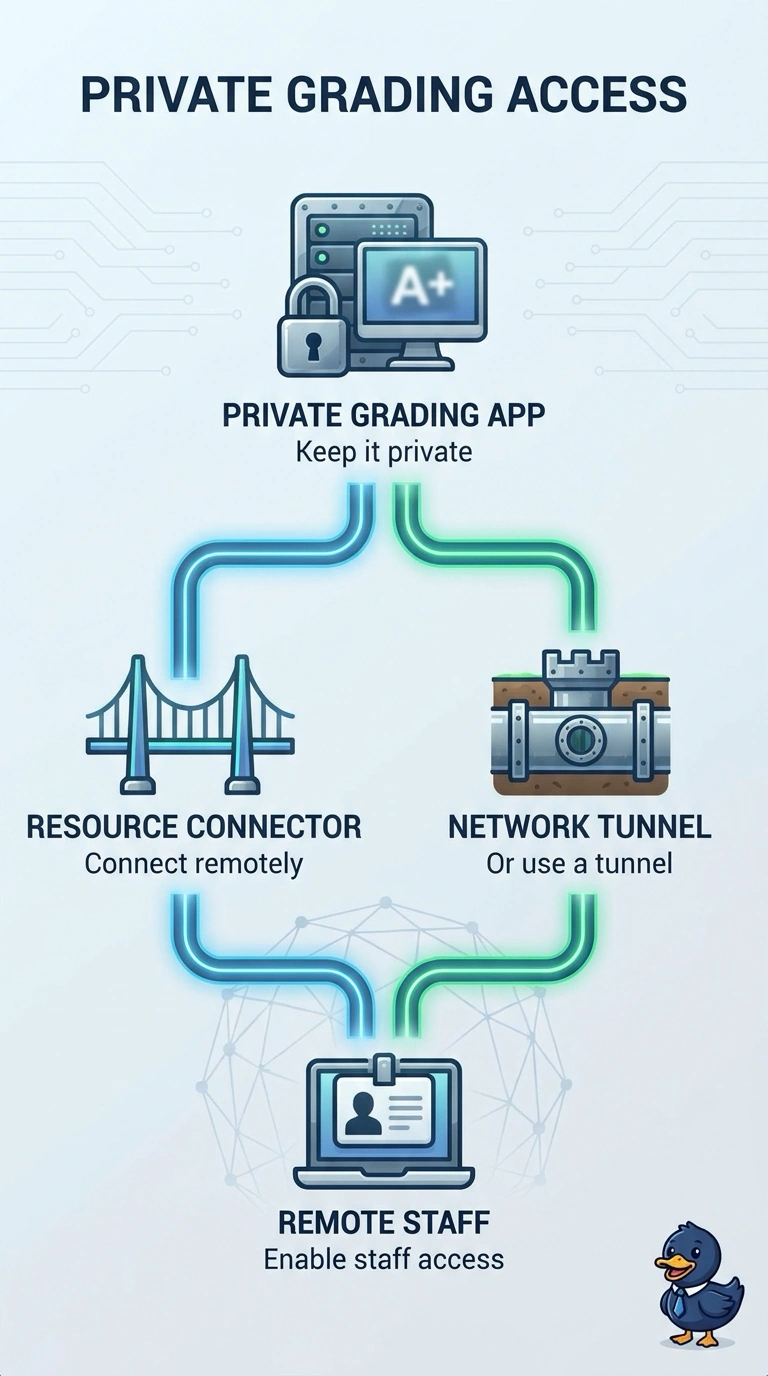
You do not nail a private office onto the public street just so couriers can read a number. You keep the grading application private and publish it through a connector or a tunnel. The trap is requiring a public address before private access is allowed to publish it.
Full Explanation
Private access publishes an application that stays private. Keep the grading application private and publish it through a resource connector or a network tunnel. Do not require a public address for that design. A public address on the grading application, required before either a connector or a tunnel is allowed to publish it, adds an exposure the connector and the tunnel are meant to avoid. A hosts-file mapping on each staff laptop, leaving the grading application unpublished on any private path, only renames the destination on that one laptop and does not publish the app for remote staff. A guest internet category, used as the control that publishes this private grading service to remote staff, is a web filter for internet destinations, not a way to publish a private application. Exam caveat: connector and tunnel private access do not need a public address on the application. A public address is a different, more exposed design. Operational check: remove any proposed public address, publish the grading app through the connector or the tunnel, and confirm a remote staff member reaches it without a public destination.