
Remote-access users at a bank can open an IPsec session into Cisco Secure Access, but servers have no return path because static routes omit the client pools. What should those tunnel routes include?
Select an answer to reveal the explanation.
Short Explanation
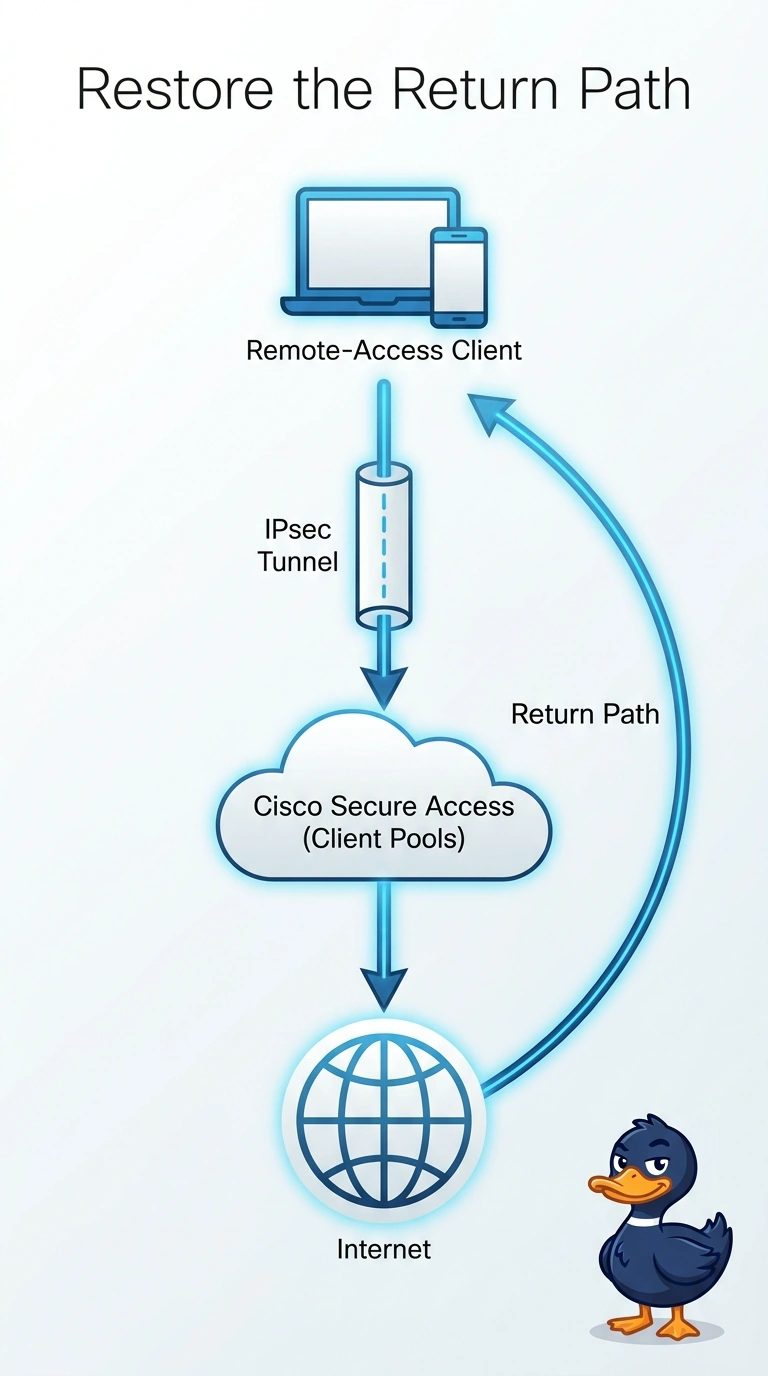
Return mail needs a real sender address, or the reply has nowhere to land. You add the remote-access client pools to the static routes for this IPsec tunnel. The trap is injecting the carrier-grade range into a connector-only network, which does not build the missing return path.
Full Explanation
Static routing for an IPsec private-access tunnel has to include the remote-access client pools, or VPN users have no return path from the private applications. Those tunnel routes should include the remote-access client pools, so VPN users have a return path across this IPsec private-access tunnel. The carrier-grade range 100.64.0.0/10 inside the bank network, because this design uses only resource connectors, applies the wrong checklist to the wrong design. That range is part of the IPsec static-routing checklist, and resource-connector designs do not need it inside the customer network. Adding it here also does not restore the omitted client pools. A hosts-file entry on each laptop so the private names resolve without any return route for the clients fixes naming, not the missing return route. UDP 500 and UDP 4500 openings on a resource connector, which is not the path these VPN users are missing, permits ports connectors do not use and does not install the pools. Exam caveat: missing client pools on an IPsec tunnel explain one-way VPN access. Do not answer that symptom with a connector-only routing item. Operational check: compare the tunnel's static routes with the remote-access pools and confirm return traffic for a connected VPN client is routed back across the tunnel.