
A hotel resource connector cannot resolve the private reservation application's name, so zero-trust access fails, while laptops on the LAN still resolve that name. What should be restored?
Select an answer to reveal the explanation.
Short Explanation
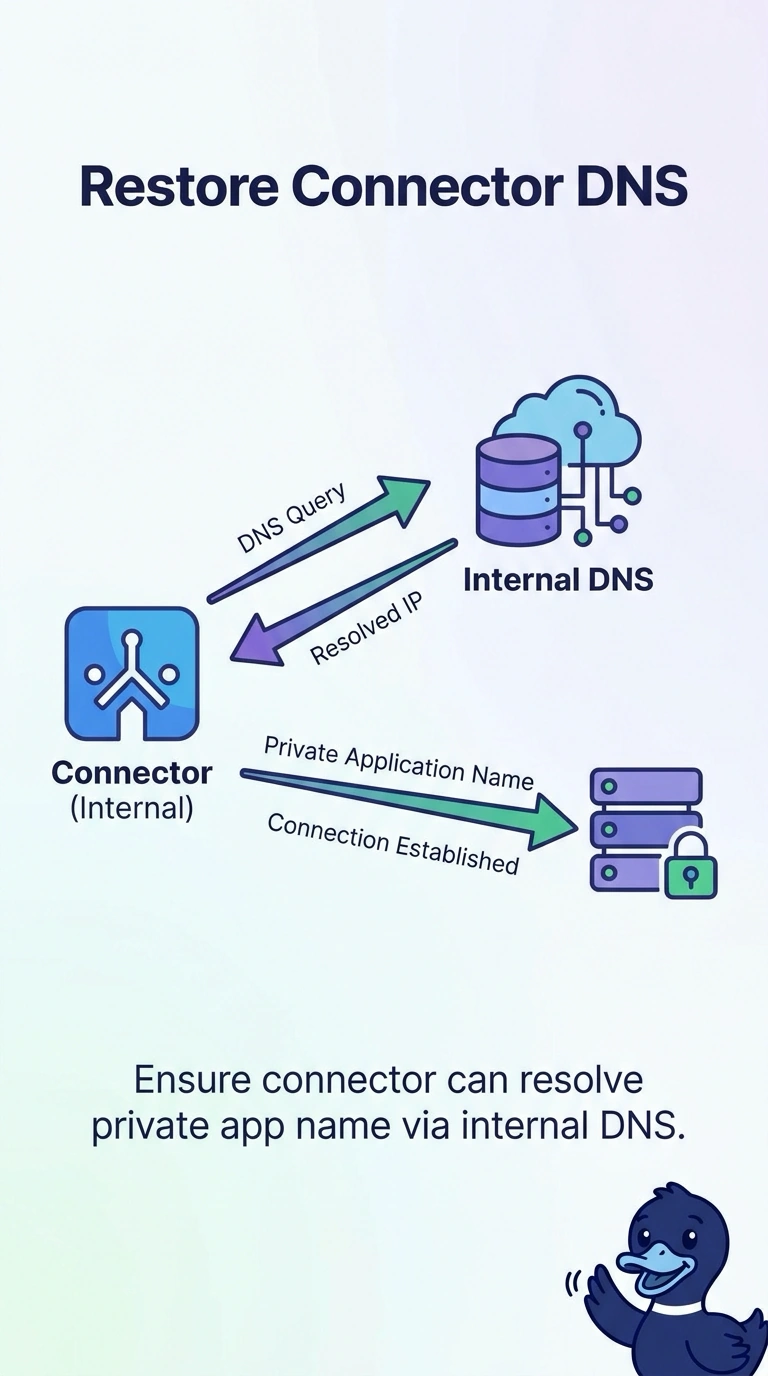
If the front desk cannot read the staff directory, a sticky note on a guest phone does not fix the desk. You restore internal DNS reachability from the connector so the connector can resolve the name. The trap is a hosts-file change on the laptop, which does not update the connector.
Full Explanation
The resource connector resolves the private application name from inside the network. If that connector cannot resolve the reservation name, you restore internal DNS reachability from the connector so the connector can resolve the private application name. A hosts-file change on each guest-services laptop, which does not repair name resolution on the connector itself, fixes the wrong machine. Users already resolve the name. The connector does not. An opening for UDP 500 and UDP 4500, the IPsec ports a resource connector does not use to resolve this name, permits tunnel negotiation that this failure is not using. A public web-category exception for a destination this private connector lookup does not send to the web gateway edits a proxy rule the connector lookup never hits. Exam caveat: connector DNS is the connector's problem. A client hosts file and an IPsec port allowance answer different designs. Operational check: from the connector host, resolve the private application name and confirm the answer is the internal address the connector is meant to reach.