
Two warehouse sites reuse the same private addresses for different inventory applications. How should private access tell those applications apart?
Select an answer to reveal the explanation.
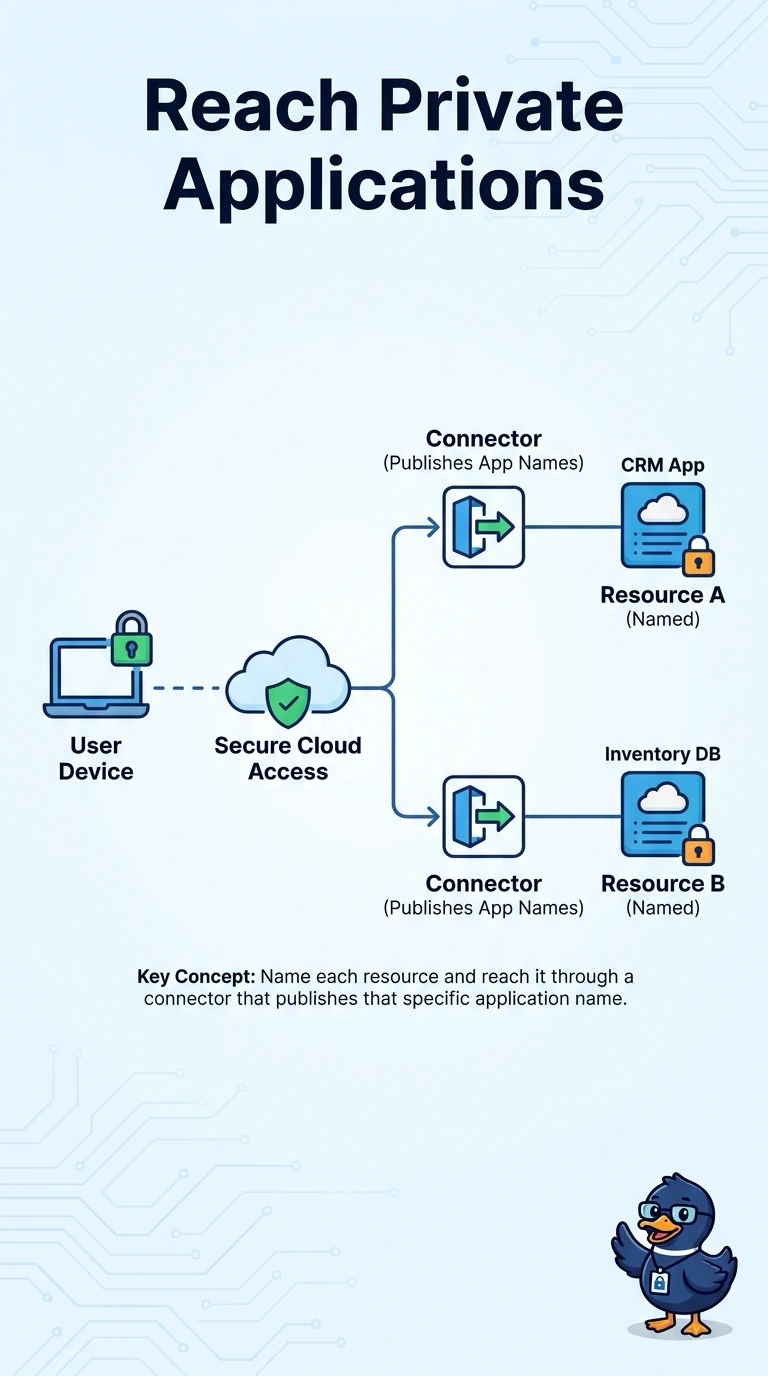
Short Explanation
Two apartments that share a street number need names on the doors, not a second copy of the same road. You name each resource and reach it through a connector that publishes that name. The trap is routing one identical subnet into two IPsec tunnels and hoping the tunnels sort the sites.
Full Explanation
Overlapping private addresses are separated by naming the resource, not by installing the same subnet in two places. Name each resource and reach it through a connector that publishes that specific application name, so each inventory application is selected by name. If you route that identical subnet into two IPsec tunnels and expect the tunnels to separate the two warehouse sites, both tunnels advertise the same range and the flows are not distinct. Give each inventory application a public address so users choose the site by an internet destination and you have published private apps onto the internet, which this design does not require. Place both warehouse sites under one web category and filter them as ordinary internet destinations and you are using a web control on traffic that is not a public website. Exam caveat: overlapping sites are an application-naming problem for private access. Routing the same subnet twice does not create two identities. Operational check: publish each inventory app by its private name on the connector for that site, and confirm a user reaches the intended site by that name.