
An airline branch IPsec tunnel to Cisco Secure Access stays down because the edge blocks UDP 500 and UDP 4500 toward Secure Access. What should be permitted for this tunnel?
Select an answer to reveal the explanation.
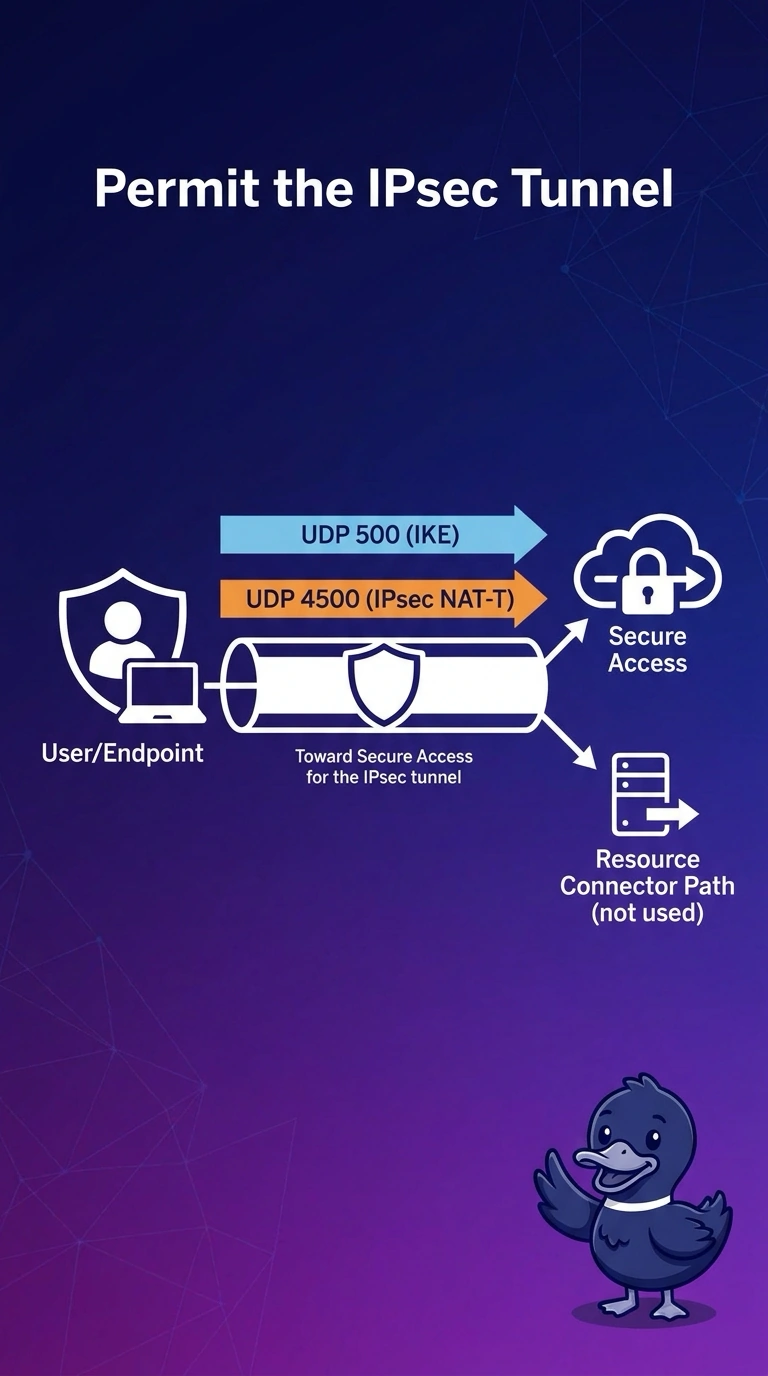
Short Explanation
A tunnel door uses a specific knock, and blocking that knock keeps the door shut. You permit UDP 500 and UDP 4500 toward Secure Access for the IPsec path. The trap is opening those ports for a resource connector, which does not use them.
Full Explanation
This branch tunnel is IPsec, and the optional allowance that lets that negotiation reach Cisco Secure Access is UDP 500 and UDP 4500. Permit UDP 500 and UDP 4500 toward Secure Access for the IPsec tunnel, a path a resource connector does not use. Those same UDP ports toward a resource connector, treating the connector as the component that negotiates this IPsec tunnel, aim the allowance at the wrong component. Connectors make outbound connections of their own and do not use that IPsec port allowance. A hosts-file edit on crew laptops, offered as the change that will bring up a tunnel the edge firewall is blocking, changes name resolution on the clients and does not open the blocked negotiation. A web-category change that classifies the tunnel negotiation packets as ordinary allowed crew browsing treats IPsec as if it were web traffic the secure web gateway categorizes. Exam caveat: UDP 500 and UDP 4500 belong to the IPsec tunnel path. They are not a connector requirement and they are not a web category. Operational check: on the edge, permit that UDP path toward Secure Access and confirm the IPsec tunnel establishes.