
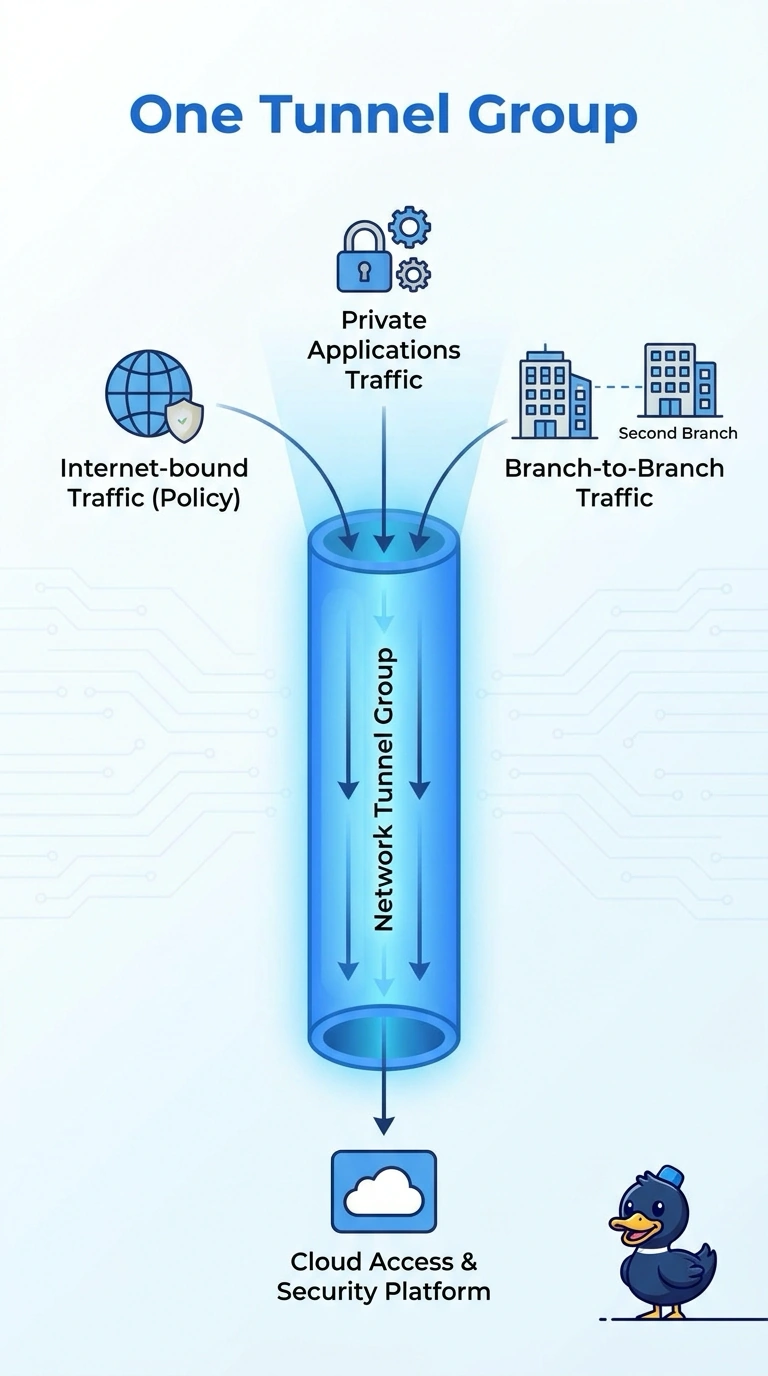
A warehouse branch must send internet-bound traffic for policy, reach private applications, and communicate with a second branch. Which access method carries all three?
Select an answer to reveal the explanation.
Short Explanation
One truck lane has to carry the city deliveries, the private dock, and the run to the other warehouse. You use a network tunnel group, because that path can carry internet-bound traffic, private applications, and branch-to-branch traffic. The trap is a connector or a browser session that was built for a narrower job.
Full Explanation
A network tunnel group uses IPsec with IKEv2 and can carry internet-bound traffic for policy, private traffic, and branch-to-branch traffic, which is the combination this warehouse branch needs. A resource connector exposes named private applications for zero-trust access and does not forward branch-to-branch traffic between warehouses. Clientless zero-trust access is a browser path for HTTP and HTTPS and does not place the branch router on the network or carry non-web flows for the site. DNS security on the protected resolver can block a name and does not steer private applications or branch-to-branch flows. Exam caveat: a connector is preferred when it and a tunnel both serve the same private resource and the connector group is reachable, but a connector still does not add branch-to-branch forwarding. Operational check: from the branch, confirm an internet policy hit, a private application session, and a flow to the second branch all appear on the tunnel. Those three routes have to point at the tunnel group or the traffic never arrives there.