
A school technology team sees a new internet collaboration application in its shadow findings and wants to control it with a private-access resource connector. What actually governs that internet application?
Select an answer to reveal the explanation.
Short Explanation
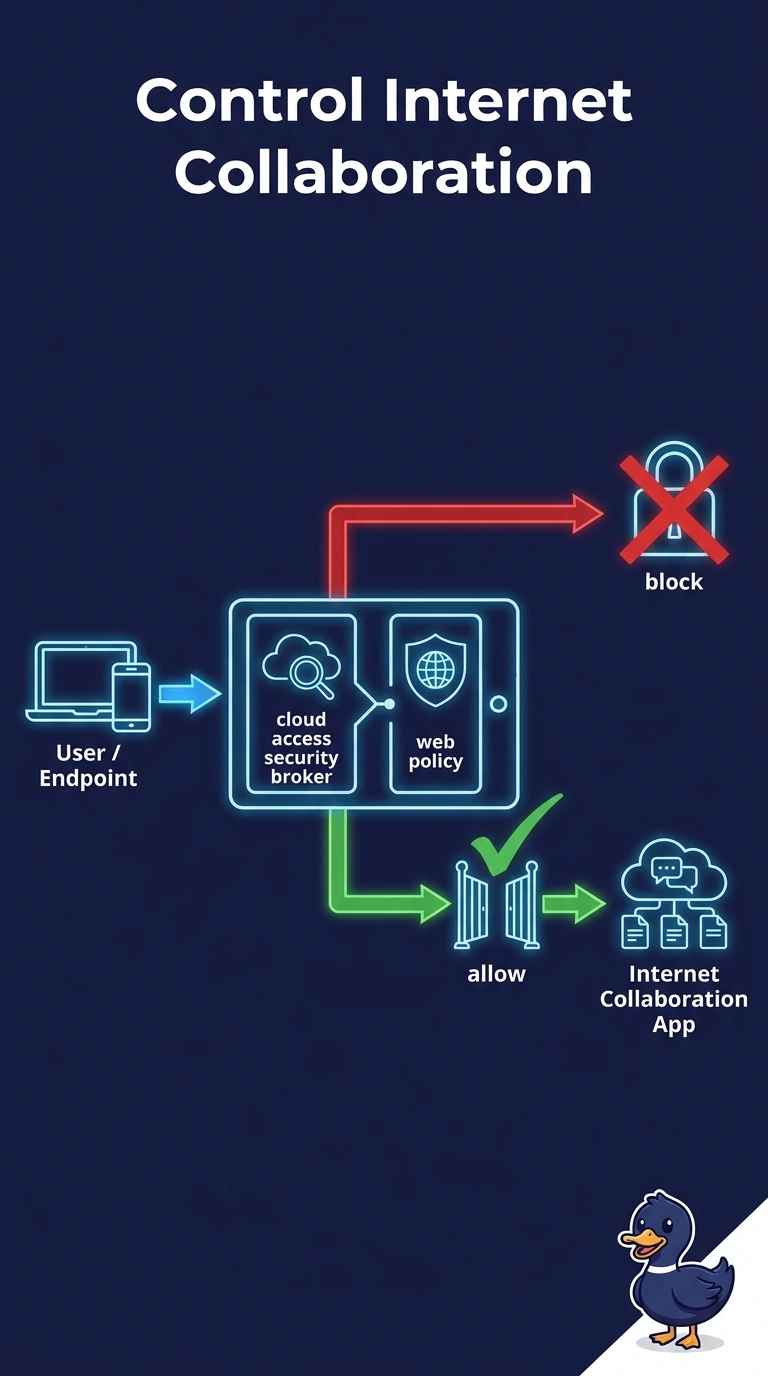
A public website is not a room inside the school, so a key to the back hallway does not govern it. You use a cloud access security broker or a web policy, because that is what can allow or block an internet application. The trap is standing up a private connector, a tunnel, or a browser path and calling the shadow finding solved.
Full Explanation
Shadow findings of an internet collaboration application are handled by a cloud access security broker or a web policy that can block or allow that application. A resource connector makes outbound connections and exposes private resources you name, and publishing private resources does not let it control public SaaS applications. An IPsec tunnel with UDP 500 and 4500 opened is the optional transport allowance for a network tunnel, and opening those ports does not classify the collaboration application by user activity. Clientless zero-trust access is a browser path for private HTTP and HTTPS, and it does not place the user on the school network or clear a shadow finding about a public application. Exam caveat: blocking an unapproved application is an access control, while inspecting prompts inside an approved AI tool is a different control entirely. Operational check: confirm the shadow application is blocked for a test user while an approved application in the same category still opens.