
A clinic owns a cloud file tenant, and some staff reach it from networks that never send their sessions through the web proxy. Which control still covers files already stored in that tenant?
Select an answer to reveal the explanation.
Short Explanation
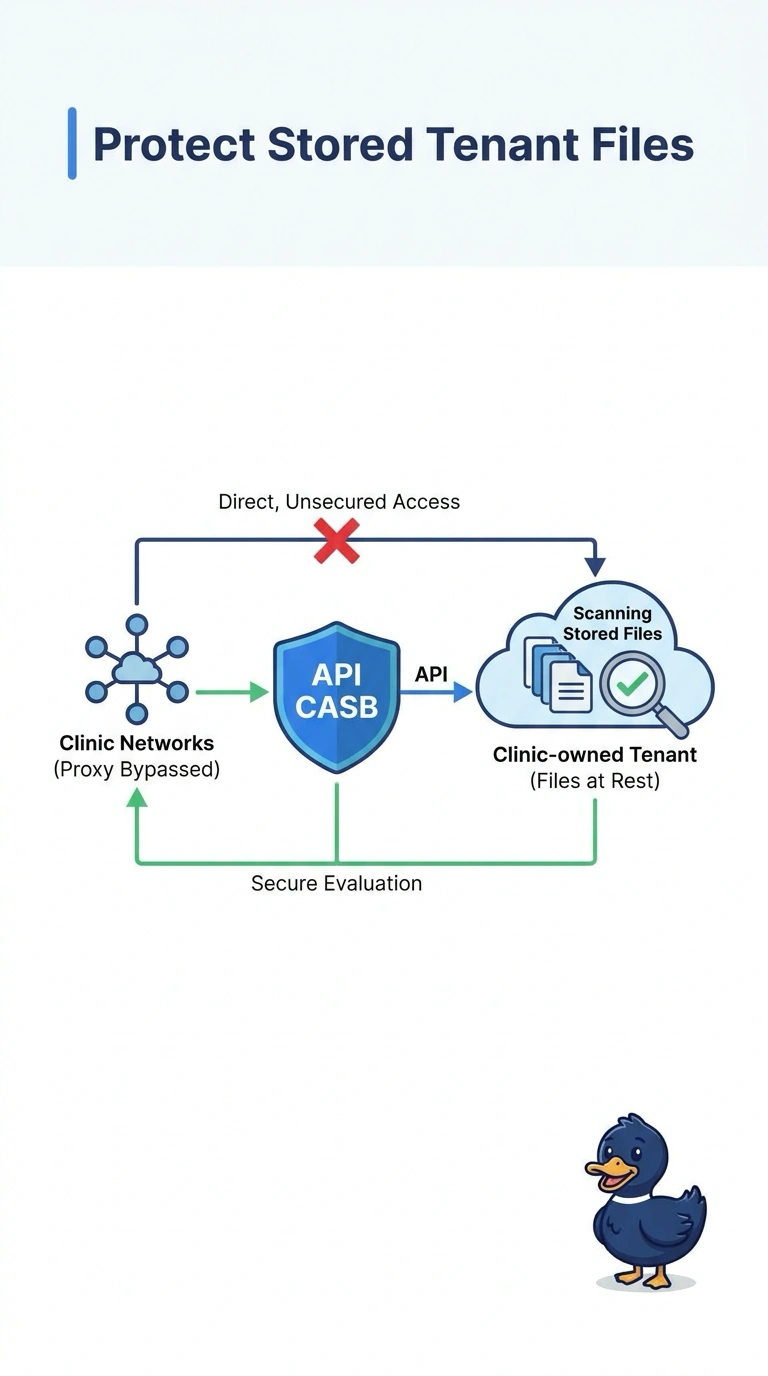
Files already in the filing cabinet are not watched by the person at the front door. You use API cloud access security brokerage so the clinic-owned tenant is covered at rest, including files that never crossed today's proxy. The trap is counting on an inline control that only sees sessions people actually send through the proxy.
Full Explanation
API cloud access security brokerage connects to the tenant and evaluates files already stored at rest, so coverage remains when staff reach that clinic-owned tenant without using the proxy. Inline cloud access security brokerage on the proxy sees a session only when the session is steered there, and it does not see staff who bypass the proxy. A resource connector publishes private applications for zero-trust access and does not inventory or remediate files stored in a public cloud file tenant. A DNS policy on the protected resolver can block a name at lookup time and does not classify file bodies that never cross the proxy. Exam caveat: inline controls and API controls answer different moments, and an inline miss does not mean the tenant has no coverage once API access to the tenant is in place. Operational check: share a test file in the tenant from a network that does not use the proxy and confirm the API finding still reports that file. A file created while the user is off the proxy still belongs in that tenant inventory.