
A utility policy for a sanctioned application denies a session that comes from an unexpected country, yet the same user can still open a general VPN. The policy owner has approved this user's access from that country. What should be changed?
Select an answer to reveal the explanation.
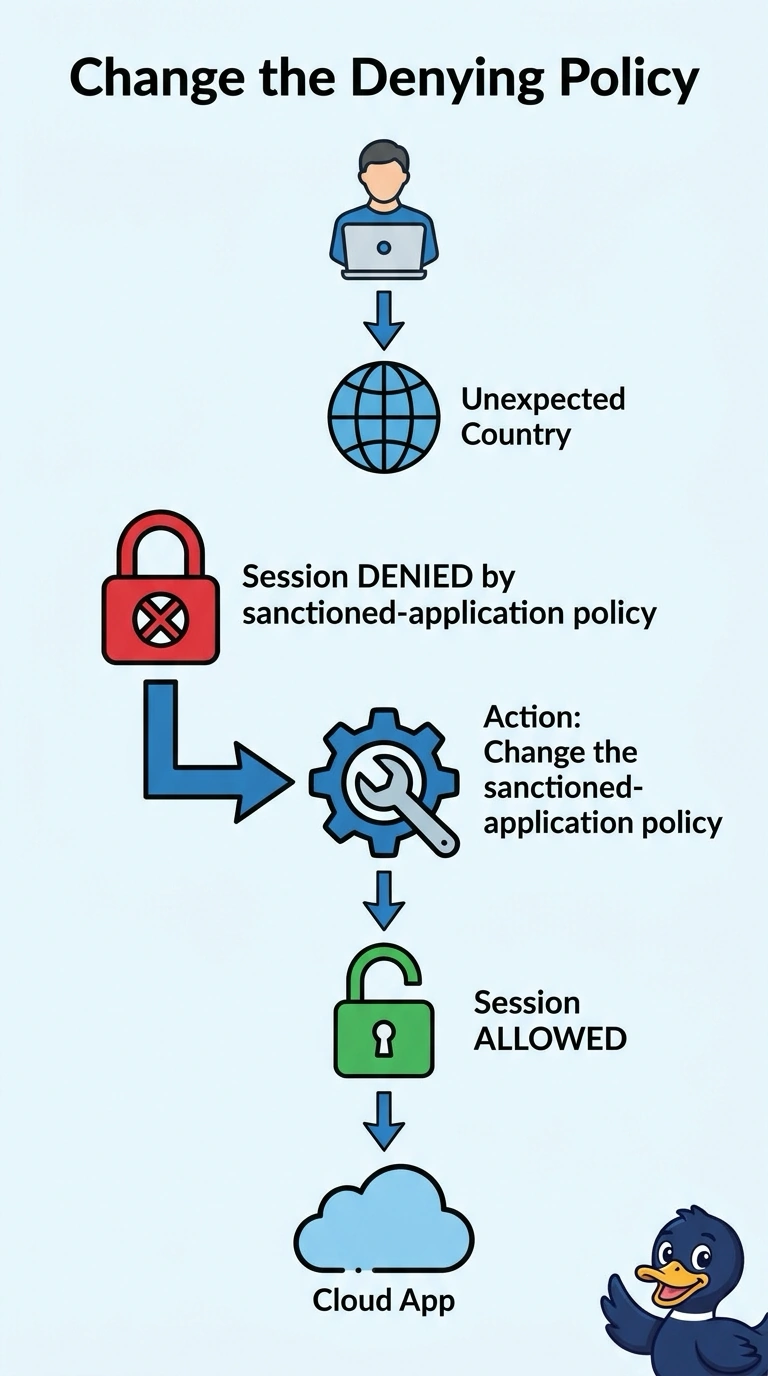
Short Explanation
You can think of this as a country rule at the club door: it can refuse a guest pass while your subway card still opens the station gate. Change the sanctioned-application policy that denied the tenant session. Rebuilding a working general VPN, replacing your password, or failing over connectors would not change that country decision.
Full Explanation
The deny applies to the sanctioned application when the tenant session comes from an unexpected country. The fact that the same user can still open a general VPN shows that a different access path succeeded; it does not explain or override the SaaS deny. Change the sanctioned-application policy that denied the tenant session, because that is the control matching the block. A working VPN neither warrants nor overrides removal of an intentional country restriction. Rebuilding the general VPN that already connects targets a path the user can open, and a working VPN does not override a country rule on the application. Replacing the user's password on the identity provider changes a credential, but the scenario describes a country-context denial, not failed authentication, so a new password will not clear the rule. Failing over the resource-connector group addresses connector availability for a private resource; a SaaS country deny does not mean those connectors are unreachable, and failover will not rewrite the application policy. Exam caveat: restricting users to the company tenant is a different CASB decision from a country rule on a session that has already reached the tenant. Practical check: review the sanctioned-application event's deny reason, confirm it cites the country, then test from an allowed location after the policy change without touching the VPN profile.