
An airline must block one unapproved AI application outright and must inspect prompts sent to a different AI application that remains approved. Which approach matches those two requirements?
Select an answer to reveal the explanation.
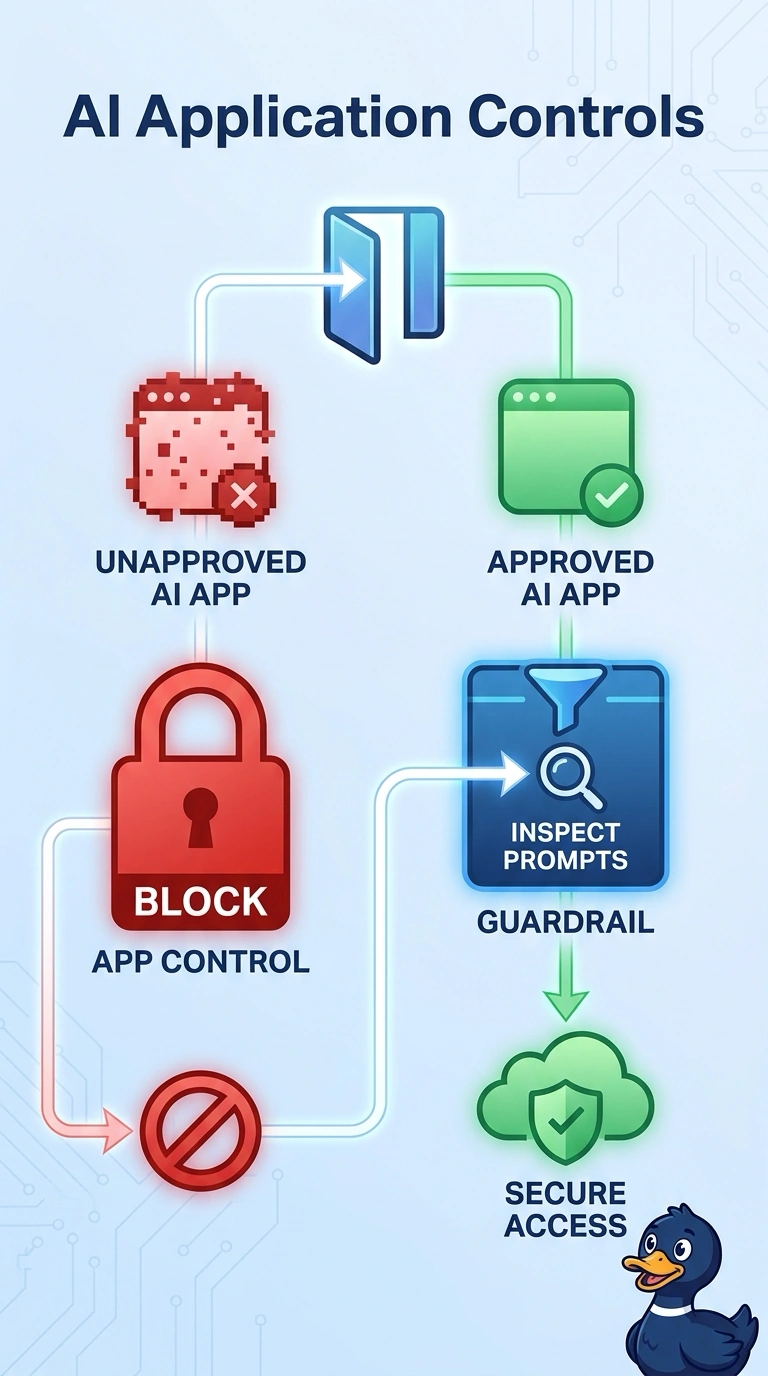
Short Explanation
A rope line keeps an uninvited guest out, and a different inspector reads what an invited guest is handed. You block the unapproved AI application with app control and inspect the approved application's prompts with a guardrail. The trap is a model test, a guardrail you hope also blocks the other tool, or a category block of both.
Full Explanation
Blocking an unapproved AI application is an app-control action. Inspecting prompts on an approved AI application is a guardrail action. They are different controls, and the airline needs both: block the unapproved AI application with app control, and inspect the approved application's prompts with a guardrail. Validating an internal model in AI Defense checks a model the enterprise builds or fine-tunes. That test does not block a public tool employees opened on their own, so recording it as the block misses the unapproved application. Putting a guardrail only on the approved application can inspect that application's prompts and responses. A guardrail on the approved tool does not also block the unapproved AI application outright. Blocking both applications with one category rule stops the approved tool as well, so no approved prompts remain to inspect and the second requirement fails. Exam caveat: AI Guardrails also need HTTPS inspection on an access policy for the same identity, or the prompt body cannot be read. Operational check: from a pilot account, confirm the unapproved application is denied, then send a test prompt to the approved application and confirm the guardrail inspects it.