
A school spreadsheet already stored in the authorized sanctioned OneDrive tenant is shared with anyone who has the link, and a matching SaaS API DLP rule with Revoke Access applies. Which action removes that public link?
Select an answer to reveal the explanation.
Short Explanation
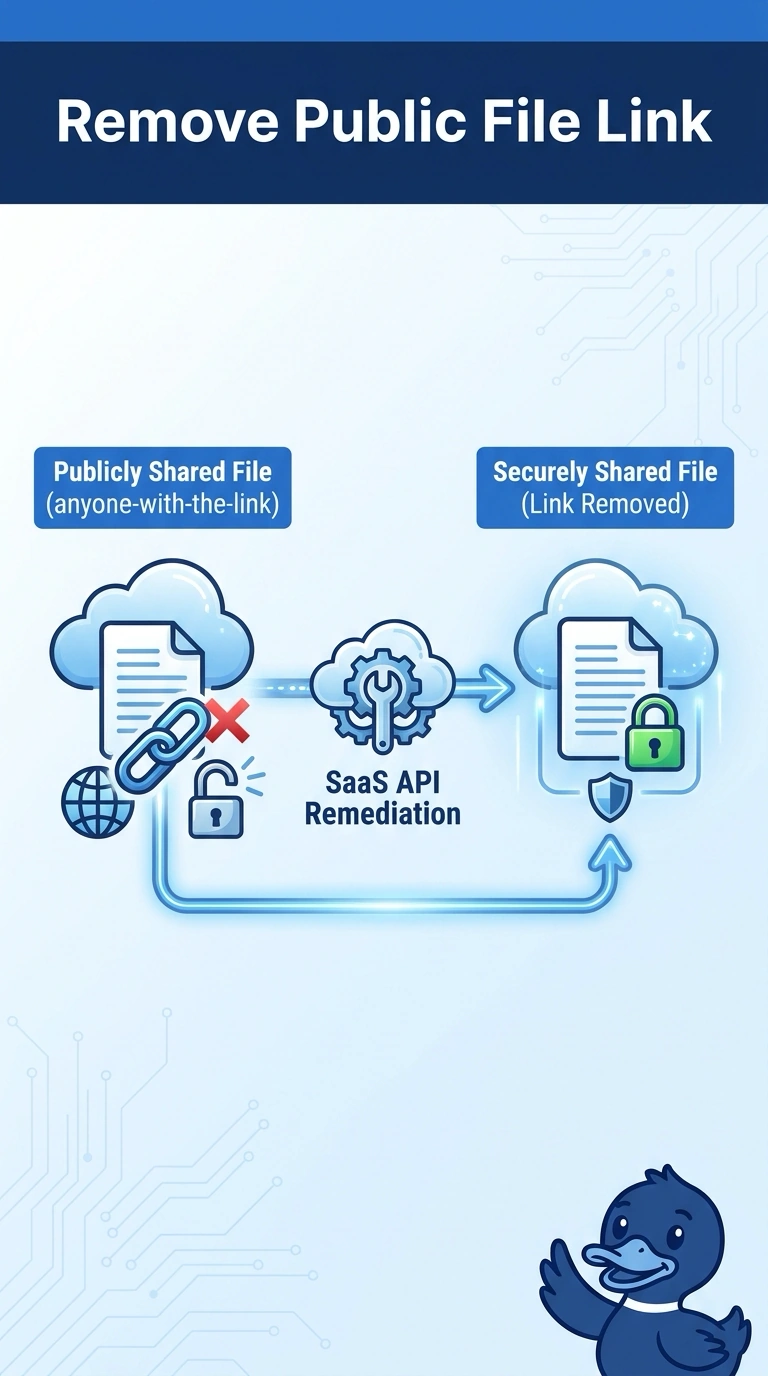
A poster already hanging on the wall comes down when someone takes that poster down, not when a new rule watches the door. You use SaaS API remediation to remove the anyone-with-the-link share on the file already stored. The trap is a web rule, a discovery inventory, or an email filter, none of which unshare that file.
Full Explanation
SaaS API controls see files at rest in a sanctioned tenant, including a file that was shared without crossing today's proxy. API remediation can undo a public link. Using SaaS API remediation to remove the anyone-with-the-link share is the action that changes the stored spreadsheet. Adding a web data-loss prevention rule watches uploads and, when in scope, other live channels. It does not reach back and remove a public link from a file already stored in the tenant. Running an on-demand discovery inventory lists where sensitive data sits. Discovery is not an inline block and it is not a write-back, so treating the inventory as removal leaves the link in place. Forwarding the file to the email data-loss prevention integration sends a copy toward a mailbox control. Email data-loss prevention is a separate integration, and a mailbox filter does not edit sharing on the tenant object. Exam caveat: an API control can also see a link that was created off-network, which is exactly why the proxy rule from today is not required for this cleanup. Operational check: verify the public link is gone, and review any other removed shares and transferred ownership before restoring intended access for named school users.