
A bank finds staff using both the approved collaboration suite and a lookalike service that accepts traffic on the same destination port. How should access to those two services be controlled?
Select an answer to reveal the explanation.
Short Explanation
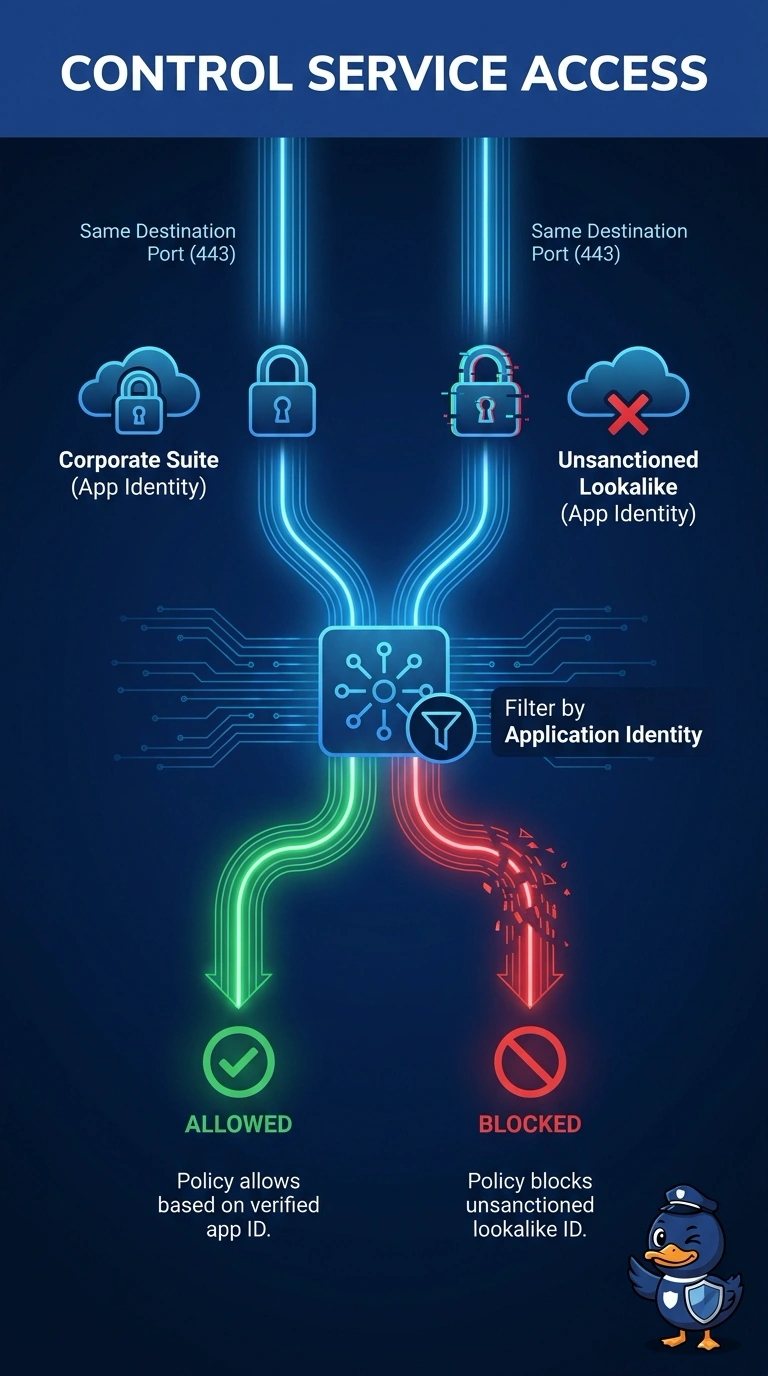
You can tell two services apart by their identity, even when they use the same port. Application identity lets you block the unsanctioned lookalike while keeping the approved corporate suite available. Opening the port for everyone leaves both reachable, while blocking the whole category also removes the suite you approved.
Full Explanation
Application identity distinguishes the corporate suite from a lookalike that happens to use the same destination port, so you can block the unsanctioned service and still allow the one the bank approved. Allowing the shared destination port for every user leaves both services reachable and does not separate them. Blocking the entire collaboration category also removes the corporate suite already approved for staff, making that block broader than the finding calls for. Publishing the lookalike through a private resource connector does not control access to that service: a connector exposes a private resource inside a network rather than classifying a public application. Exam caveat: restricting access to the approved corporate suite by its application identity is not the same as blocking the entire collaboration category. Practical check: try the lookalike and the corporate suite from the same workstation, then confirm in the activity log that one application is blocked and the other is allowed. The application names in the log distinguish the services even when the port number is the same.