
Warehouse crews have started storing shift photos in an unsanctioned internet storage application. Leadership wants that adoption to show up in reporting. Which method reveals the application?
Select an answer to reveal the explanation.
Short Explanation
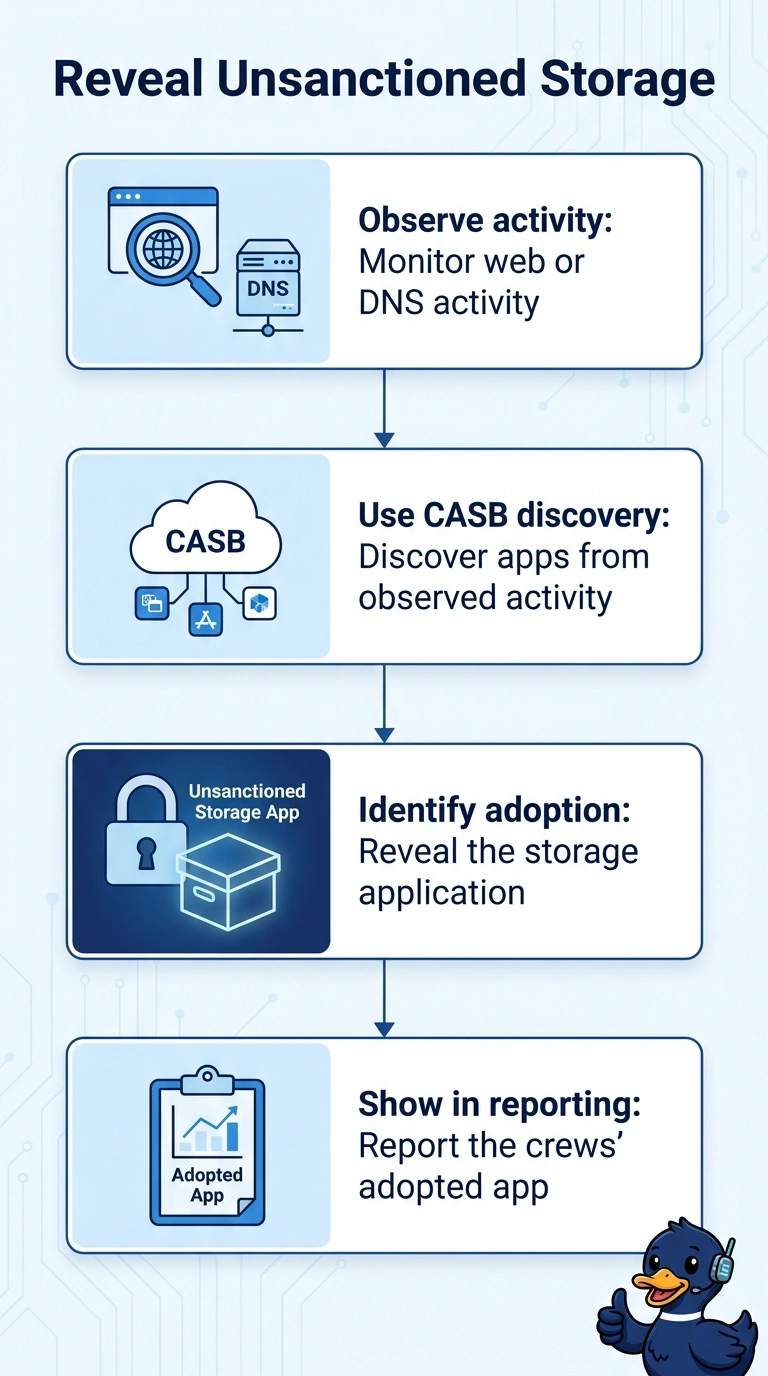
Unfamiliar trucks on a highway camera are how you notice a warehouse you do not own. You use CASB discovery from web or DNS activity to surface the unsanctioned storage app. The trap is a private-app connector, which never inventories that internet service.
Full Explanation
Cloud access security brokerage finds shadow applications from activity the organization can already see. CASB discovery driven by observed web or DNS activity is what reveals the unsanctioned internet storage application the crews started using. A private-application resource connector lives inside the network, makes outbound connections, and publishes private resources you name. It does not inventory an internet SaaS application, and publishing a private web app is a different job. A clientless zero-trust bookmark reaches a private HTTP application by name. Naming that private app does not list unsanctioned public storage. An AI Defense model-validation run checks models the enterprise builds or fine-tunes. It does not discover shadow storage applications. Exam caveat: shadow SaaS shows up in CASB discovery. A connector for private applications does not double as that inventory. Operational check: after crews use the storage site through the protected path, confirm the application appears in CASB discovery and not only as a private-app bookmark.