
A warehouse collaboration application is marked high risk from its application profile, but the review team starts hunting a malware hash that no one supplied. Which evaluation matches the rating in front of them?
Select an answer to reveal the explanation.
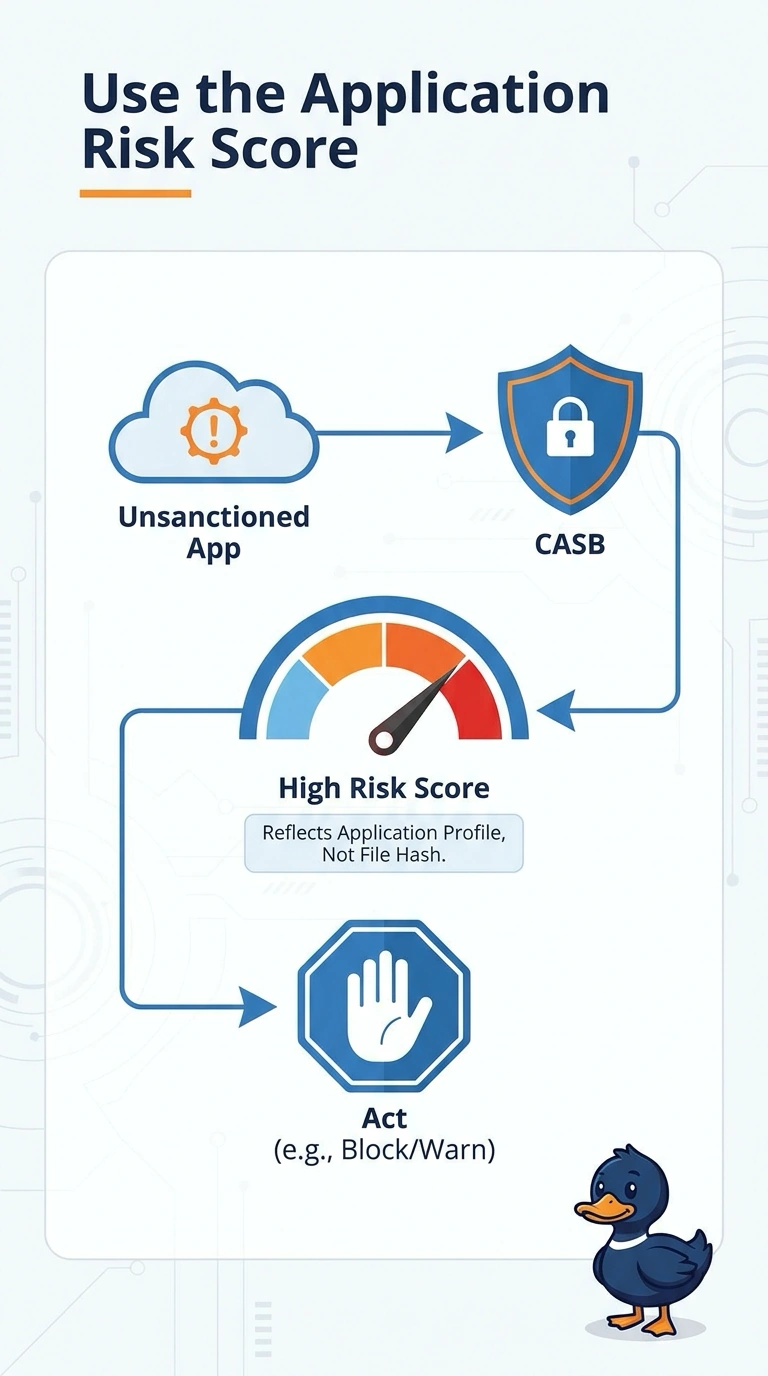
Short Explanation
A restaurant health score rates the kitchen, and it does not name a spoiled jar that nobody delivered. You act on the CASB application risk score, which is a profile decision rather than a file hash. The trap is hunting a missing hash, allowing addresses at the firewall, or swapping in a user certificate.
Full Explanation
A cloud access security broker scores many applications from profile attributes such as how the service handles data, identity, and compliance. That CASB application risk score is an application-risk decision. Acting on it matches the high-risk rating the warehouse already has, and it does not require a file hash. Searching the file store for a malware hash that nobody supplied looks for a malware verdict the rating never claimed. A high application score is not proof that a known bad file is sitting in the warehouse. Lowering the application risk score by allowing its addresses on the warehouse perimeter firewall confuses a network permit with the profile that produced the score. Opening addresses does not rewrite the application's risk attributes. Requiring a newer user certificate treats a caller credential as the cloud-application risk decision. Certificates authenticate a key. They do not rescore a collaboration application. Exam caveat: a later malware hit on a file inside that application is a separate disposition and does not erase the profile score. Operational check: open the application risk detail, confirm the score cites profile findings, and record the allow, coach, or block decision against the application rather than against an empty hash search.