
A bank data-loss rule receives a password-protected archive that a teller uploaded to a file site, and the rule cannot open the archive. Unreadable archives are not allowed to leave, and the team still wants a verdict on the files inside. What should the team conclude?
Select an answer to reveal the explanation.
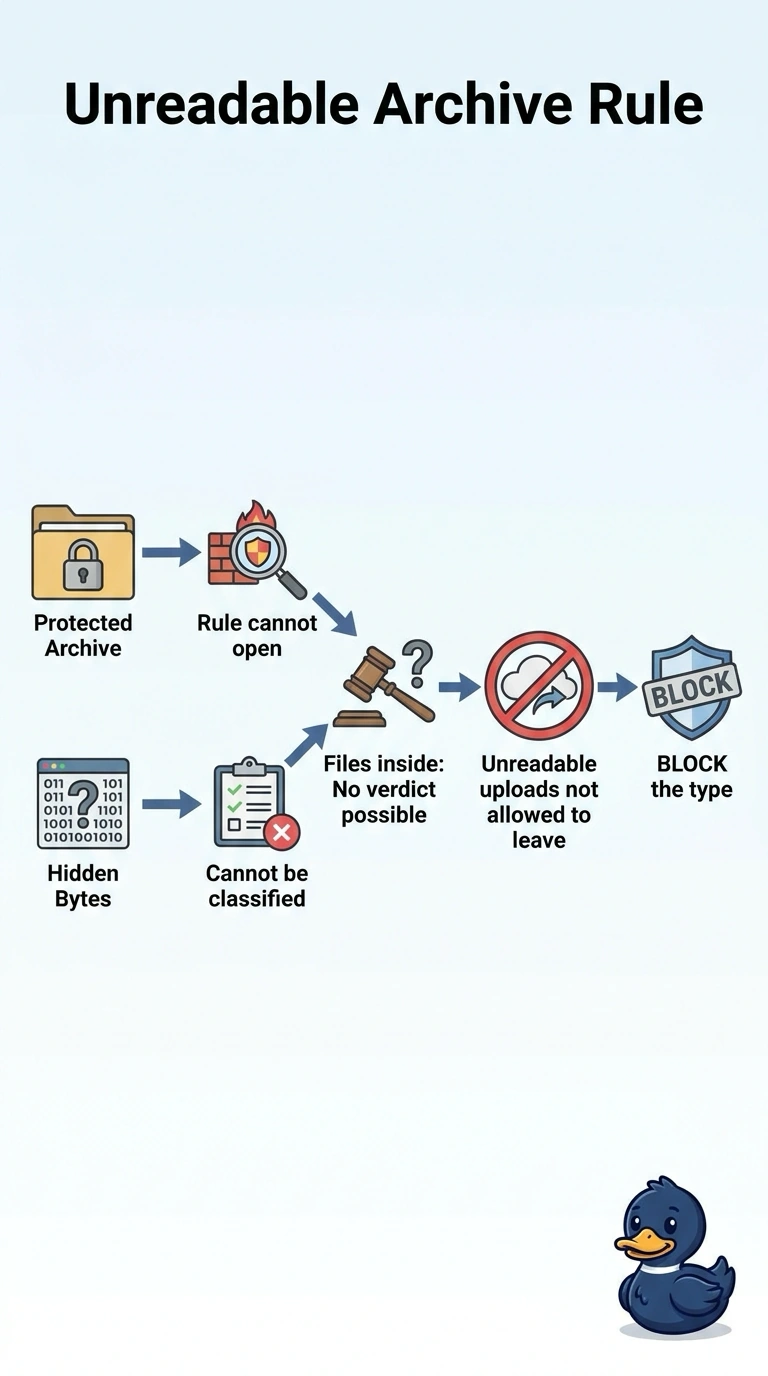
Short Explanation
A locked suitcase does not tell you which shirts are folded inside. You cannot classify bytes you cannot open, so you block that encrypted archive type when unreadable files must not leave. The trap is stamping a confirmed data match on contents nobody could read.
Full Explanation
Data-loss inspection can classify only bytes it can open. A password-protected archive that cannot be read has no inner verdict, so the honest result is that the hidden bytes are unclassified. When the bank requires unreadable uploads to stop, the control that matches that requirement is a block of that encrypted archive type, not a guess about the contents. Treating the archive as a confirmed card-data match invents a classification the engine never produced. Decrypting the archive with the web gateway inspection certificate fails because that certificate opens transport encryption, not a password the teller set on the file. A tenant discovery scan of copies stored at rest hits the same locked file and still cannot see inside it. Exam caveat: an encrypted archive that cannot be opened is not a positive match and not a clean file. Operational check: submit a test archive with a password the policy cannot supply and confirm the event says the content was not classified, while the encrypted type is blocked.