
A school payment sandbox sends fake card numbers, and the live data-loss policy matches those numbers on every test checkout. Production uploads of real card numbers must still be blocked. What should the team change?
Select an answer to reveal the explanation.
Short Explanation
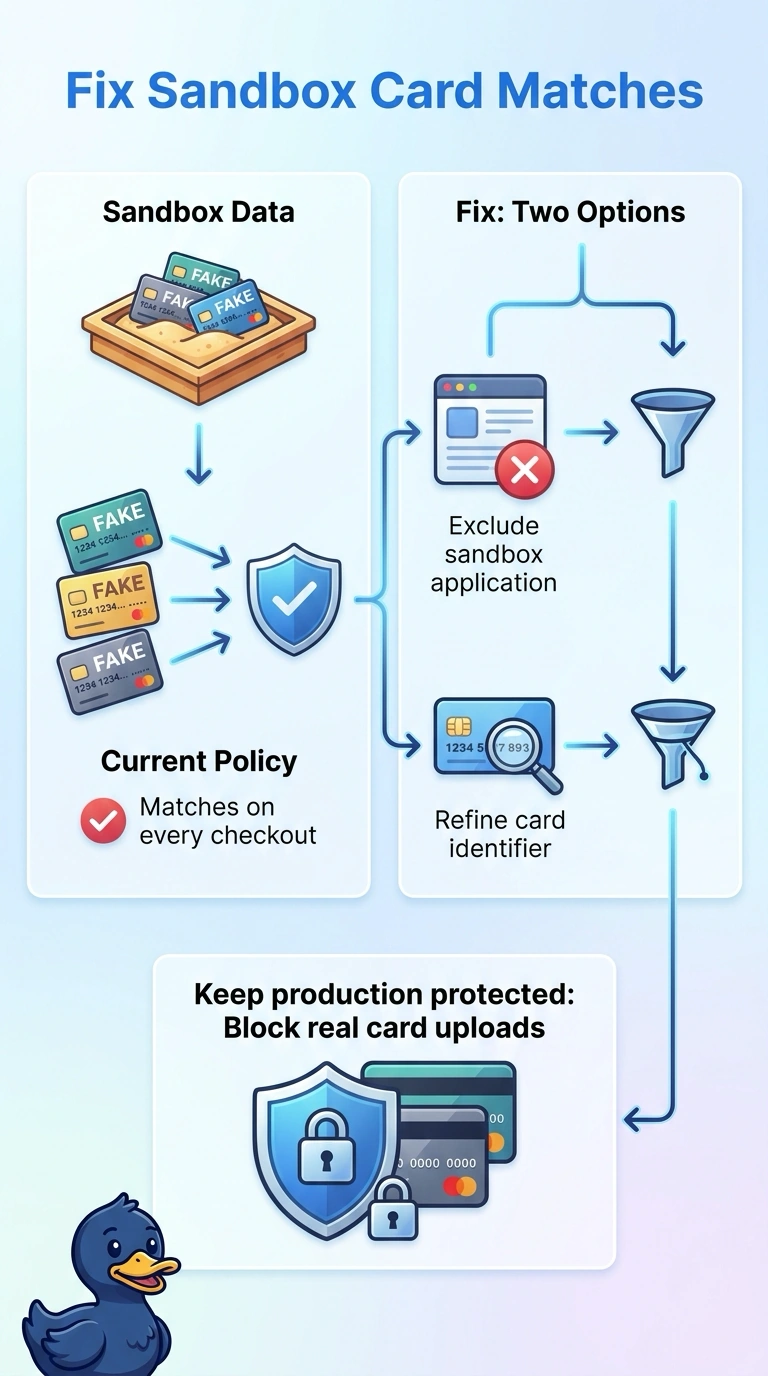
A practice alarm in an empty lot is not a reason to rip the alarms out of the building. You exclude the sandbox or refine the identifier and leave the production card control in place. The trap is deleting the whole data-loss policy just to quiet the test.
Full Explanation
The sandbox is tripping a real card pattern with fake numbers. The production control still has to block real card uploads, so the change is local: exclude the sandbox application, or refine the identifier so the test pattern stops matching. Either one quiets the sandbox without abandoning the live rule. Turning HTTPS inspection off for every user would hide the card pattern on the sandbox and on production uploads together, so the real control goes blind. Switching the whole school data-loss policy to monitor only stops blocking both the sandbox and a genuine card upload. Deleting the entire data-loss policy makes the sandbox succeed by removing the production control the school still needs. The fake numbers and the real card numbers share a pattern, so the fix has to separate the sandbox from production rather than blinding every upload. Exam caveat: a noisy test application is tuned with an exclusion or a tighter identifier, not by retiring the policy. Operational check: rerun a sandbox checkout and a production-style upload of a real test pattern, and confirm only the production upload still blocks.